Form library · Health and safety
Risk assessment template
A site risk assessment form that follows HSE's five steps. Record each hazard with photos, score it, set the further action, brief the crew and sign it off. Every question is listed below, and you can fill the live form in on this page.
Ready to use from the form library, and editable. Trial from £1, cancel any time.
What should a risk assessment template include?
A risk assessment template should record the hazards, who might be harmed and how, the controls already in place, any further action with who will do it and by when, and a date to review it. HSE's five steps are identify the hazards, assess the risks, control them, record the findings and review. Employers with five or more employees must record the significant findings.
Last updated . Facts checked on 26 September 2026 against regulation 3 of the Management of Health and Safety at Work Regulations 1999 and HSE's steps to manage risk.
Try the risk assessment form live
Answer a few questions and watch it adapt. Your answers are not saved, and any photos you add are deleted within the hour.
This is the real form as your team would use it: questions appear as you answer, scores work themselves out and you can add photos and signatures. No sign-up needed.
Fill it in on a phone or tablet
Your team completes the risk assessment on site in the SiteSurvey app on iPhone, iPad and Android phones and tablets. The project name and address fill in for them, it works without signal, and it syncs when the device is back online with photos kept against the question they answer.
Customers and subcontractors do not need the app: send them a link and they can fill it in from any browser.
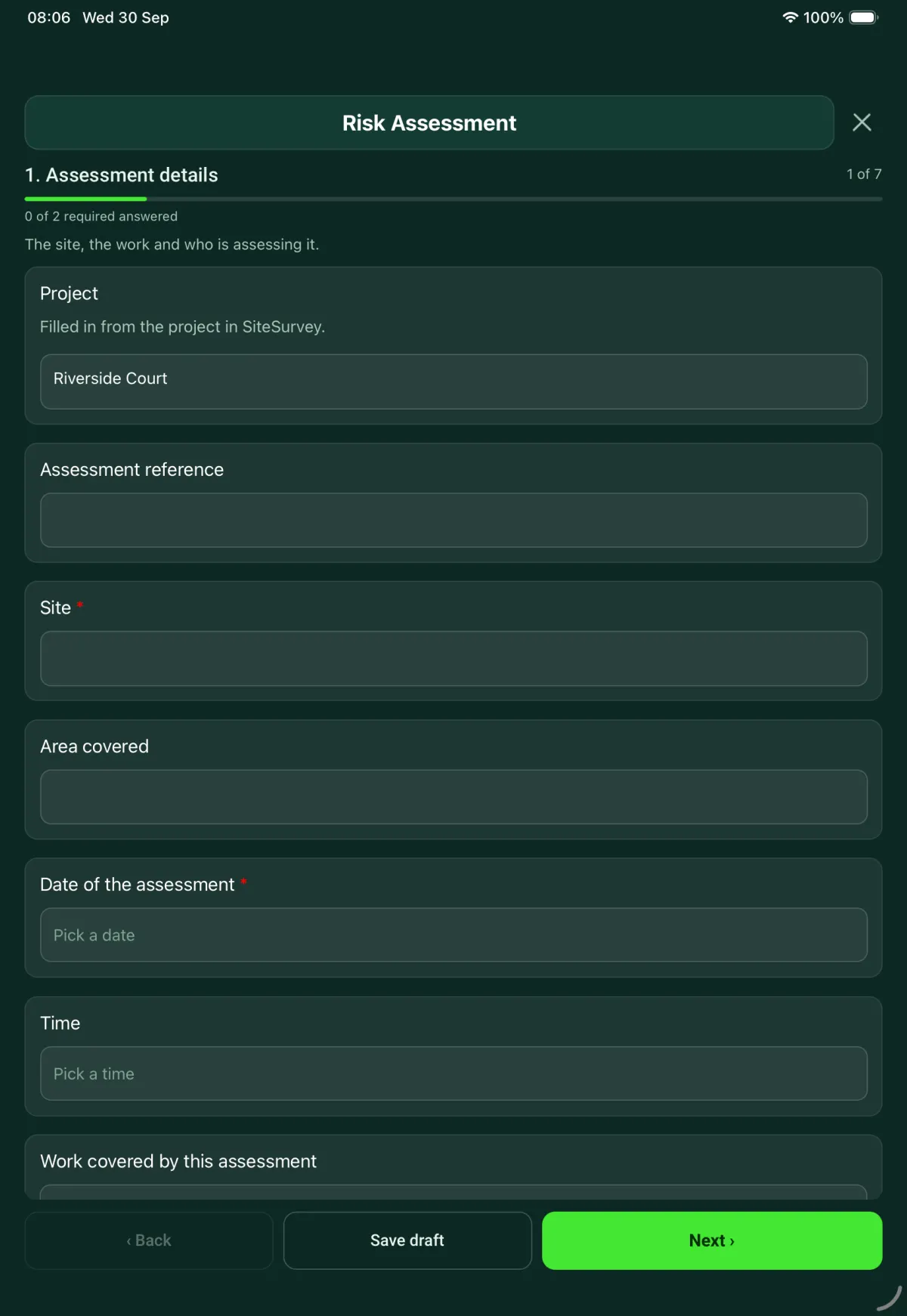
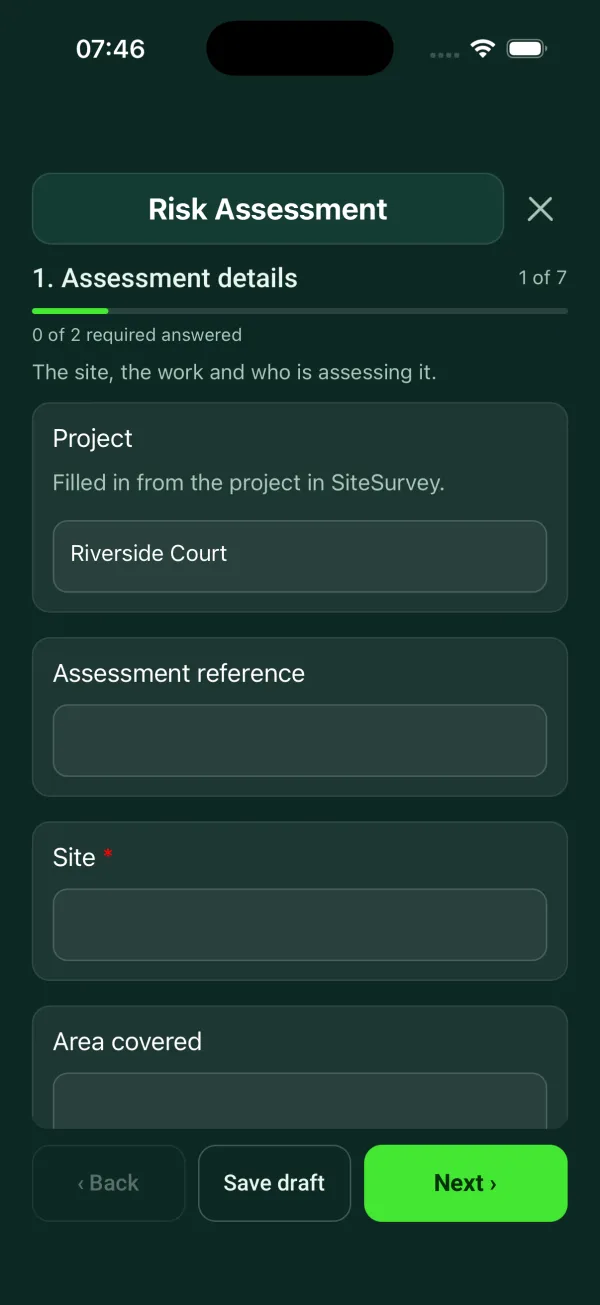
Every question in the risk assessment template
Hazards, who might be harmed, controls and risk scores, with a briefing record and review date. 7 sections and 79 questions. Follow-up questions and guidance appear only when an answer calls for them, so the person on site never sees the ones that do not apply.
Details you only enter once
Add this form to a project in SiteSurvey and it fills in what the project already knows, so nobody on site retypes it and every form on the job uses the same names. Anything filled in can still be changed.
- Project: the project name
- Site: the site, when the form is opened for a space or a product
Assessment details
The site, the work and who is assessing it.
- ProjectShort answerFills in from the project name
- Assessment referenceShort answer
- Site*Short answerFills in from the site, when the form is opened for a space or a product
- Area coveredShort answer
- Date of the assessment*Date
- TimeTime
- Work covered by this assessmentNotes
- Assessor name and roleShort answer
- Type of assessmentChoose one
- New assessment
- Review of an existing assessment
- Reference of the assessment being reviewedShort answerShown when “Type of assessment” is “Review of an existing assessment”
- Why is it being reviewed?Choose one
- The work or the area has changed
- An incident or near miss
- Workers reported a problem
- New people or equipment
- Planned review date reached
- Other (describe)
Shown when “Type of assessment” is “Review of an existing assessment” - GuidanceRegulation 3 of the Management of Health and Safety at Work Regulations 1999. An assessment must be reviewed if there is reason to suspect it is no longer valid, or there has been a significant change in the matters it relates to.Shown when “Type of assessment” is “Review of an existing assessment”
- What happened, and when?NotesShown when “Type of assessment” is “Review of an existing assessment” and “Why is it being reviewed?” is “An incident or near miss”
- Does the employer have five or more employees?Yes or No
- GuidanceRecord required. An employer with five or more employees must record the significant findings of the assessment, and any group of employees identified as especially at risk.Shown when “Does the employer have five or more employees?” is Yes
- GuidanceThe duty to record applies to employers with five or more employees. The duty to make a suitable and sufficient assessment applies to every employer.Shown when “Does the employer have five or more employees?” is No
- Were the people doing the work involved in the assessment?Yes or No
- Who, and how?Short answerShown when “Were the people doing the work involved in the assessment?” is Yes
- CheckHSE guidance is to involve workers. They often know the practical problems that are not obvious from outside the job.Shown when “Were the people doing the work involved in the assessment?” is No
Who might be harmed
Think about everyone the work could affect, not only the crew.
- Who could be affected by this work?Tick all that apply
- Employees doing the work
- Other contractors on site
- Visitors and delivery drivers
- Members of the public
- How many people are doing the work?NumberShown when “Who could be affected by this work?” includes “Employees doing the work”
- How are members of the public kept away from the work?NotesShown when “Who could be affected by this work?” includes “Members of the public”
- Which other contractors, and who is their supervisor?Short answerShown when “Who could be affected by this work?” includes “Other contractors on site”
- Is anyone especially at risk?Yes or No
- Who?Tick all that apply
- Young person
- New starter or trainee
- New or expectant mother
- Lone worker
- Someone with a disability or health condition
- Other (describe)
Shown when “Is anyone especially at risk?” is Yes - CheckYoung persons. An employer must not employ a young person unless the assessment has been made or reviewed taking particular account of their inexperience, lack of awareness of risks and immaturity. Regulation 3 of the 1999 Regulations.Shown when “Is anyone especially at risk?” is Yes and “Who?” includes “Young person”
- What is being done differently for them?NotesShown when “Is anyone especially at risk?” is Yes
Hazards
One entry for each hazard. Rate it standing in front of it.
- GuidanceWhat a good photo shows. Show the hazard and the control in the same picture where you can: the castors and brakes, the edge of the trench, the route the lead takes.
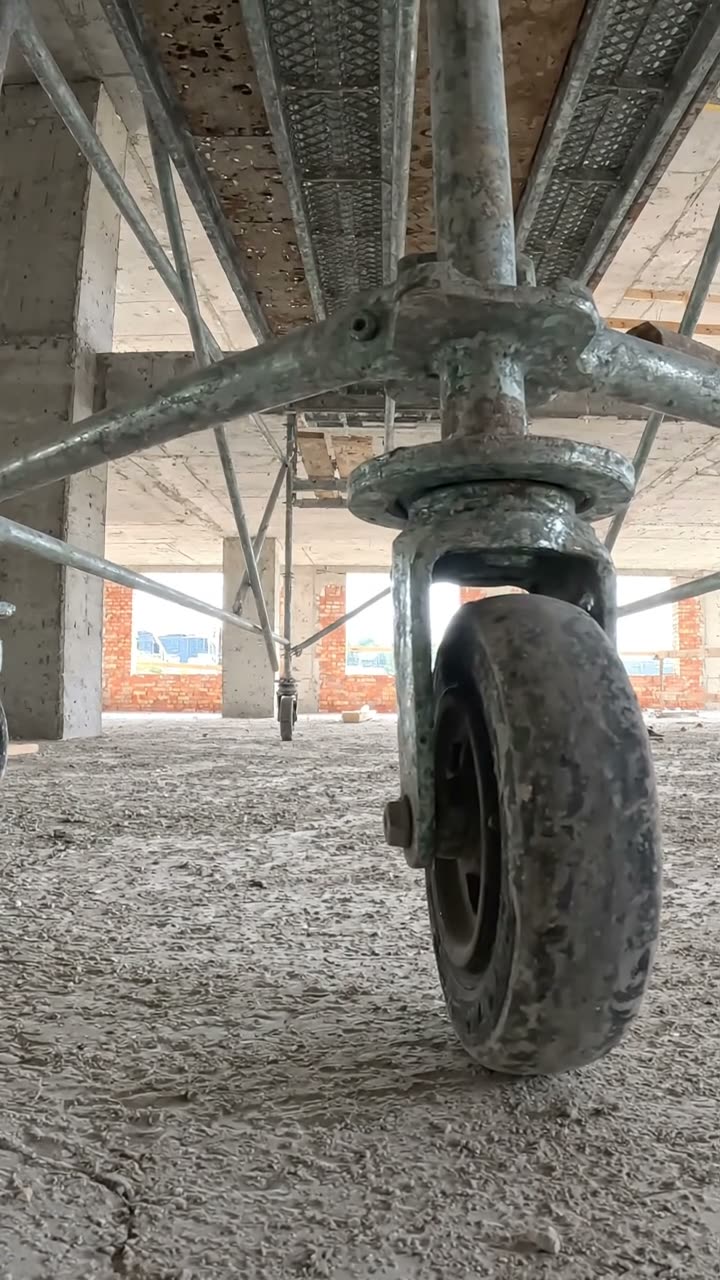
The locked castor of a mobile tower on a level floor slab 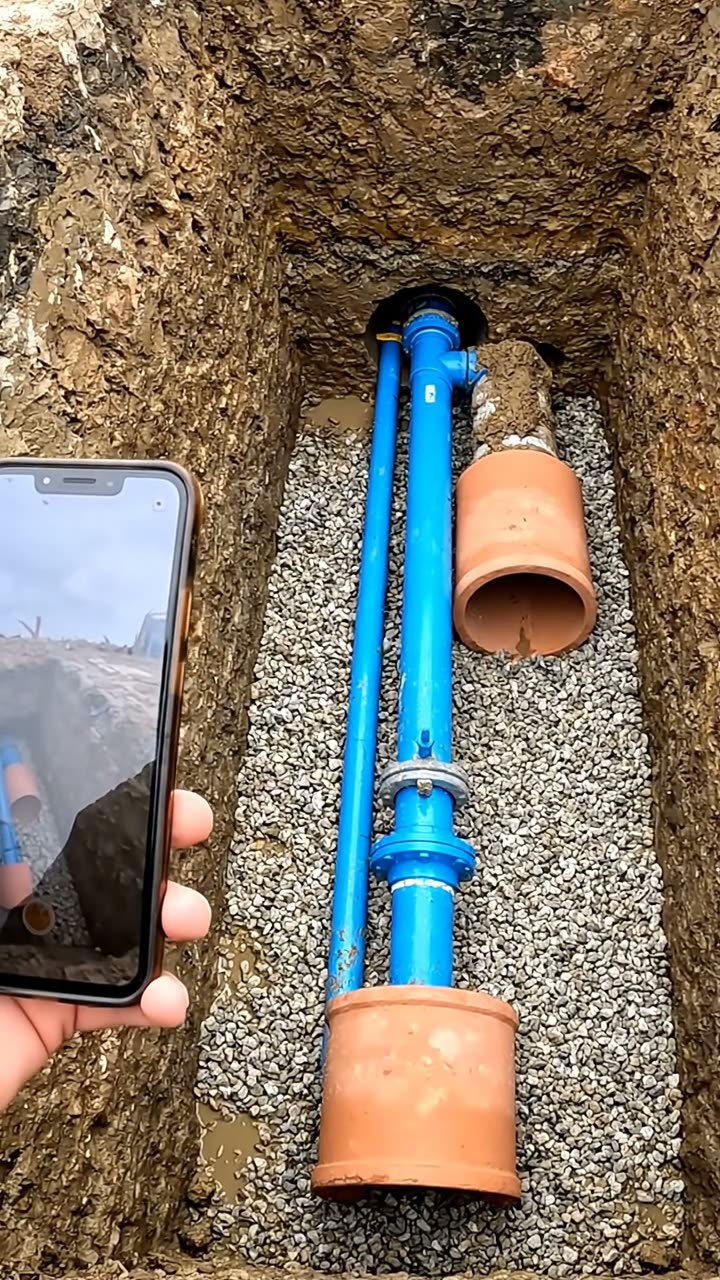
An open service trench with no barriers around the edge 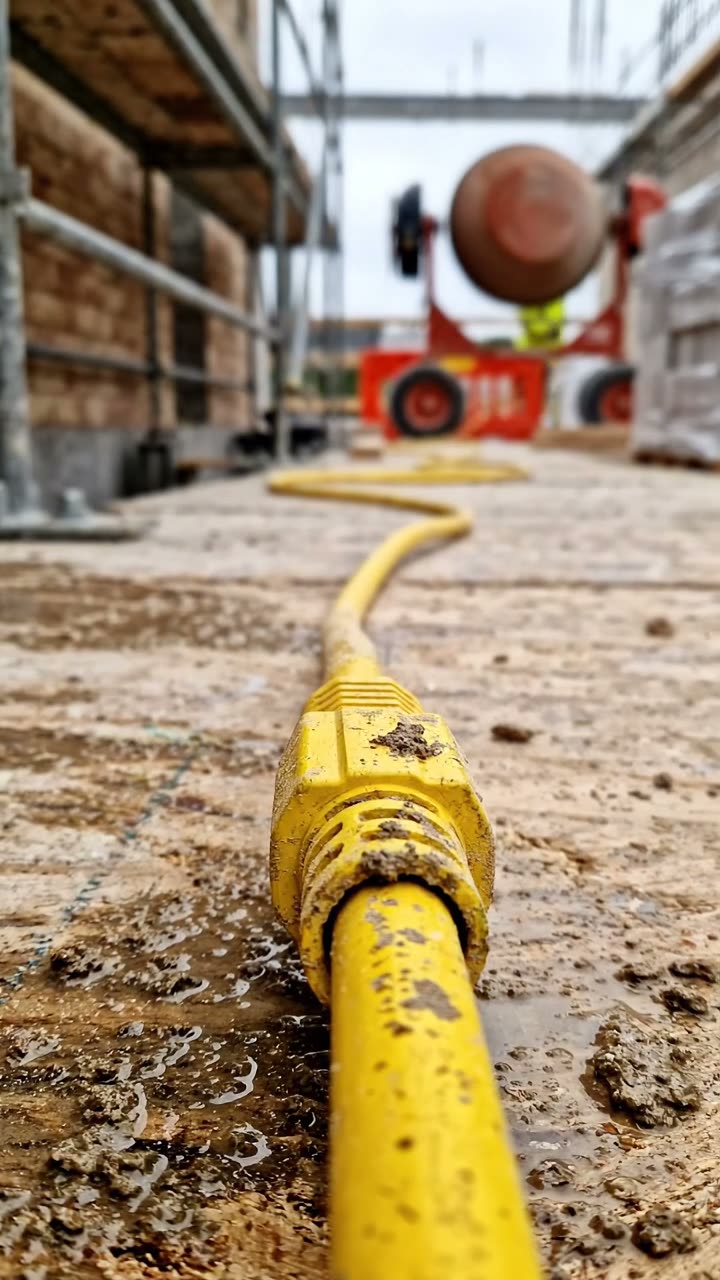
A yellow extension lead lying across a wet site walkway - GuidanceScoring. Likelihood and severity are each rated 1 to 5 and multiplied. Scoring is a common way to rank hazards. It is not required by law, and the bands are this form's own.
- Hazards foundRepeat for each hazard. Each one asks:
- Type of hazardChoose one
- Work at height
- Excavation
- Slips and trips
- Electricity
- Vehicles and plant
- Manual handling
- Dust or hazardous substances
- Noise or vibration
- Other (describe)
- Where is it?Short answer
- What is the hazard?Notes
- Who might be harmed, and how?Notes
- Photos of the hazardPhotos
- Can the work be done safely without working at height?Yes or NoShown when “Type of hazard” is “Work at height”
- CheckWork at Height Regulations 2005, regulation 6. Work must not be carried out at height where it is reasonably practicable to carry it out safely another way.Shown when “Type of hazard” is “Work at height” and “Can the work be done safely without working at height?” is Yes
- Access equipmentChoose one
- Mobile tower
- Fixed scaffold
- Mobile elevating work platform
- Podium steps
- Ladder or stepladder
- Other (describe)
Shown when “Type of hazard” is “Work at height” and “Can the work be done safely without working at height?” is No - Tower checks. Tick what is in placeTick all that apply
- Firm, level ground
- Castors locked
- Stabilisers or outriggers fitted as the instruction manual requires
- Double guardrails and toeboards
- Platform fully boarded
- Bracing complete
Shown when “Type of hazard” is “Work at height” and “Access equipment” is “Mobile tower” - WarningThe castors are not recorded as locked. HSE guidance says a tower should rest on firm, level ground with the castors locked.Shown only when the answers above make it relevant
- Could a person fall 2 metres or more from the platform?Yes or NoShown when “Type of hazard” is “Work at height” and “Access equipment” is “Mobile tower”
- Date the tower was last inspected on this siteDateShown when “Type of hazard” is “Work at height” and “Access equipment” is “Mobile tower” and “Could a person fall 2 metres or more from the platform?” is Yes
- Days since the last inspectionWorked out by the formShown when “Type of hazard” is “Work at height” and “Access equipment” is “Mobile tower” and “Could a person fall 2 metres or more from the platform?” is Yes and “Date the tower was last inspected on this site” is answered
- WarningInspection overdue. A working platform used for construction work, from which a person could fall 2 metres or more, must not be used unless it has been inspected within the previous 7 days. Work at Height Regulations 2005, regulation 12.Shown only when the answers above make it relevant
- What protects the edge?Choose one
- Barriers or guardrails in place
- Nothing in place
Shown when “Type of hazard” is “Excavation” - WarningUnprotected edge. Suitable and sufficient steps must be taken to prevent any person, work equipment or material from falling into an excavation. Construction (Design and Management) Regulations 2015, regulation 22.Shown when “Type of hazard” is “Excavation” and “What protects the edge?” is “Nothing in place”
- Will anyone work in the excavation?Yes or NoShown when “Type of hazard” is “Excavation”
- How are the sides kept from collapsing?Choose one
- Supports fitted
- Sides battered back
- Nothing in place
Shown when “Type of hazard” is “Excavation” and “Will anyone work in the excavation?” is Yes - Has a competent person inspected it at the start of this shift?Yes or NoShown only when the answers above make it relevant
- WarningWhere supports or battering have been provided, construction work must not be carried out in the excavation until a competent person has inspected it at the start of the shift and is satisfied the work can be done safely. Regulation 22 of the 2015 Regulations.Shown when “Type of hazard” is “Excavation” and “Will anyone work in the excavation?” is Yes and “Has a competent person inspected it at the start of this shift?” is No
- WarningHSE guidance says no ground can be relied upon to stand unsupported in all circumstances. Nobody should enter until the sides are supported or battered back.Shown when “Type of hazard” is “Excavation” and “Will anyone work in the excavation?” is Yes and “How are the sides kept from collapsing?” is “Nothing in place”
- What is underfoot?Tick all that apply
- Trailing lead or cable
- Wet or muddy surface
- Uneven surface
- Materials or waste in the way
- Poor lighting
Shown only when the answers above make it relevant - GuidanceHSE guidance on trailing cables. Use cordless tools where you can. Where cables are needed, run them at high level, especially along corridors.Shown only when the answers above make it relevant
- GuidanceHSE guidance on slippery surfaces. Treat them with stone for mud or grit for ice, or provide a temporary covering. Signpost the area and make sure footwear with a good grip is worn.Shown only when the answers above make it relevant
- What supplies the equipment?Choose one
- Battery, cordless
- 110 V centre tapped to earth
- 230 V mains
Shown when “Type of hazard” is “Electricity” - Is the 230 V equipment protected by an RCD?Yes or NoShown when “Type of hazard” is “Electricity” and “What supplies the equipment?” is “230 V mains”
- CheckHSE guidance for construction sites is to use cordless tools, or tools on a 110 V centre tapped to earth supply, so that the maximum voltage to earth does not exceed 55 V. Record why 230 V is needed here.Shown when “Type of hazard” is “Electricity” and “What supplies the equipment?” is “230 V mains”
- Controls already in placeNotes
- Photos of the controls in placePhotos
- Likelihood of harm with these controlsChoose one
- 1. Very unlikely
- 2. Unlikely
- 3. Possible
- 4. Likely
- 5. Almost certain
- Severity of the harmChoose one
- 1. Minor injury, no time off
- 2. Injury needing first aid
- 3. Injury needing time off work
- 4. Major injury
- 5. Death
- Risk score (likelihood x severity)Worked out by the formShown when “Likelihood of harm with these controls” is answered and “Severity of the harm” is answered
- RatingWorked out by the formShown when “Likelihood of harm with these controls” is answered and “Severity of the harm” is answered
- GuidanceLow, 1 to 4. Keep the controls in place and check that they stay effective.Shown only when the answers above make it relevant
- CheckMedium, 5 to 12. Record what further action would lower the risk, who will do it and by when.Shown only when the answers above make it relevant
- WarningHigh, 15 to 25. Do not start this work until further controls are in place and the risk has been rated again.Shown only when the answers above make it relevant
- Has the work or the area been stopped or closed off?Yes or NoShown only when the answers above make it relevant
- Who has been told, and when?Short answerShown only when the answers above make it relevant
- Further action neededNotesShown only when the answers above make it relevant
- What kind of control is it?Choose one
- Removes the hazard
- Changes the job, equipment or materials to reduce exposure
- Practical safeguard, such as a barrier or guardrail
- Instruction, briefing or supervision
- Personal protective equipment
Shown only when the answers above make it relevant - CheckPersonal protective equipment is the last option in HSE's order of controls. Record why the hazard cannot be removed or guarded instead.Shown only when the answers above make it relevant
- Who will do it?Short answerShown only when the answers above make it relevant
- Needed byDateShown only when the answers above make it relevant
- Likelihood once the action is doneChoose one
- 1. Very unlikely
- 2. Unlikely
- 3. Possible
- 4. Likely
- 5. Almost certain
Shown only when the answers above make it relevant - Severity once the action is doneChoose one
- 1. Minor injury, no time off
- 2. Injury needing first aid
- 3. Injury needing time off work
- 4. Major injury
- 5. Death
Shown only when the answers above make it relevant - Residual risk scoreWorked out by the formShown only when the answers above make it relevant
- Residual ratingWorked out by the formShown only when the answers above make it relevant
- CheckThe further action does not lower the score. Look again at whether the hazard can be removed or guarded.Shown only when the answers above make it relevant
Summary and decision
The scores across all hazards, and whether the work can start.
- Hazards recordedWorked out by the form
- Highest risk scoreWorked out by the form
- Highest residual scoreWorked out by the formShown only when the answers above make it relevant
- WarningAt least one hazard is rated high. That work should not start until the further controls are in place.Shown only when the answers above make it relevant
- GuidanceEvery hazard recorded is rated low with the controls in place.Shown only when the answers above make it relevant
- Can the work start?Choose one
- Yes
- Yes, except in the areas listed below
- No
- Which areas or tasks stay closed, and until when?NotesShown when “Can the work start?” is “Yes, except in the areas listed below”
- What has to happen before the work can start?NotesShown when “Can the work start?” is “No”
- WarningYou have recorded that the work can start, but a hazard is rated high. Check the hazard entry or change the decision.Shown only when the answers above make it relevant
- Does any of the work need a permit to work?Yes or No
- Permit referenceShort answerShown when “Does any of the work need a permit to work?” is Yes
Briefing
Tell the people doing the work what the assessment found, before they start.
- Has the crew been briefed?Yes or No
- WarningEmployers must give employees comprehensible and relevant information on the risks identified by the assessment. Regulation 10 of the 1999 Regulations. Brief the crew before work starts.Shown when “Has the crew been briefed?” is No
- Time of the briefingTimeShown when “Has the crew been briefed?” is Yes
- People on the jobNumberShown when “Has the crew been briefed?” is Yes
- People briefed and signedNumberShown when “Has the crew been briefed?” is Yes
- Share of the crew briefed (%)Worked out by the formShown only when the answers above make it relevant
- CheckNot everyone on the job has been briefed. Brief and sign the rest before they start.Shown only when the answers above make it relevant
- Does anyone need the briefing in another language or format?Yes or NoShown when “Has the crew been briefed?” is Yes
- What was provided?Short answerShown when “Has the crew been briefed?” is Yes and “Does anyone need the briefing in another language or format?” is Yes
- Points raised by the crewNotesShown when “Has the crew been briefed?” is Yes
- Crew signaturesRepeat for each signature. Each one asks:Shown when “Has the crew been briefed?” is Yes
- NameShort answer
- SignatureSignature
Review
An assessment is only useful while it still matches the work.
- GuidanceReview the assessment if there is reason to suspect it is no longer valid, or if there has been a significant change. HSE guidance also names changes to staff, processes or equipment, problems reported by workers, and accidents or near misses.
- What would prompt a review on this job?Tick all that apply
- Access equipment moved or altered
- Excavation extended or backfilled
- Bad weather
- New people joining the crew
- Change to the method or sequence
- Incident or near miss
- Other (describe)
- Planned review dateDate
- Days until the planned reviewWorked out by the formShown when “Planned review date” is answered and “Date of the assessment” is answered
- CheckThe planned review date is before the date of the assessment. Check the dates.Shown only when the answers above make it relevant
Assessor sign-off
- WarningThis assessment has a hazard rated high. Check that the further action, the person responsible and the date are filled in.Shown only when the answers above make it relevant
- NameShort answer
- Assessor signatureSignature
Risk assessment template questions
Can I use it for a young person or a new or expectant mother?
Yes. The template asks whether anyone is especially at risk, including a young person, a new starter, a new or expectant mother, a lone worker or someone with a disability or health condition, and records what is being done differently for them. For a young person it shows the regulation 3 requirement to take particular account of their inexperience, lack of awareness of risks and immaturity.
Do I have to write a risk assessment down?
Every employer must make a suitable and sufficient assessment of the risks. An employer with five or more employees must also record the significant findings and any group of employees identified as especially at risk. That is regulation 3 of the Management of Health and Safety at Work Regulations 1999, which applies in Great Britain.
How does this template score risk?
Each hazard gets a likelihood and a severity from 1 to 5, and the form multiplies them. 1 to 4 is Low, 5 to 12 is Medium and 15 to 25 is High. A Medium or High score opens the further action, who will do it, the date and a residual score. Scoring is a common way to rank hazards, but it is not required by law and the bands are this form's own.
When should a risk assessment be reviewed?
Regulation 3 says an assessment must be reviewed if there is reason to suspect it is no longer valid, or there has been a significant change in the matters it relates to. The template asks what would prompt a review on this job, such as moved access equipment or new people on the crew, and records a planned review date.
Can the crew sign the risk assessment on site?
Yes. The briefing section records when the crew was briefed, how many people are on the job and how many signed, and collects each person's name and signature on the phone or tablet.
Does it work without signal?
In the SiteSurvey app, yes. The form works offline and syncs when the device is back online, with photos attached to the hazard they belong to.
Does the template make the assessment suitable and sufficient?
No. It prompts for the points HSE expects and flags common gaps, but a competent person still has to judge the hazards and the controls for the work in front of them.
Related
Related templates
Templates that go with the risk assessment form
How a task will be done safely: scope, crew and competence, numbered work steps with hazards and controls, permits, emergency arrangements, briefing and approval. Links to the risk assessment by reference.
Record a toolbox talk: topic, key points, attendees with signatures.
Record an accident, injury, near miss, dangerous occurrence, ill health or damage, with people involved, witness statements, RIDDOR checks, investigation and actions.
Construction site safety walk: perimeter, work at height, welfare, housekeeping, plant, hazards and actions.
Use this risk assessment form with your team
Add it from the form library in one click, change any question, and every completed form becomes a branded PDF report.
Start your trial →