Live in early access
Fire doors
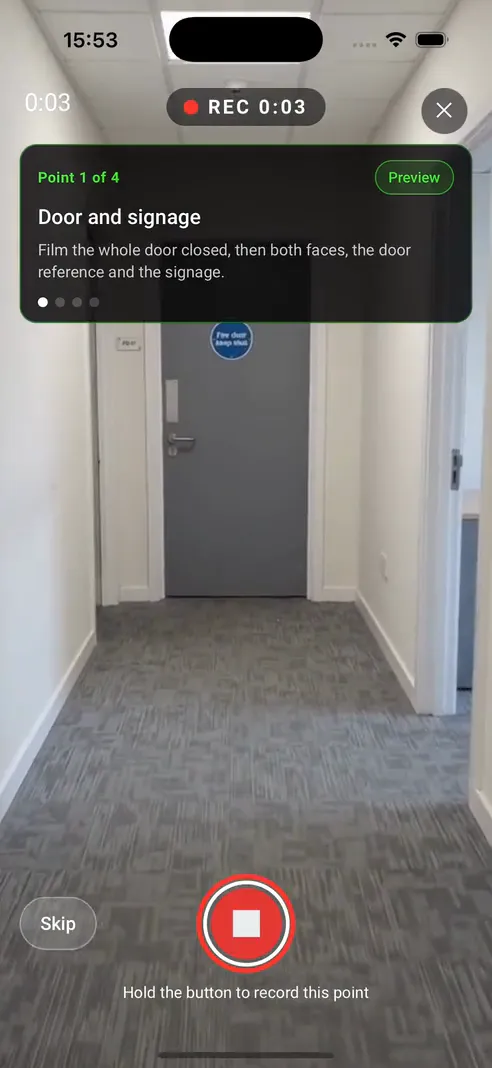
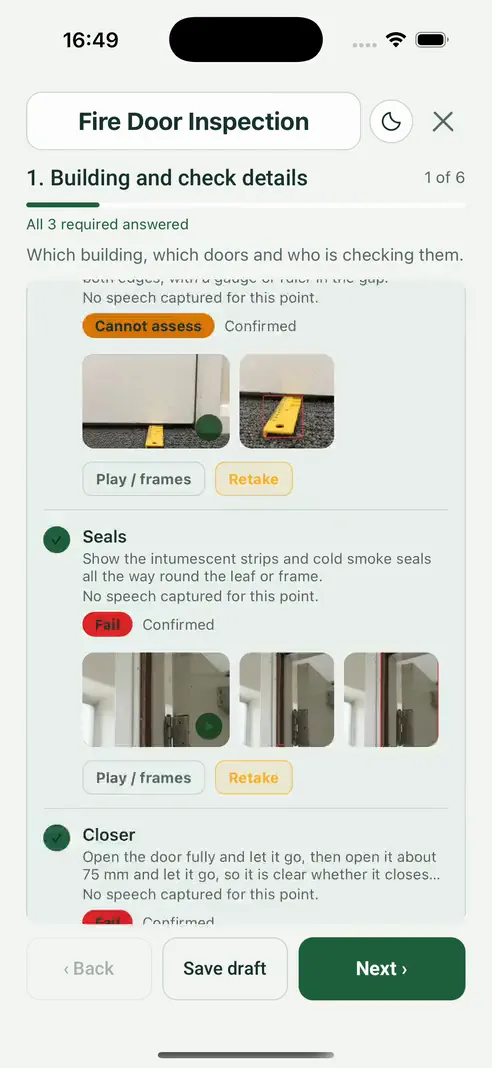
4 points and 18 checks: door and signage, gaps, seals and hinges, closer. Communal fire door checks have their own brief with 17 checks.
Kestrel AI Beta
Kestrel spots compliance and health and safety defects in inspection video: fire doors, electrical fittings, ladders, communal areas, damp and mould and site safety. It is built in the UK, against UK standards, and we want to build it with the regulators, trade bodies and inspectors who know those standards best.
Updated 25 October 2026. Fire doors are our first worked example, not the limit.
Why a UK model
Today's vision models learned mostly from overseas images. They have seen few UK fire door sets, intumescent seals, consumer units or HHSRS hazards, and they do not know UK guidance.
Inspectors need consistent evidence they can defend. Regulators need to know how a finding was reached. Kestrel aims to do both: a model trained on UK examples, labelled against UK guidance, tested by UK inspectors and with its accuracy published.
Working today, in early access
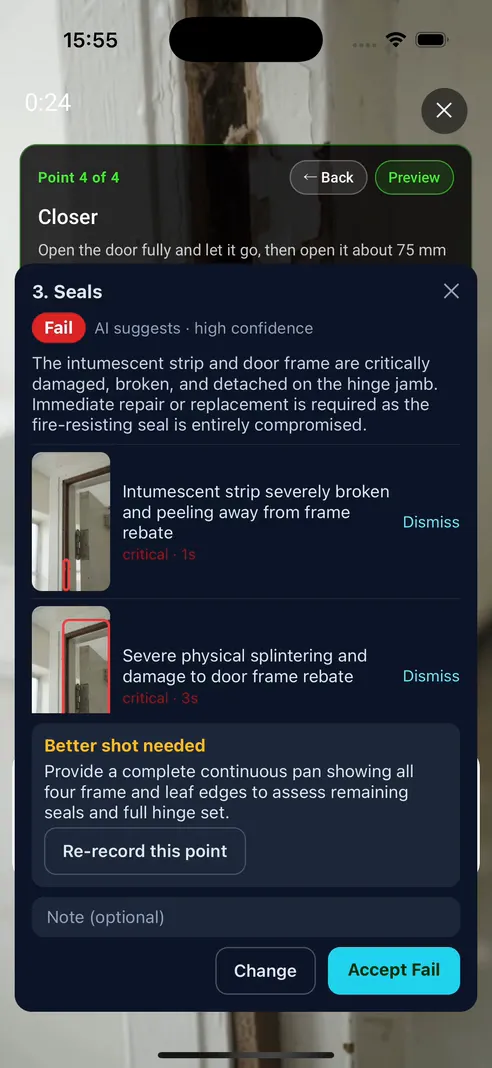
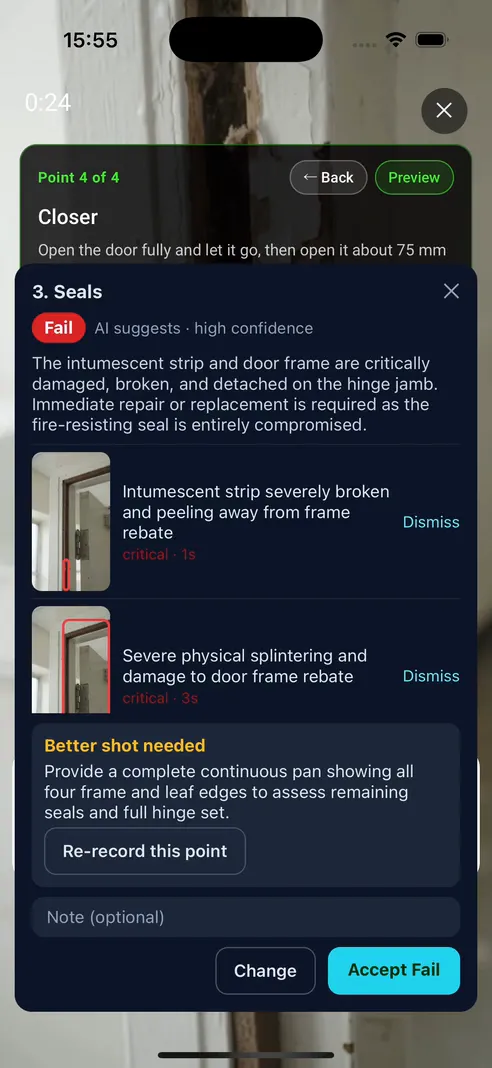
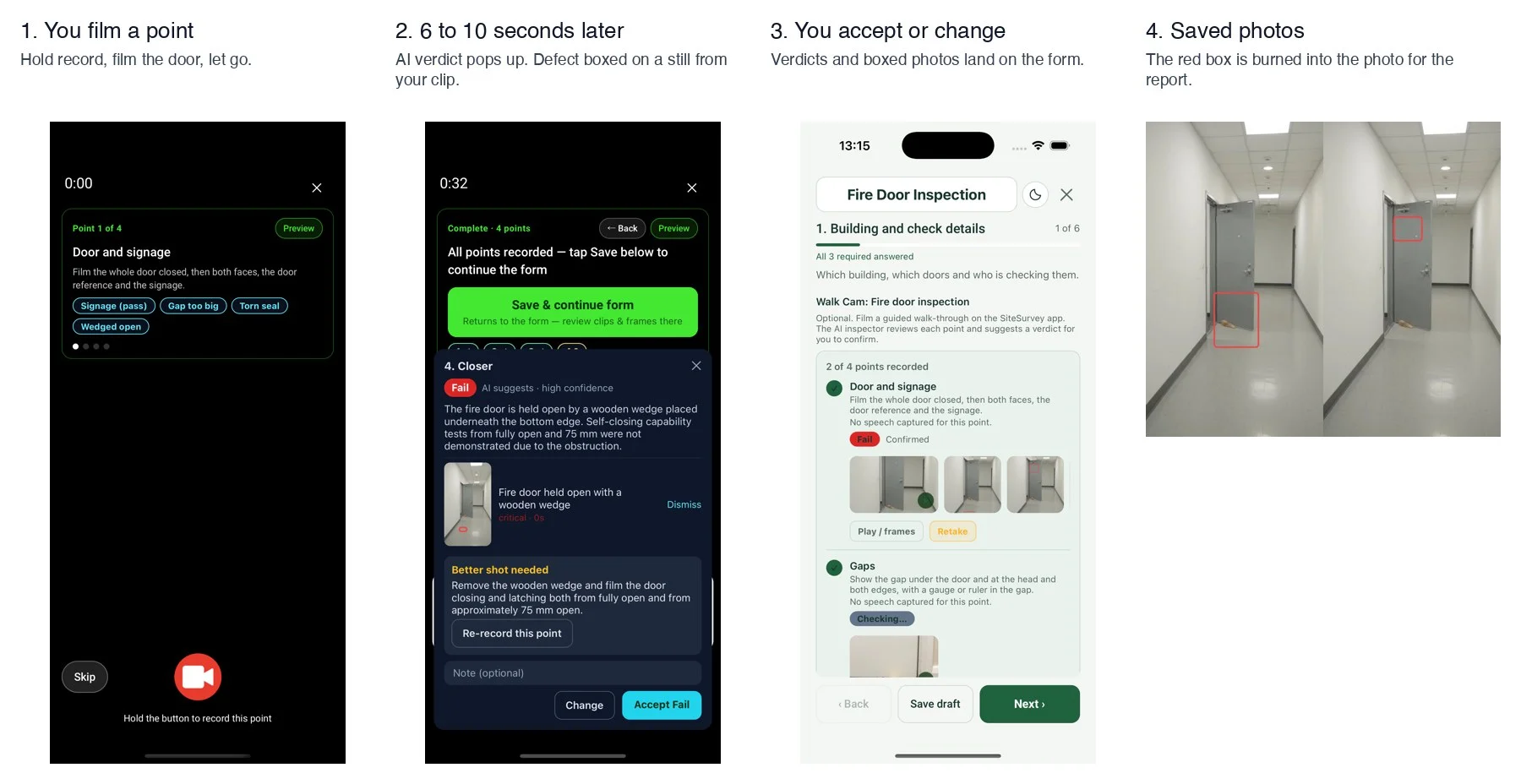
Inside the SiteSurvey app, a guided Walk Cam takes the inspector through each point of an inspection. Each clip is checked against a written brief for that point. A few seconds later the inspector sees a suggested verdict (pass, fail or cannot assess) with each defect boxed on a still from the clip. They accept, change or dismiss it. Below is a real fire door walk, recorded in the app.
First results, October 2026
These are early tests on real doors and fittings, not a formal trial. They show the approach works. Proving how well it works is what we need partners for.
Fire door, seals point
Torn intumescent strip on the hinge jamb, boxed on a still from the clip.
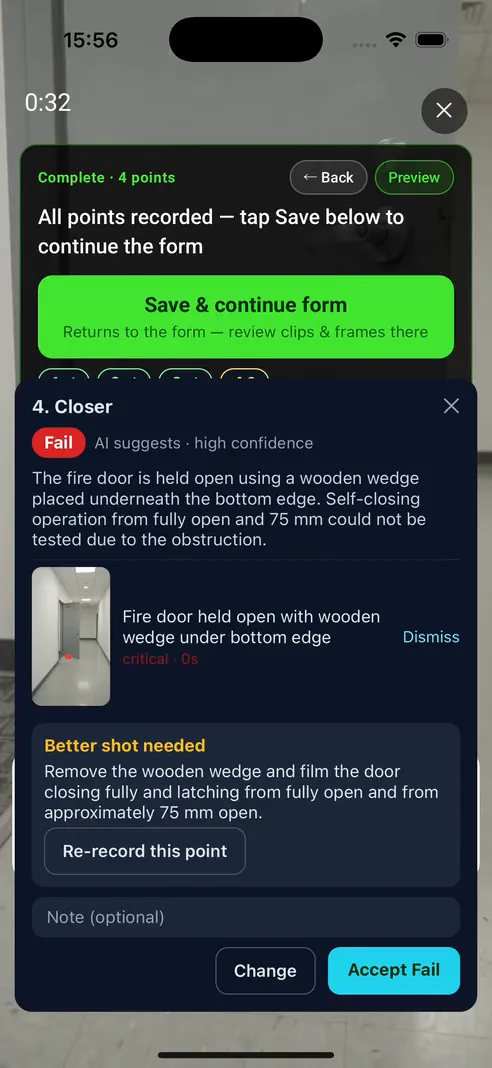
Fire door, closer point
Door wedged open. Asked the inspector to remove the wedge and film the door closing.
Fire door on a real site
Door did not self-close when released.
Electrical visual check
Light switch with a missing rocker, marked critical.
Quick defect check
Charger unit missing from its mounting, boxed on the still.
Points not filmed fully
Said what was missing (the gauge, the reverse face, the seals with the door open) instead of guessing.
More than fire doors
Each area gets its own brief: the checks for each point, the guidance it follows, and the rules for pass, fail and cannot assess. Clips marked "Next" show ordinary Walk Cam footage from those inspections, not AI results.
4 points and 18 checks: door and signage, gaps, seals and hinges, closer. Communal fire door checks have their own brief with 17 checks.
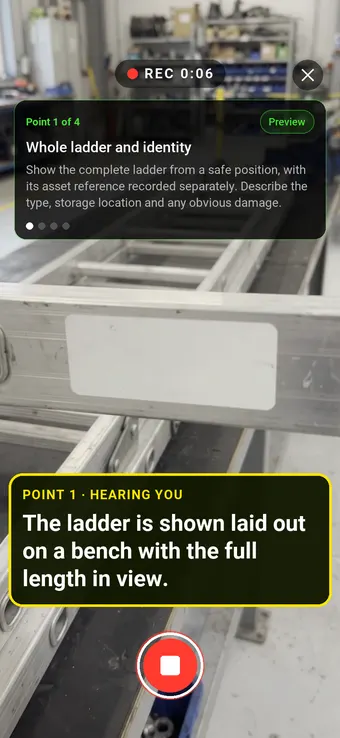
4 points and 19 checks taken from HSE guidance INDG455: stiles, rungs, feet, labels. It never judges grip or load.
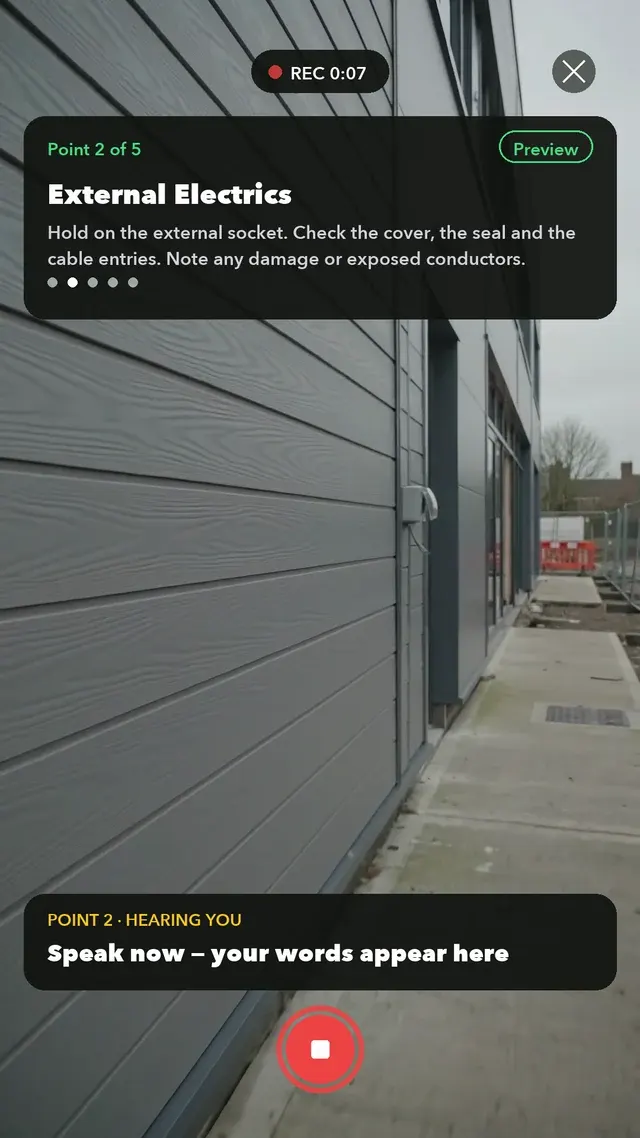
Visual checks on switches, sockets and fittings: missing parts, damage, exposed conductors. Never a substitute for testing by an electrician.
Blocked routes, missing signage, fire doors held open, stored combustibles.
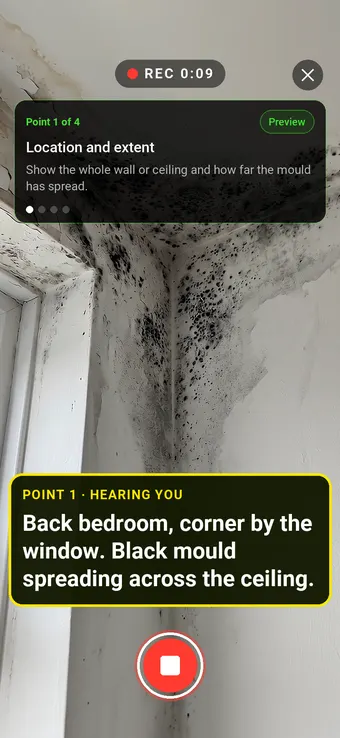
Visible mould, staining, condensation and leak evidence, in line with HHSRS and the duties landlords now have under Awaab's Law.
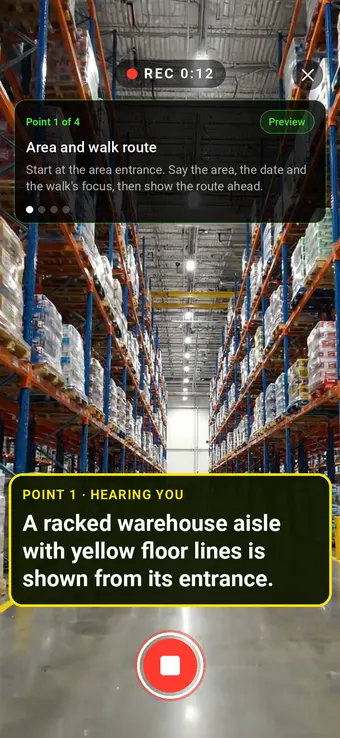
Edge protection, access, housekeeping, PPE and scaffold tags on construction sites.
Everything we want Kestrel to cover
Live means it runs today in early access, from a form in our library. Tested means we have run it on real phones but it is not in the library yet. Planned means we need partners, images and expert reviewers to build it. Kestrel checks what can be seen. It never replaces testing, sampling or a qualified person's judgement.
Missing an inspection your organisation cares about? Tell us and we will add it.
The plan
Now
A general-purpose vision model (Google Gemini) follows SiteSurvey's UK inspection briefs. The inspector confirms every finding. Clips are not used for training.
Next
A shared, anonymised set of UK inspection images, labelled with defect categories agreed with regulators and trade bodies. Contributed by partners under data-sharing agreements.
Then
Specialist models trained on that library, starting with fire doors. Tested against an evaluation set reviewed by certified inspectors before any customer uses them.
Always
Published accuracy for every area, with wrong passes reported separately. A model that misses a defect is worse than one that asks for a better shot.
Help us build it
Regulators, trade bodies, fire and rescue services, housing providers, contractors and universities. Here is what we are asking for, and what partners get back.
Help us describe and grade defects the way your guidance and your members do, so Kestrel uses the same language as the people who rely on it.
Example photos or video of real defects, shared under a data-sharing agreement. We remove faces, addresses, flat numbers and number plates before anything is used.
Certified inspectors and technical staff to check a sample of Kestrel's verdicts and tell us where it is wrong.
Housing providers, contractors and facilities teams willing to try it on real inspections and tell us what works.
Built in on purpose
Kestrel supports competent people. It does not replace them, and it is not a certificate. Every report produced with it says "AI-assisted inspection. Verdicts confirmed by the inspector."
Today, clips are assessed by Google Gemini and are not used to train any model. Kestrel will be trained only on images that partners share under agreement, or that customers choose to contribute.
Kestrel suggests. A competent person accepts, changes or dismisses every finding. Nothing reaches a report until they do.
Out of shot, too dark, or no gauge in the gap all come back as cannot assess, with the shot that would settle it.
It reads a gauge or ruler on camera. It never estimates a gap or a distance.
A data protection impact assessment, written data-sharing agreements, anonymisation before training, and nothing used without permission.
About SiteSurvey
SiteSurvey is a UK inspection and survey app used by housing providers, contractors and facilities teams. Inspectors record forms, photos, Walk Cam video and floor plans on their phones, and the results become branded reports. The form library has over 300 inspection templates.