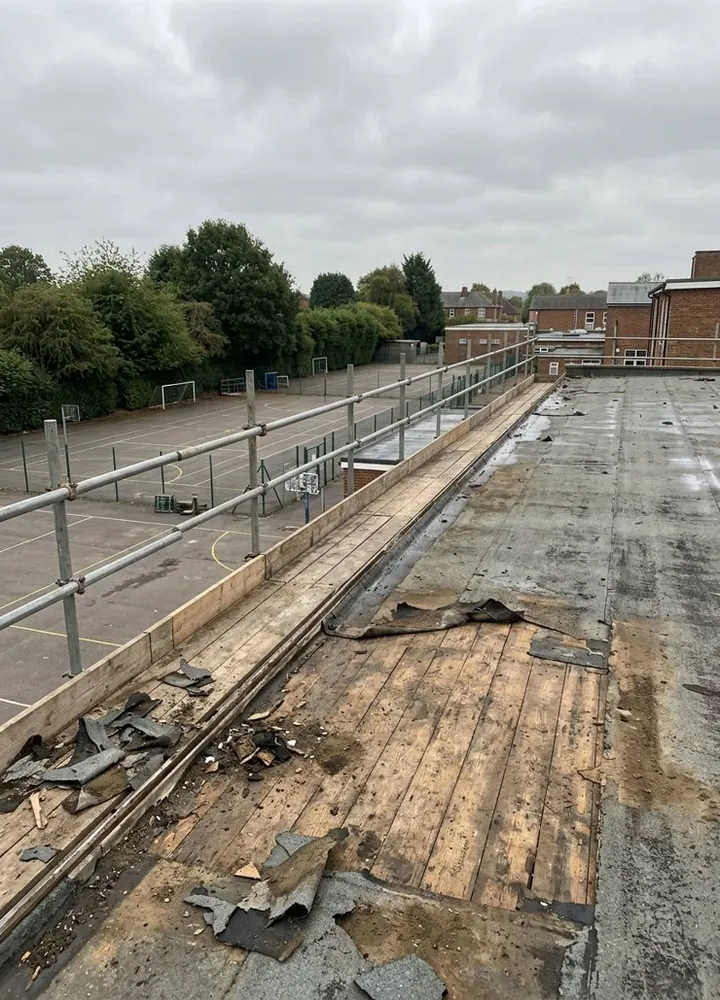
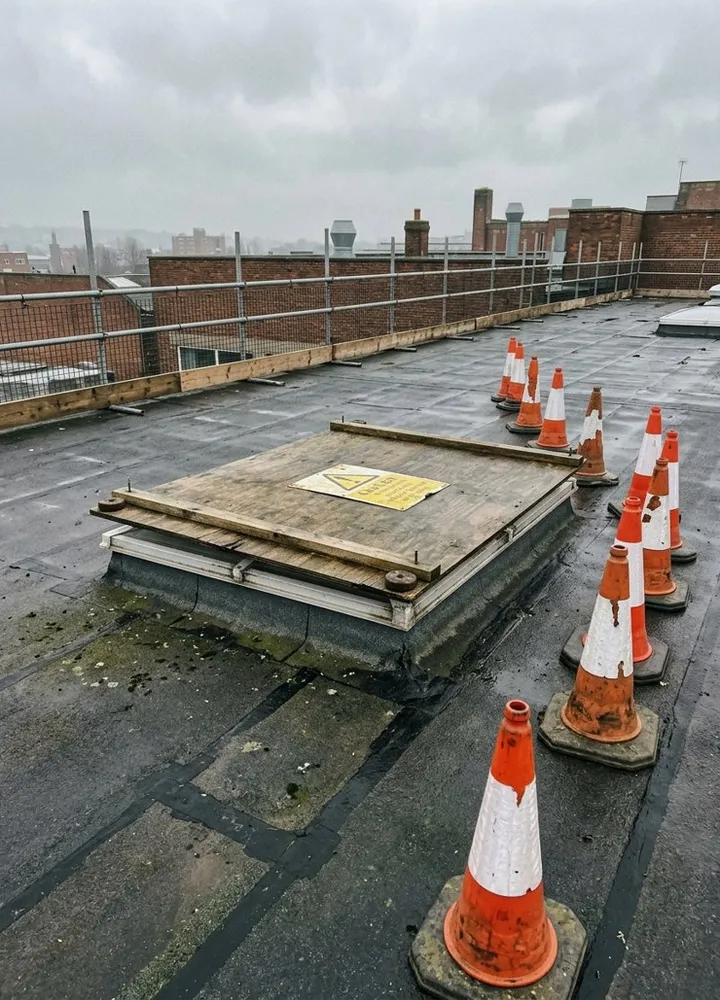
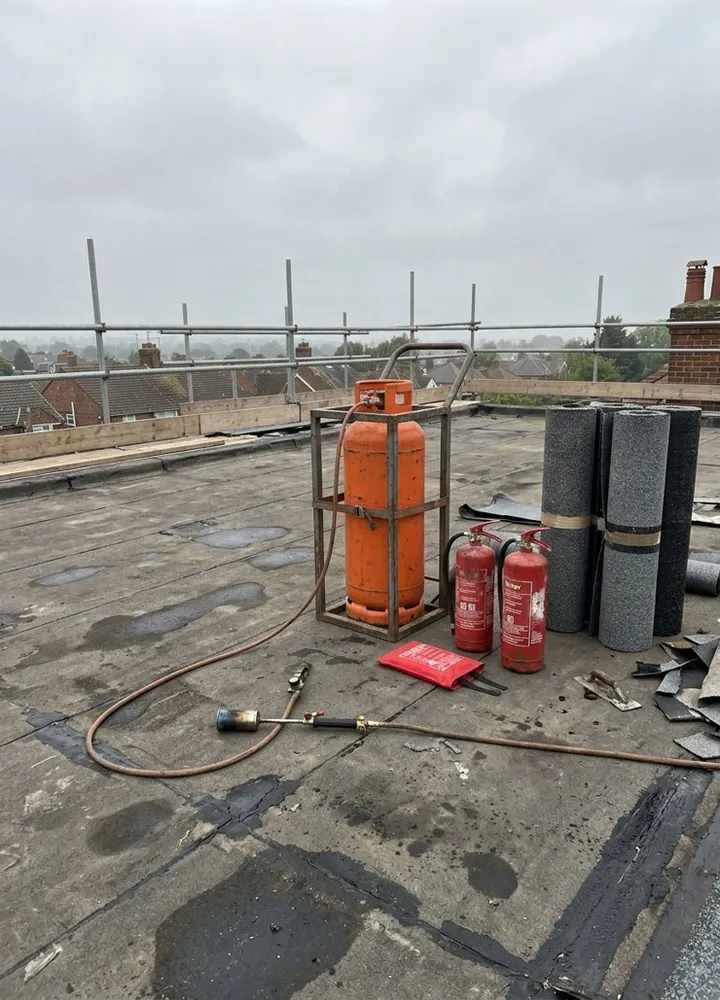
Repeat for each hazard. Each one asks:
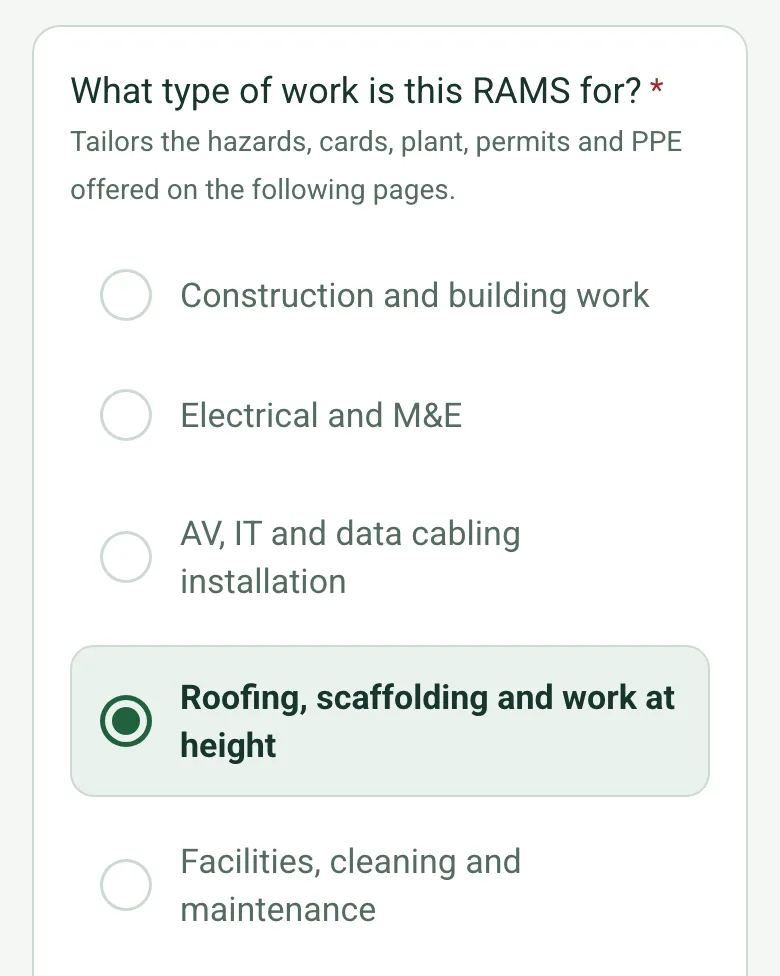
Type of hazard*Choose one
Where is it?Short answer
What is the hazard, who might be harmed, and how?*Notes
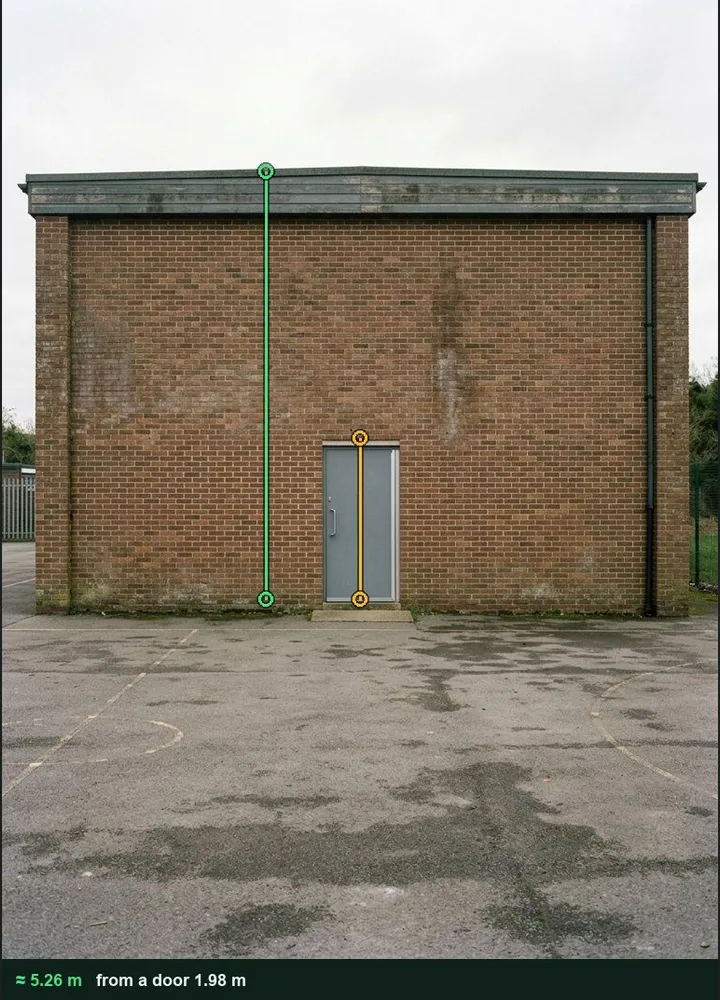
Photos of the hazardPhotos
Can the work be done safely without working at height?Yes or No
Shown when “Type of hazard” is “Work at height”
- CheckWork at Height Regulations 2005, regulation 6. Work must not be carried out at height where it is reasonably practicable to carry it out safely another way.
Shown when “Type of hazard” is “Work at height” and “Can the work be done safely without working at height?” is Yes
Access equipmentChoose one
Shown when “Type of hazard” is “Work at height”
Could a person fall 2 metres or more?Yes or No
Shown when “Type of hazard” is “Work at height”
Date the tower or scaffold was last inspected on this siteDate
Shown only when the answers above make it relevant
- WarningInspection overdue. A working platform used for construction work, from which a person could fall 2 metres or more, must not be used unless it has been inspected within the previous 7 days. Work at Height Regulations 2005, regulation 12.
Shown only when the answers above make it relevant
Have underground services been located with plans and a CAT and Genny scan?Yes or No
Shown only when the answers above make it relevant
- WarningDo not break ground until services have been located. Hand dig within the safe distance of any service found.
Shown only when the answers above make it relevant
What supplies the equipment?Choose one
Shown only when the answers above make it relevant
Is the 230 V equipment protected by an RCD?Yes or No
Shown only when the answers above make it relevant
- CheckHSE guidance for construction sites is to use cordless tools, or tools on a 110 V centre tapped to earth supply, so that the maximum voltage to earth does not exceed 55 V. Record why 230 V is needed here.
Shown only when the answers above make it relevant
Will any work be done on or near live conductors?Yes or No
Shown only when the answers above make it relevant
- WarningElectricity at Work Regulations 1989, regulation 14. No person may work on or near a live conductor unless it is unreasonable in all the circumstances for it to be dead, it is reasonable to work on or near it live, and suitable precautions are taken to prevent injury. Record the justification and the precautions in the controls.
Shown only when the answers above make it relevant
Asbestos survey or register referenceShort answer
Shown when “Type of hazard” is “Asbestos”
- WarningCheck the asbestos survey or register for the area before this work starts. If there is none, or the materials are not covered, stop and get advice before disturbing them.
Shown only when the answers above make it relevant
Can the work be done without entering the confined space?Yes or No
Shown when “Type of hazard” is “Confined spaces”
- CheckConfined Spaces Regulations 1997, regulation 4. No one may enter a confined space to carry out work where it is reasonably practicable to do the work without entering. Where entry is needed there must be a safe system of work and suitable emergency arrangements before anyone goes in.
Shown when “Type of hazard” is “Confined spaces”
Has the line owner been consulted about working near the lines?Yes or No
Shown when “Type of hazard” is “Overhead power lines”
- CheckHSE guidance GS6. Where work must take place near overhead lines, consult the line owner, put up barriers and goal posts where plant and vehicles pass beneath, and do not work beneath the lines unless the owner has advised it is safe.
Shown when “Type of hazard” is “Overhead power lines”
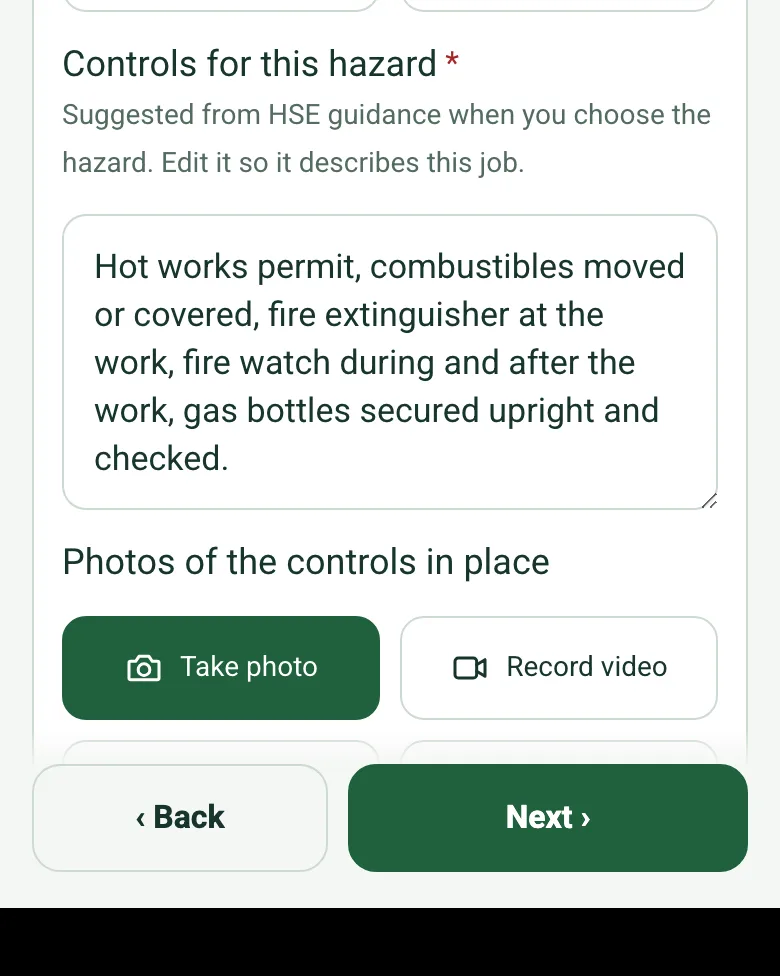
Controls for this hazard*Notes
Suggested from HSE guidance when you choose the hazard. Edit it so it describes this job.
Photos of the controls in placePhotos
Likelihood of harm with these controls*Choose one
Severity of the harm*Choose one
Risk score (likelihood x severity)Worked out by the form
Shown when “Likelihood of harm with these controls” is answered and “Severity of the harm” is answered
RatingWorked out by the form
Shown when “Likelihood of harm with these controls” is answered and “Severity of the harm” is answered
- GuidanceLow, 1 to 4. Keep the controls in place and check that they stay effective.
Shown only when the answers above make it relevant
- CheckMedium, 5 to 12. Record what further action would lower the risk, who will do it and by when.
Shown only when the answers above make it relevant
- WarningHigh, 15 to 25. Do not start this work until further controls are in place and the risk has been rated again.
Shown only when the answers above make it relevant
Further action neededNotes
Shown only when the answers above make it relevant
What kind of control is it?Choose one
Shown only when the answers above make it relevant
- CheckPersonal protective equipment is the last option in HSE's order of controls. Record why the hazard cannot be removed or guarded instead.
Shown when “What kind of control is it?” is “Personal protective equipment”
Who will do it?Short answer
Shown only when the answers above make it relevant
Needed byDate
Shown only when the answers above make it relevant
Likelihood once the action is doneChoose one
Shown only when the answers above make it relevant
Severity once the action is doneChoose one
Shown only when the answers above make it relevant
Residual risk scoreWorked out by the form
Shown when “Likelihood once the action is done” is answered and “Severity once the action is done” is answered
Residual ratingWorked out by the form
Shown when “Likelihood once the action is done” is answered and “Severity once the action is done” is answered
- CheckThe further action does not lower the score. Look again at whether the hazard can be removed or guarded.
Shown only when the answers above make it relevant
HighWorked out by the form
Still highWorked out by the form