Form library · Facilities and maintenance
Equipment inspection checklist
An inspection round form for building plant such as condensers, distribution boards and booster sets. Record each asset by its tag, grade its condition, photograph defects, work out F gas leak check intervals and pressure vessel checks, then set the next due date and sign. Every question is listed below, and you can fill the live form in on this page.
Ready to use from the form library, and editable. Trial from £1, cancel any time.
What should an equipment inspection checklist include?
An equipment inspection checklist should identify each asset by its tag and location, record its condition against the last inspection, and describe any defect with photos and a priority. It should say whether a failed item was taken out of use or made safe, why the inspection was done, the readings taken, when the next inspection is due and who signed it.
Last updated . Facts checked on 30 September 2026.
Try the equipment inspection form live
Answer a few questions and watch it adapt. Your answers are not saved, and any photos you add are deleted within the hour.
This is the real form as your team would use it: questions appear as you answer, scores work themselves out and you can add photos and signatures. No sign-up needed.
Fill it in on a phone or tablet
Your team completes the asset inspection on site in the SiteSurvey app on iPhone, iPad and Android phones and tablets. The project name and address fill in for them, it works without signal, and it syncs when the device is back online with photos kept against the question they answer.
Customers and subcontractors do not need the app: send them a link and they can fill it in from any browser.
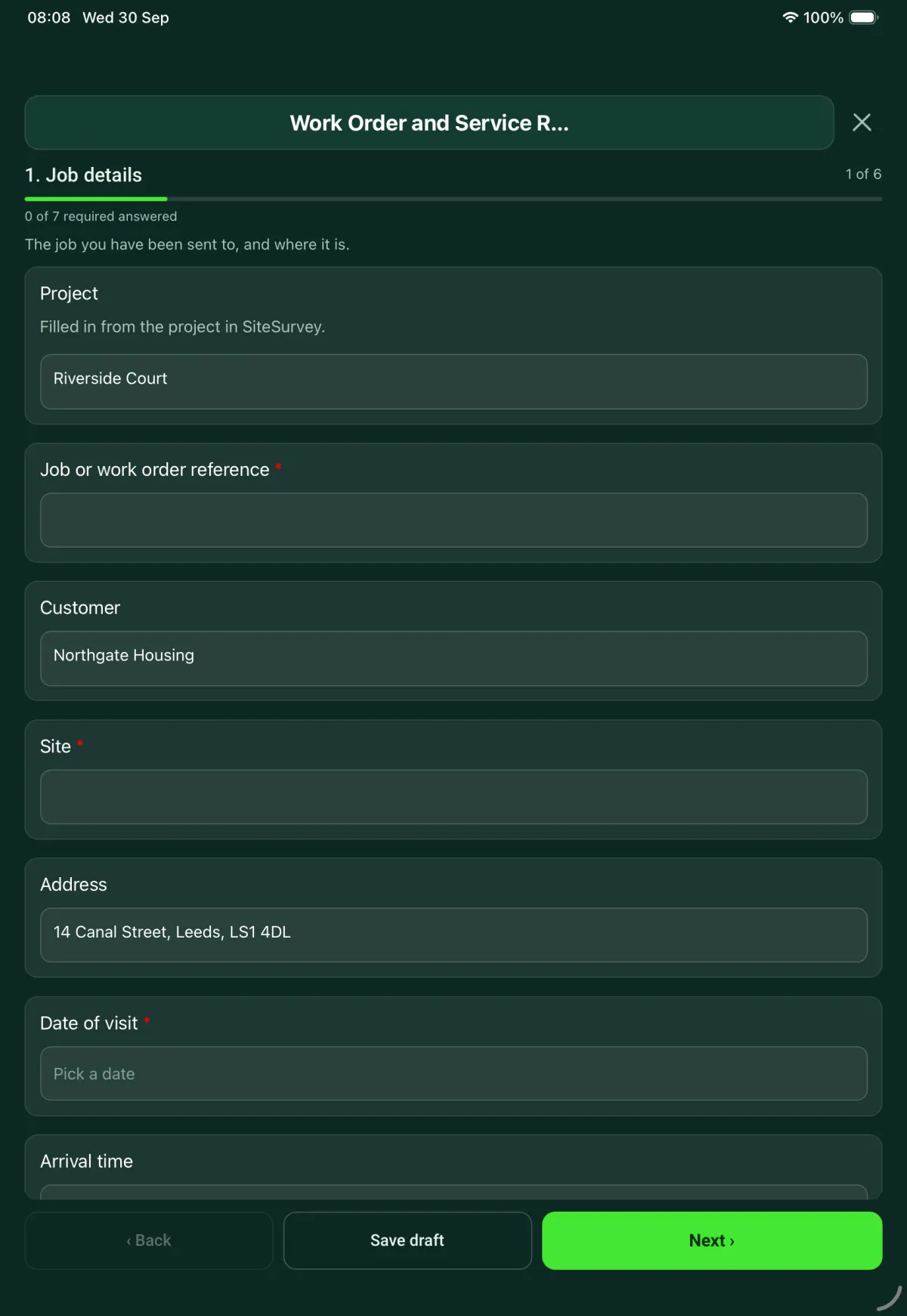
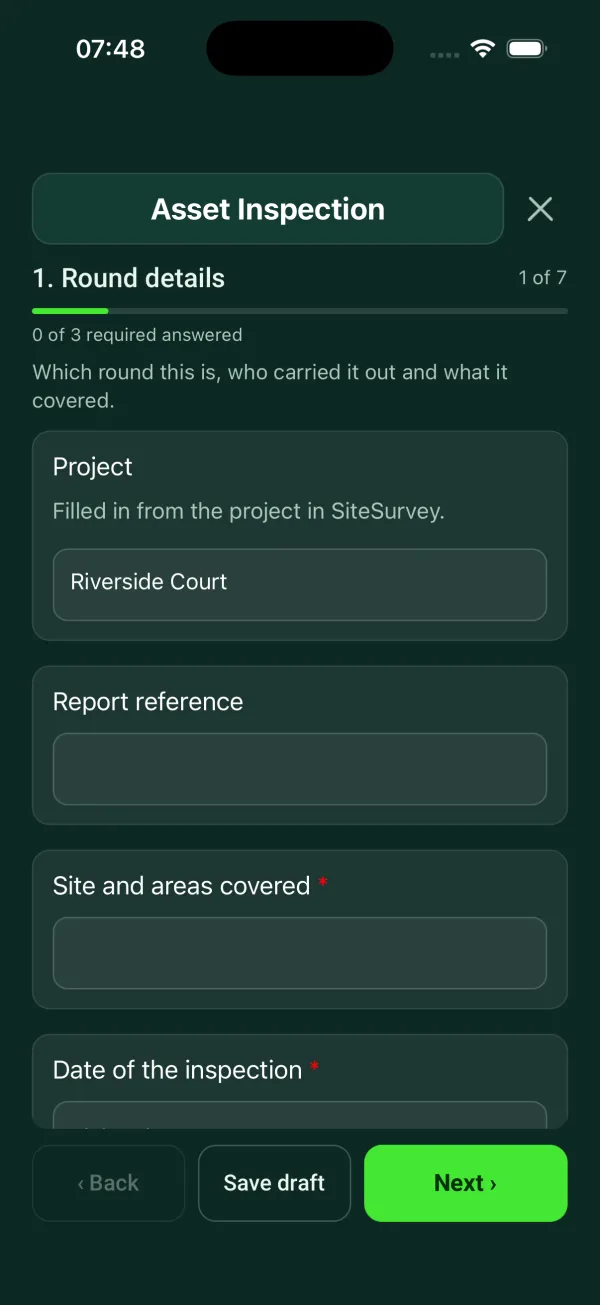
Every question in the equipment inspection template
Inspection round for plant: asset condition, refrigerant and leak checks, pressure vessels, next due dates. 7 sections and 77 questions. Follow-up questions and guidance appear only when an answer calls for them, so the person on site never sees the ones that do not apply.
Details you only enter once
Add this form to a project in SiteSurvey and it fills in what the project already knows, so nobody on site retypes it and every form on the job uses the same names. Anything filled in can still be changed.
- Project: the project name
- Site and areas covered: the site, when the form is opened for a space or a product
Round details
Which round this is, who carried it out and what it covered.
- ProjectShort answerFills in from the project name
- Report referenceShort answer
- Site and areas covered*Short answerFills in from the site, when the form is opened for a space or a product
- Date of the inspection*Date
- Inspector name and role*Short answer
- Why is this inspection being carried out?Choose one
- Planned condition round
- First inspection after installation or a move
- After a repair
- After an incident or exceptional event
- GuidanceAfter installation. Where the safety of work equipment depends on how it is installed, the law requires it to be inspected before it is first put into service, and after it is put together in a new place.Shown when “Why is this inspection being carried out?” is “First inspection after installation or a move”
- What was repaired, and when?Short answerShown when “Why is this inspection being carried out?” is “After a repair”
- What happened, and which assets could it have affected?NotesShown when “Why is this inspection being carried out?” is “After an incident or exceptional event”
- CheckExceptional circumstances. Work equipment must be inspected each time something has happened that could have put its safety at risk. Inspect every asset that could have been affected.Shown when “Why is this inspection being carried out?” is “After an incident or exceptional event”
- Date of the previous inspectionDateShown when “Why is this inspection being carried out?” is “Planned condition round”
- Days since the previous inspectionWorked out by the formShown when “Why is this inspection being carried out?” is “Planned condition round” and “Date of the previous inspection” is answered and “Date of the inspection” is answered
- Were all the assets on the round inspected?Yes or No
- Which assets were not inspected, and why?NotesShown when “Were all the assets on the round inspected?” is No
- Were any covers removed or live parts exposed?Yes or No
- WarningLive parts. The law says no one may work on or near a live conductor where danger may arise, unless it is unreasonable for it to be dead, it is reasonable to work live, and suitable precautions are taken. Record who authorised the work.Shown when “Were any covers removed or live parts exposed?” is Yes
- Who authorised it, and what precautions were taken?Short answerShown when “Were any covers removed or live parts exposed?” is Yes
Asset record
One entry for each asset. Find the asset by its tag, then record what you see.
- GuidanceWhat a good photo shows. Step back so the whole asset and its tag can be seen, then get close to any defect. Put the gauge or the instrument in shot when you take a reading.
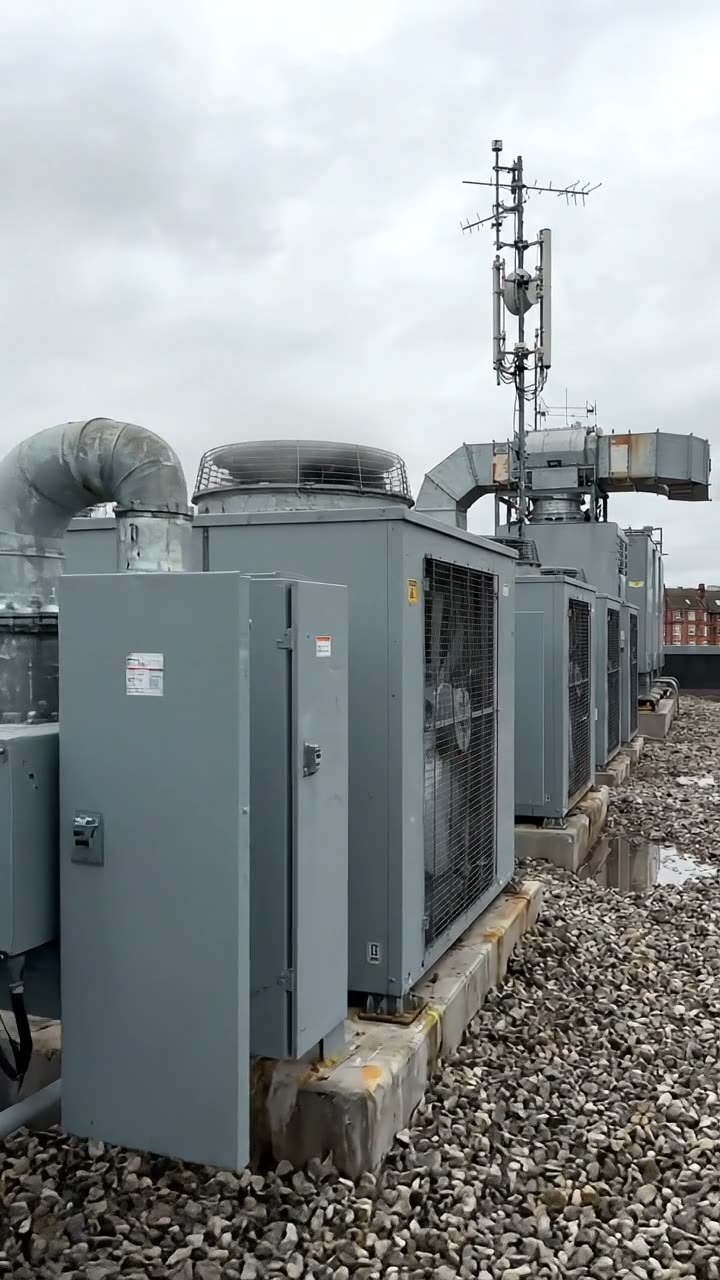
A row of condensers on a roof, with the fan guards and plinths in view 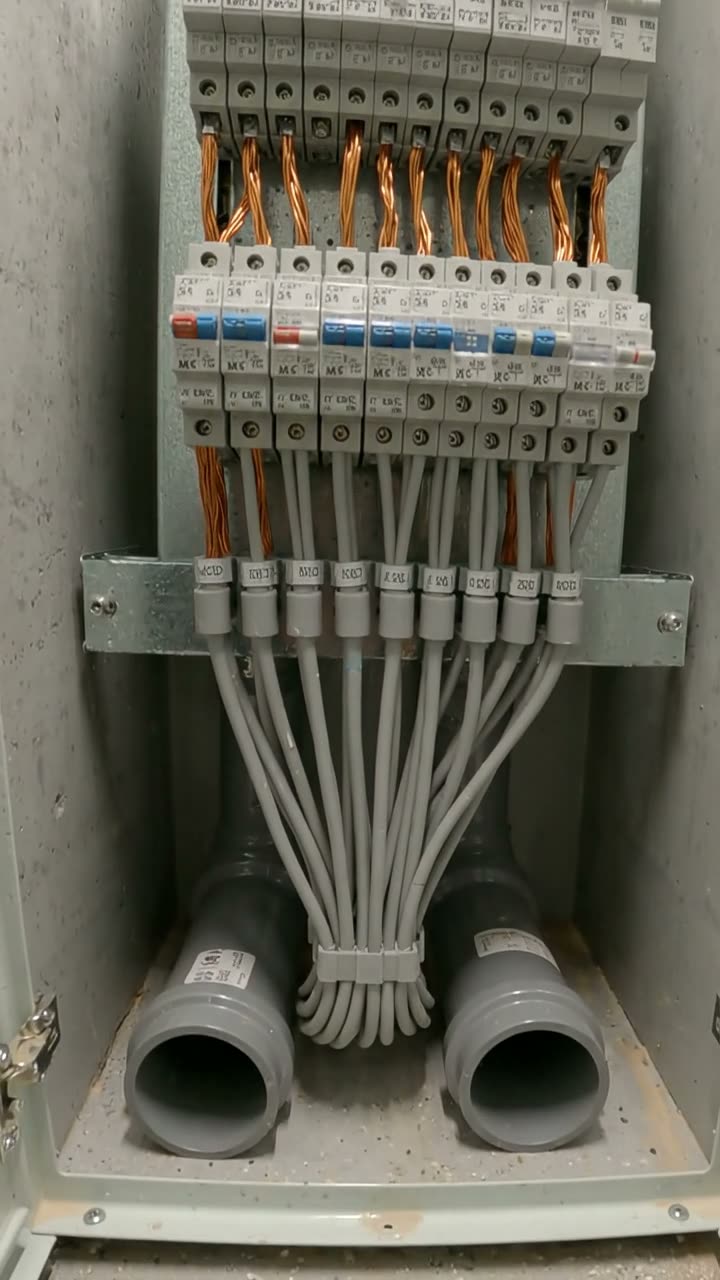
A distribution board in a riser cupboard, with labelled cables 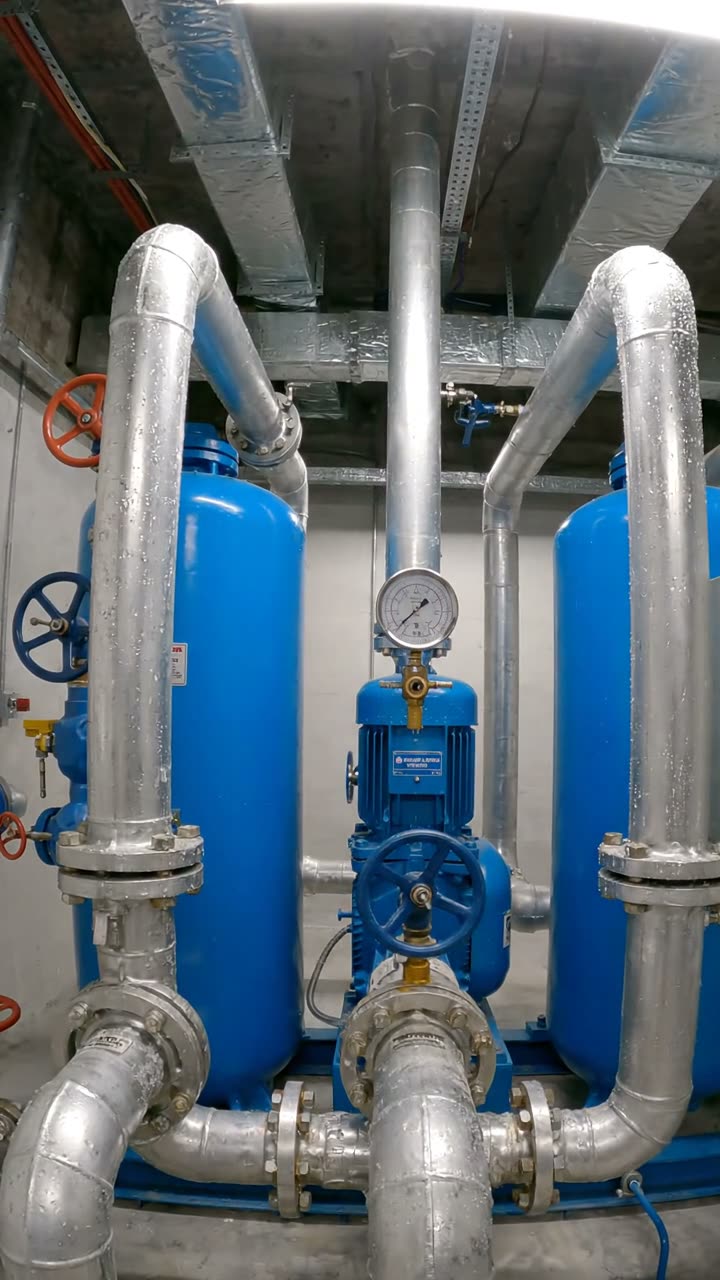
A booster set in a plant room, with the pressure gauge in view - Assets inspectedRepeat for each asset. Each one asks:
- Asset tag or IDShort answer
- LocationShort answer
- Does the tag match the asset register?Yes or No
- What is different?Short answerShown when “Does the tag match the asset register?” is No
- What kind of asset is it?Choose one
- Condenser
- Distribution board
- Booster set
- Coil and finsChoose one
- Clean
- Dirty
- Fins damaged
Shown when “What kind of asset is it?” is “Condenser” - Are the fan guards in place and secure?Yes or NoShown when “What kind of asset is it?” is “Condenser”
- WarningA fan guard is missing or loose. Record it as a defect and say whether the unit was taken out of use.Shown when “What kind of asset is it?” is “Condenser” and “Are the fan guards in place and secure?” is No
- Are the fixings and mounts sound?Yes or NoShown when “What kind of asset is it?” is “Condenser”
- Air on (°C)NumberShown when “What kind of asset is it?” is “Condenser”
- Air off (°C)NumberShown when “What kind of asset is it?” is “Condenser”
- Temperature difference (°C)Worked out by the formShown when “What kind of asset is it?” is “Condenser” and “Air on (°C)” is answered and “Air off (°C)” is answered
- Any sign of heat, such as scorching, discolouration or a smell?Yes or NoShown when “What kind of asset is it?” is “Distribution board”
- WarningSigns of heat. Do not open or touch the board. Report it now to the person in charge of the electrical system, and record who you told.Shown when “What kind of asset is it?” is “Distribution board” and “Any sign of heat, such as scorching, discolouration or a smell?” is Yes
- Who was it reported to, and when?Short answerShown when “What kind of asset is it?” is “Distribution board” and “Any sign of heat, such as scorching, discolouration or a smell?” is Yes
- Are the covers and the door secure?Yes or NoShown when “What kind of asset is it?” is “Distribution board”
- CheckA cover or door is not secure. Record it as a defect below.Shown when “What kind of asset is it?” is “Distribution board” and “Are the covers and the door secure?” is No
- Are the circuits labelled?Yes or NoShown when “What kind of asset is it?” is “Distribution board”
- Warmest surface (°C)NumberShown when “What kind of asset is it?” is “Distribution board”
- Air in the cupboard (°C)NumberShown when “What kind of asset is it?” is “Distribution board”
- Difference (°C)Worked out by the formShown when “What kind of asset is it?” is “Distribution board” and “Warmest surface (°C)” is answered and “Air in the cupboard (°C)” is answered
- Any leaks?Yes or NoShown when “What kind of asset is it?” is “Booster set”
- Where is it leaking from?Short answerShown when “What kind of asset is it?” is “Booster set” and “Any leaks?” is Yes
- Any unusual noise or vibration?Yes or NoShown when “What kind of asset is it?” is “Booster set”
- Pressure on the gauge (bar)NumberShown when “What kind of asset is it?” is “Booster set”
- Set range, low (bar)NumberShown when “What kind of asset is it?” is “Booster set”
- Set range, high (bar)NumberShown when “What kind of asset is it?” is “Booster set”
- CheckThe pressure is outside the set range. Record it as a defect below.Shown only when the answers above make it relevant
- Condition at this inspectionChoose one
- Good
- Fair
- Poor
- Failed
- Condition at the last inspectionChoose one
- Good
- Fair
- Poor
- Failed
- CheckThe condition is worse than at the last inspection. Say what has changed.Shown only when the answers above make it relevant
- Defect foundNotesShown only when the answers above make it relevant
- Photos of the defectPhotosShown only when the answers above make it relevant
- Priority of the workChoose one
- Routine, at the next visit
- Soon, before the next visit
- Urgent
Shown only when the answers above make it relevant - WarningFailed. Say whether the asset has been taken out of use or made safe, and who was told.Shown only when the answers above make it relevant
- Has it been taken out of use or made safe?Yes or NoShown only when the answers above make it relevant
- Photos of the assetPhotos
- NotesNotes
Refrigerant and leak checks
For equipment that holds F gas. Take the gas and the charge from the label on the unit.
- Does any asset on this round hold F gas refrigerant?Yes or No
- Refrigerant, from the labelShort answerShown when “Does any asset on this round hold F gas refrigerant?” is Yes
- Charge (kg)NumberShown when “Does any asset on this round hold F gas refrigerant?” is Yes
- Global warming potential of the gasNumberShown when “Does any asset on this round hold F gas refrigerant?” is Yes
- Carbon dioxide equivalent (tonnes)Worked out by the formShown only when the answers above make it relevant
- Is the unit labelled as hermetically sealed?Yes or NoShown when “Does any asset on this round hold F gas refrigerant?” is Yes
- Is a leak detection system fitted?Yes or NoShown when “Does any asset on this round hold F gas refrigerant?” is Yes
- GuidanceUnder 5 tonnes. The F gas rules do not require leak checks for this unit.Shown only when the answers above make it relevant
- GuidanceHermetically sealed and under 10 tonnes. The F gas rules do not require leak checks for this unit, as long as it is labelled as hermetically sealed.Shown only when the answers above make it relevant
- Check5 tonnes or more, under 50. Leak checks are due at least once every 12 months, or every 24 months where a leak detection system is fitted.Shown only when the answers above make it relevant
- Check50 tonnes or more, under 500. Leak checks are due at least once every 6 months, or every 12 months where a leak detection system is fitted.Shown only when the answers above make it relevant
- Warning500 tonnes or more. Leak checks are due at least once every 3 months, or every 6 months with a leak detection system. Equipment of this size must have a leak detection system.Shown only when the answers above make it relevant
- Date of the last leak check, from the F gas recordDateShown when “Does any asset on this round hold F gas refrigerant?” is Yes
- Days since the last leak checkWorked out by the formShown when “Does any asset on this round hold F gas refrigerant?” is Yes and “Date of the last leak check, from the F gas record” is answered and “Date of the inspection” is answered
- Any sign of a leak, such as oil staining at a joint or valve?Yes or NoShown when “Does any asset on this round hold F gas refrigerant?” is Yes
- WarningPossible leak. Where a leak is found, the operator must have it repaired without undue delay. The repair must be checked by a certified person within one month. Leak checks on this equipment are work for a certified person.Shown when “Does any asset on this round hold F gas refrigerant?” is Yes and “Any sign of a leak, such as oil staining at a joint or valve?” is Yes
- Who was it reported to?Short answerShown when “Does any asset on this round hold F gas refrigerant?” is Yes and “Any sign of a leak, such as oil staining at a joint or valve?” is Yes
- GuidanceThe operator must keep the F gas records, including the dates and results of leak checks, for at least 5 years.Shown when “Does any asset on this round hold F gas refrigerant?” is Yes
Pressure vessels
For sets with a pressure vessel, such as a booster set. Take the figures from the data plate.
- Does any asset on this round have a pressure vessel?Yes or No
- Volume of the vessel (litres)NumberShown when “Does any asset on this round have a pressure vessel?” is Yes
- Pressure (bar)NumberShown when “Does any asset on this round have a pressure vessel?” is Yes
- Pressure x volume (bar litres)Worked out by the formShown only when the answers above make it relevant
- Check250 bar litres or more. If the vessel holds compressed air or gas at more than 0.5 bar, the law requires a written scheme of examination before the system is operated. Check that one is in place.Shown only when the answers above make it relevant
- Is there a written scheme of examination?Choose one
- Yes
- No
- Not known
Shown only when the answers above make it relevant - Date of the last examination under the schemeDateShown when “Is there a written scheme of examination?” is “Yes”
- WarningNo written scheme of examination was found. Report this to the person responsible for the system. This inspection is not an examination under a written scheme.Shown only when the answers above make it relevant
Round summary
Count the assets by condition.
- Assets inspectedNumber
- GoodNumber
- FairNumber
- PoorNumber
- FailedNumber
- Share graded good (%)Worked out by the formShown only when the answers above make it relevant
- CheckThe counts do not add up to the number of assets inspected.Shown only when the answers above make it relevant
- WarningAt least one asset is graded failed. Check that each one is recorded as taken out of use or made safe.Shown only when the answers above make it relevant
- What has changed since the last round?Notes
Next due and records
When the assets are due again and where the record goes.
- Next inspection dueDate
- Days until the next inspectionWorked out by the formShown when “Next inspection due” is answered and “Date of the inspection” is answered
- GuidanceWhere the law requires work equipment to be inspected, the result must be recorded and kept until the next inspection is recorded. HSE guidance says records of electrical maintenance are not a legal requirement, but recommends keeping them.
- Who is the report sent to?Short answer
- Are any actions from the last round still open?Yes or No
- Which actions, and why are they still open?NotesShown when “Are any actions from the last round still open?” is Yes
Inspector sign-off
- WarningThis round has an asset graded failed. Check that the person responsible has been told.Shown only when the answers above make it relevant
- NameShort answer
- Inspector signatureSignature
Equipment inspection template questions
When must work equipment be inspected?
Where the safety of work equipment depends on how it is installed, it must be inspected before it is first put into service and after it is put together in a new place. It must also be inspected each time something has happened that could have put its safety at risk. The form asks why the round is being done and shows the matching guidance.
How does the form work out F gas leak check intervals?
Enter the charge in kilograms and the global warming potential from the unit's label, and the form works out the carbon dioxide equivalent in tonnes. From 5 to under 50 tonnes, leak checks are due at least every 12 months, from 50 to under 500 at least every 6 months, and from 500 tonnes at least every 3 months. A fitted leak detection system doubles each interval, and equipment of 500 tonnes or more must have one.
What happens if a refrigerant leak is found?
The operator must have the leak repaired without undue delay, and a certified person must check the repair within one month. Leak checks on this equipment are work for a certified person. The operator must keep the F gas records, including the dates and results of leak checks, for at least 5 years.
Does it cover pressure vessels?
Yes. Enter the vessel's volume and pressure from the data plate and the form multiplies them. At 250 bar litres or more, a vessel holding compressed air or gas at more than 0.5 bar needs a written scheme of examination before the system is operated, so the form asks whether one is in place. This inspection is not an examination under that scheme.
How long should equipment inspection records be kept?
Where the law requires work equipment to be inspected, the result must be recorded and kept until the next inspection is recorded. HSE guidance says records of electrical maintenance are not a legal requirement, but recommends keeping them. The form records the next due date and who the report goes to.
Can I change the asset types on the checklist?
The form comes with condensers, distribution boards and booster sets, each with its own checks and readings. It is in the SiteSurvey form library and can be edited, so you can add the asset types on your own round. Photos, conditional questions and the signature carry through to the PDF report.
Related
Related templates
Templates that go with the equipment inspection form
Planned maintenance visit: records seen, asset by asset tasks, water temperatures, work done and next visit.
Build or update an asset register: asset records with make, model, serial, condition and photos, changes to the register.
Job sheet for a reactive or planned job: safety before starting, work done, parts used, tests, outcome and customer sign-off.
Service visit record for air conditioning, heat pumps, ventilation and air handling units. Unit by unit checks, refrigerant and F gas leak checks, parts used and sign-off.
Use this equipment inspection form with your team
Add it from the form library in one click, change any question, and every completed form becomes a branded PDF report.
Start your trial →