Form library · Facilities and maintenance
PPM checklist
A planned preventative maintenance checklist for a plant room round. It covers the visit details, records seen on site, asset by asset checks for boilers, pumps, air handling units and emergency lights, water temperatures, work done and the next visit. Every question is listed below, and you can fill the live form in on this page.
Ready to use from the form library, and editable. Trial from £1, cancel any time.
What should a PPM checklist include?
A PPM checklist should record the site, the type of visit and the task list worked to, then each asset checked with its reference, location, readings, tasks completed, result and any defect with a priority and target date. It should also note the records seen on site, work done, parts used, any plant left off and when the next check is due.
Last updated . Facts checked on 26 September 2026 against SFG20, what is SFG20.
Try the PPM form live
Answer a few questions and watch it adapt. Your answers are not saved, and any photos you add are deleted within the hour.
This is the real form as your team would use it: questions appear as you answer, scores work themselves out and you can add photos and signatures. No sign-up needed.
Fill it in on a phone or tablet
Your team completes the ppm visit on site in the SiteSurvey app on iPhone, iPad and Android phones and tablets. The project name and address fill in for them, it works without signal, and it syncs when the device is back online with photos kept against the question they answer.
Customers and subcontractors do not need the app: send them a link and they can fill it in from any browser.
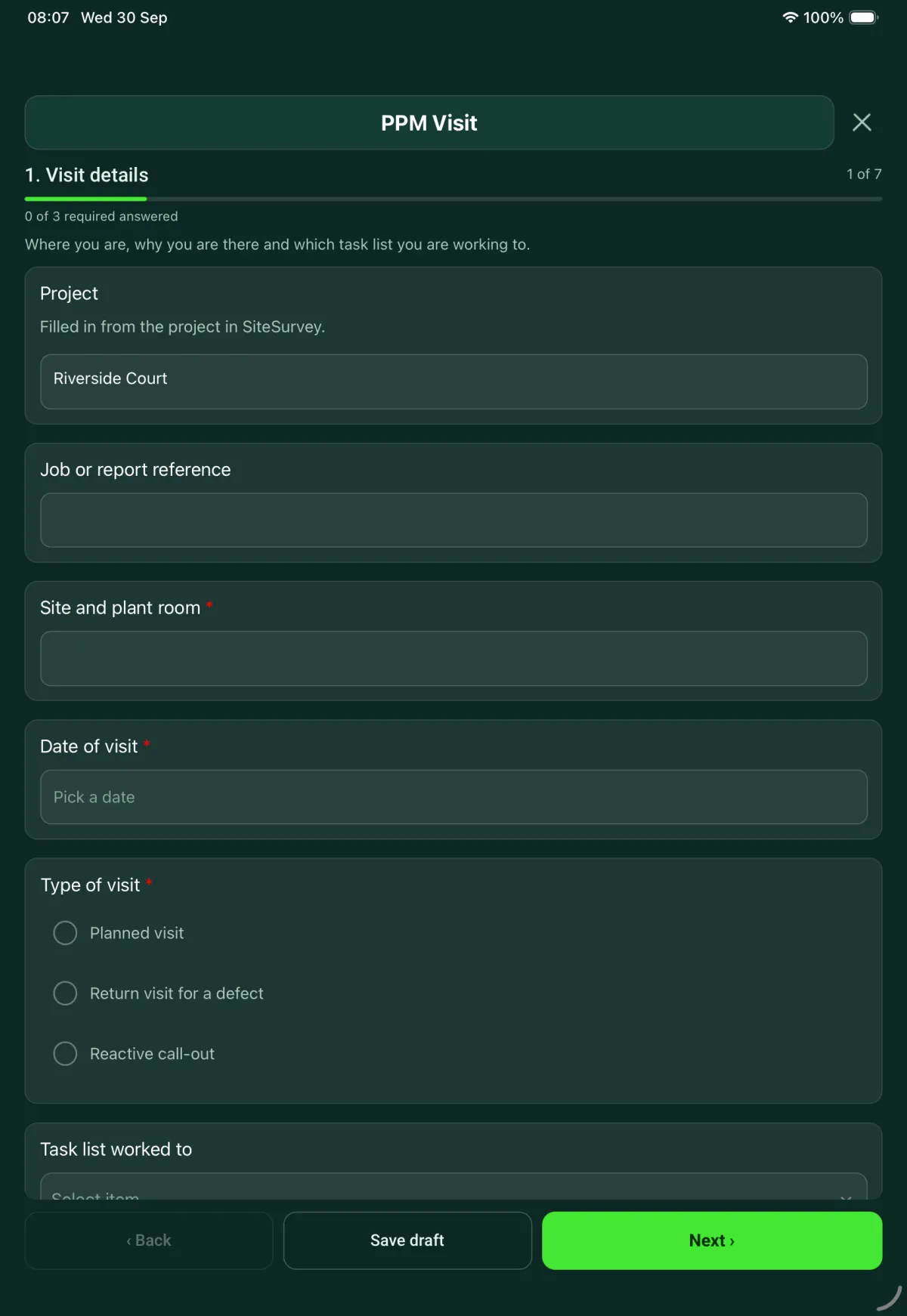
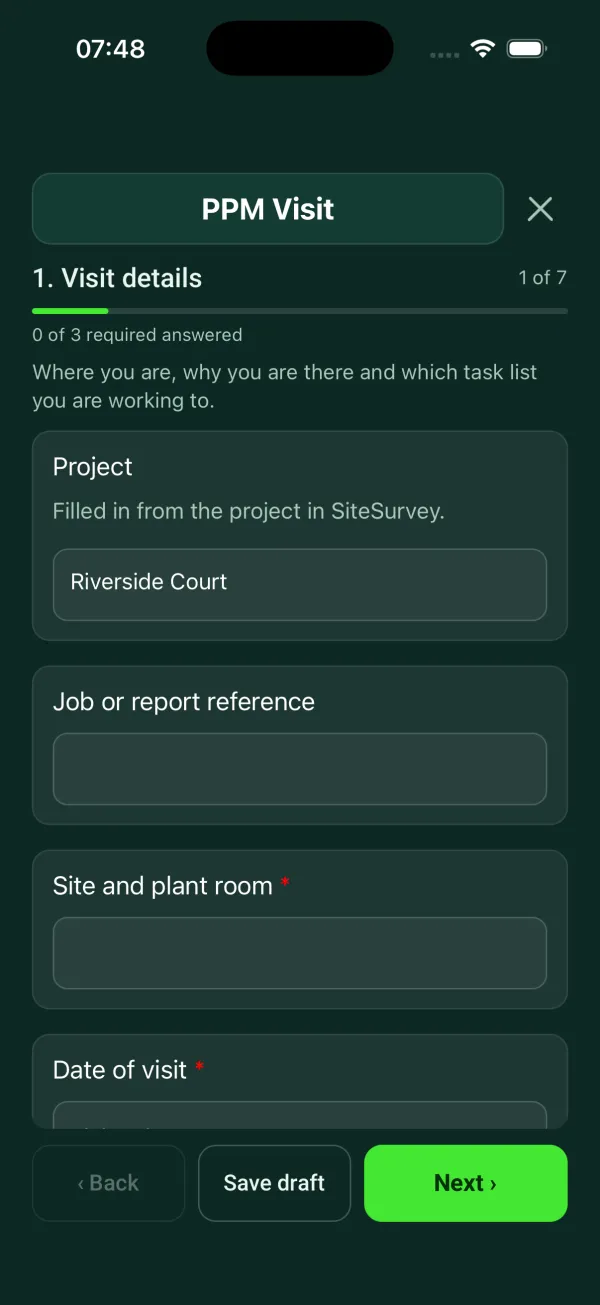
Every question in the PPM template
Planned maintenance visit: records seen, asset by asset tasks, water temperatures, work done and next visit. 7 sections and 91 questions. Follow-up questions and guidance appear only when an answer calls for them, so the person on site never sees the ones that do not apply.
Details you only enter once
Add this form to a project in SiteSurvey and it fills in what the project already knows, so nobody on site retypes it and every form on the job uses the same names. Anything filled in can still be changed.
- Project: the project name
- Site and plant room: the site, when the form is opened for a space or a product
Visit details
Where you are, why you are there and which task list you are working to.
- ProjectShort answerFills in from the project name
- Job or report referenceShort answer
- Site and plant room*Short answerFills in from the site, when the form is opened for a space or a product
- Date of visit*Date
- Type of visit*Choose one
- Planned visit
- Return visit for a defect
- Reactive call-out
- Which planned visit is this?Choose one
- Weekly
- Monthly
- Quarterly
- Six monthly
- Annual
Shown when “Type of visit” is “Planned visit” - Reference of the defect you have come back forShort answerShown when “Type of visit” is “Return visit for a defect”
- What was reported, and by whom?NotesShown when “Type of visit” is “Reactive call-out”
- GuidanceA call-out is recorded against the asset in the same way as a planned check, so it appears in the asset's history.Shown when “Type of visit” is “Reactive call-out”
- Task list worked toChoose one
- SFG20
- Manufacturer's instructions
- Client's own specification
- Other (describe)
- Schedule reference from your SFG20 licenceShort answerShown when “Task list worked to” is “SFG20”
- GuidanceSFG20. SFG20 marks statutory tasks red and industry best practice tasks amber. This form does not contain SFG20 content. Work from your own licensed schedule.Shown when “Task list worked to” is “SFG20”
- Engineer name and roleShort answer
- Does any of the work need a permit from the site?Yes or No
- Which permits?Tick all that apply
- Roof access
- Electrical isolation
- Hot work
- Confined space
- Other (describe)
Shown when “Does any of the work need a permit from the site?” is Yes - Permit referencesShort answerShown when “Does any of the work need a permit from the site?” is Yes
- Could you reach every asset on the round?Yes or No
- Which assets were not checked, and why?NotesShown when “Could you reach every asset on the round?” is No
- CheckAn asset that was not checked stays due. Say so in the summary so a return visit can be booked.Shown when “Could you reach every asset on the round?” is No
- Walk Cam: Plant room PPM walkWalk Cam video with voice-to-text
Records seen on site
Record what you saw on the day. This is not an audit of the client's duties.
- Is there a maintenance log for this plant?Yes or No
- Date of the last entryDateShown when “Is there a maintenance log for this plant?” is Yes
- GuidanceWhere machinery has a maintenance log, the law requires the log to be kept up to date (Provision and Use of Work Equipment Regulations 1998, regulation 5). Add this visit to it.Shown when “Is there a maintenance log for this plant?” is Yes
- Are there gas appliances in this plant room?Yes or No
- Will you work on a gas fitting on this visit?Yes or NoShown when “Are there gas appliances in this plant room?” is Yes
- WarningGas work. Work on a gas fitting must only be done by someone competent to do it, and a business doing gas work must be on the Gas Safe Register (Gas Safety (Installation and Use) Regulations 1998, regulation 3).Shown when “Are there gas appliances in this plant room?” is Yes and “Will you work on a gas fitting on this visit?” is Yes
- Gas Safe registration number of the businessShort answerShown when “Are there gas appliances in this plant room?” is Yes and “Will you work on a gas fitting on this visit?” is Yes
- Has the client told you that any plant here is under a written scheme of examination?Yes or No
- Did you see the last report of examination?Yes or NoShown when “Has the client told you that any plant here is under a written scheme of examination?” is Yes
- Date on the report for the next examinationDateShown when “Has the client told you that any plant here is under a written scheme of examination?” is Yes and “Did you see the last report of examination?” is Yes
- GuidanceExamination under the written scheme is carried out by a competent person and is separate from this maintenance visit. The report of examination gives the date after which the system may not be operated without a further examination (Pressure Systems Safety Regulations 2000, regulation 9).Shown when “Has the client told you that any plant here is under a written scheme of examination?” is Yes
- CheckYou did not see the report of examination. Tell the client, and do not record an examination date you have not seen.Shown when “Has the client told you that any plant here is under a written scheme of examination?” is Yes and “Did you see the last report of examination?” is No
- Did you see the water hygiene log book?Yes or No
- Did you see the emergency lighting log book?Yes or No
- CheckA log book was not seen. Record your readings and test results here and tell the client that the log book could not be found.Shown only when the answers above make it relevant
Asset by asset record
One entry for each asset. Pick the type and the checks for that type appear.
- GuidanceWhat a good photo shows. Stand back far enough to show the whole asset and its label. Then photograph any defect close up.
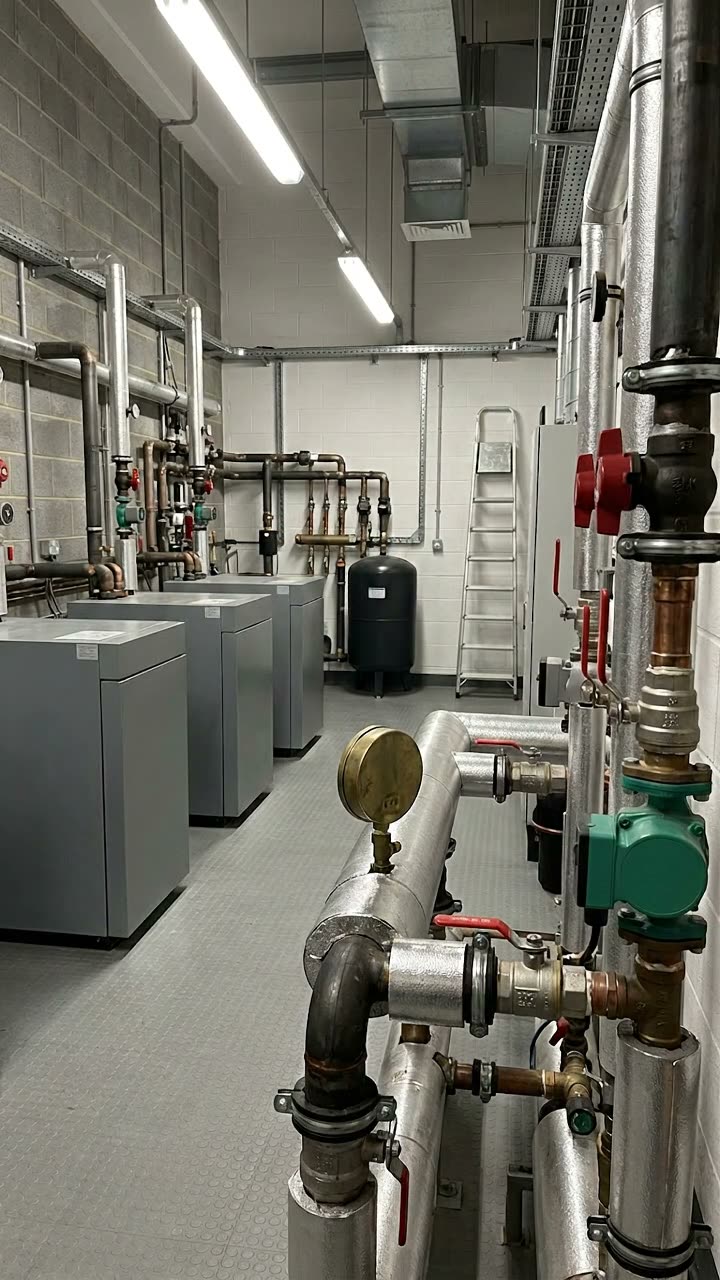
A row of boilers in a plant room with labelled valves and pipework 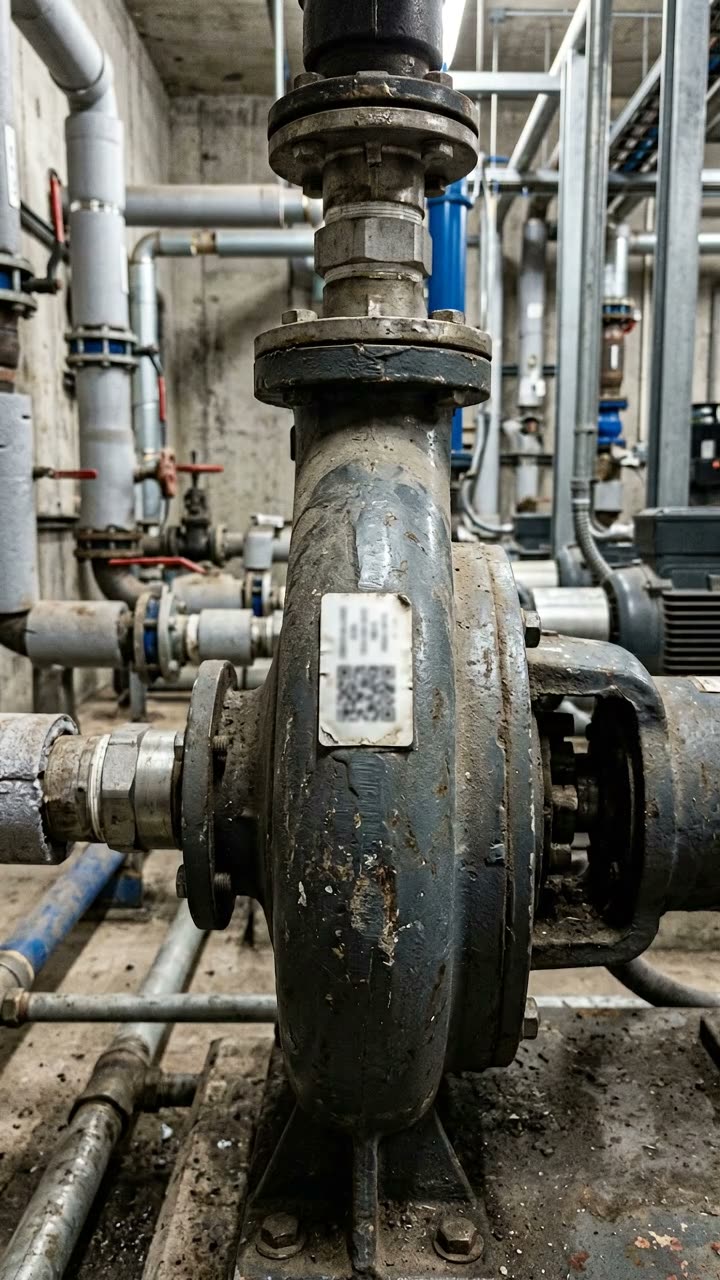
A pump with an asset label on the casing 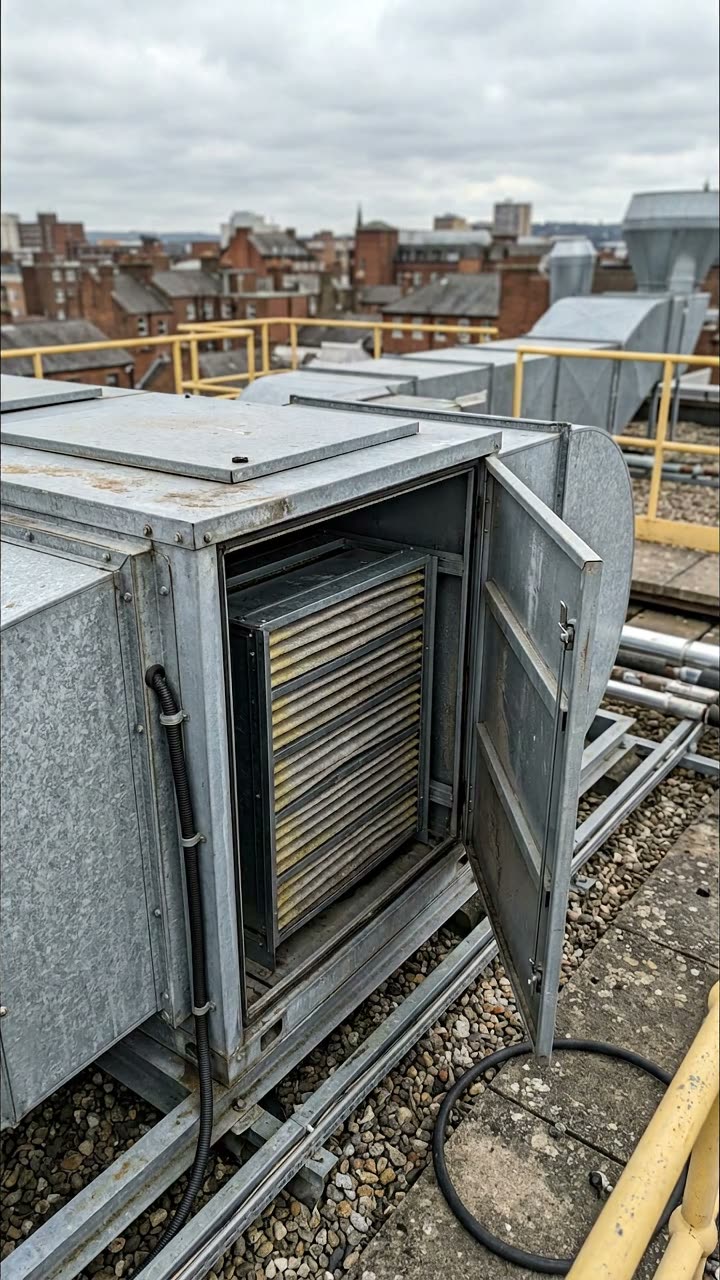
A rooftop air handling unit with the access door open and the filters showing 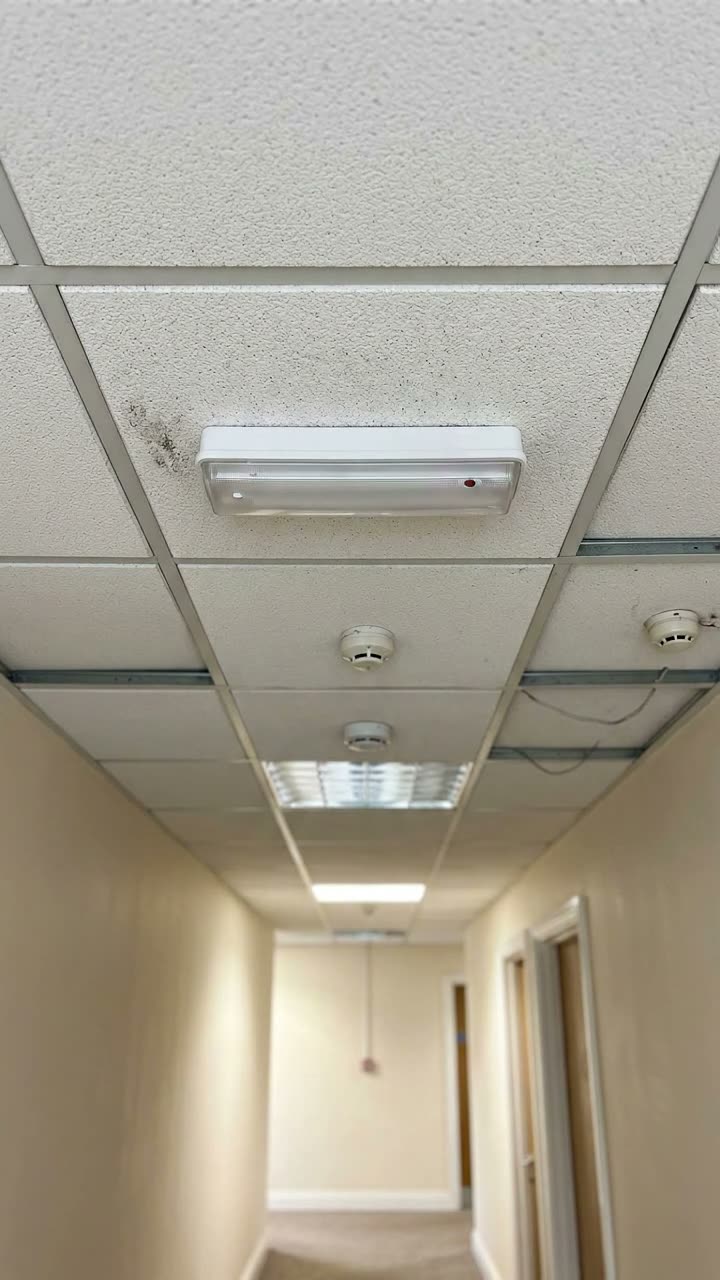
An emergency light fitting in a corridor ceiling - Assets checkedRepeat for each asset. Each one asks:
- Which type of asset is this?Choose one
- Boiler plant
- Pump and valves
- Air handling unit
- Emergency light fitting
- Asset referenceShort answer
- LocationShort answer
- Boiler plant checksTick all that apply
- Casings clean and undamaged
- Flues secure, no staining
- No leaks on flow and return
- Valves labelled
- Isolation valves exercised
- Floor dry under the plant
Shown when “Which type of asset is this?” is “Boiler plant” - System pressure (bar)NumberShown when “Which type of asset is this?” is “Boiler plant”
- Lowest normal pressure on the asset record (bar)NumberShown when “Which type of asset is this?” is “Boiler plant”
- Highest normal pressure on the asset record (bar)NumberShown when “Which type of asset is this?” is “Boiler plant”
- WarningThe system pressure is below the normal range on the asset record. Look for a leak or a fault on the pressurisation unit before you leave.Shown only when the answers above make it relevant
- WarningThe system pressure is above the normal range on the asset record. Check the expansion vessel and the safety valve discharge.Shown only when the answers above make it relevant
- Flow temperature (°C)NumberShown when “Which type of asset is this?” is “Boiler plant”
- Return temperature (°C)NumberShown when “Which type of asset is this?” is “Boiler plant”
- Flow and return difference (°C)Worked out by the formShown when “Which type of asset is this?” is “Boiler plant” and “Flow temperature (°C)” is answered and “Return temperature (°C)” is answered
- CheckThe return is hotter than the flow. Check that the two readings are the right way round.Shown only when the answers above make it relevant
- Was the pump running when you arrived?Choose one
- Running
- On standby
- Not running, fault
Shown only when the answers above make it relevant - What did you find?Tick all that apply
- Unusual noise
- Vibration
- Leak at the seal
- Leak at a flange
- Surface rust or flaking paint
- Isolation valve stiff
- Asset label missing or unreadable
- Nothing found
Shown only when the answers above make it relevant - CheckA leaking seal or flange gets worse. Raise it as a defect below, with a photo of the leak.Shown only when the answers above make it relevant
- Did the valve free up when you exercised it?Yes or NoShown only when the answers above make it relevant
- Filter conditionChoose one
- Clean
- Dirty
- Damaged or missing
Shown when “Which type of asset is this?” is “Air handling unit” - Pressure drop across the filters (Pa)NumberShown when “Which type of asset is this?” is “Air handling unit”
- Change point on the asset record (Pa)NumberShown when “Which type of asset is this?” is “Air handling unit”
- CheckThe pressure drop is at or above the change point on the asset record. Change the filters.Shown only when the answers above make it relevant
- Did you replace the filters on this visit?Yes or NoShown only when the answers above make it relevant
- Pressure drop with the new filters (Pa)NumberShown when “Which type of asset is this?” is “Air handling unit” and “Did you replace the filters on this visit?” is Yes
- Fall in pressure drop (Pa)Worked out by the formShown when “Which type of asset is this?” is “Air handling unit” and “Did you replace the filters on this visit?” is Yes and “Pressure drop across the filters (Pa)” is answered and “Pressure drop with the new filters (Pa)” is answered
- Other checksTick all that apply
- Belt tension and wear
- Drain tray clear
- Access door and seals
- Casing free of holes
Shown when “Which type of asset is this?” is “Air handling unit” - Charge indicatorChoose one
- Lit
- Not lit
- No indicator fitted
Shown when “Which type of asset is this?” is “Emergency light fitting” - CheckThe charge indicator is not lit. The fitting may not be charging. Check the supply to the fitting and raise a defect.Shown when “Which type of asset is this?” is “Emergency light fitting” and “Charge indicator” is “Not lit”
- Fitting checksTick all that apply
- Diffuser clean
- Fitting secure
- Not obstructed
Shown when “Which type of asset is this?” is “Emergency light fitting” - Did you test the fitting by simulating a supply failure?Yes or NoShown when “Which type of asset is this?” is “Emergency light fitting”
- Did the fitting light on test?Yes or NoShown when “Which type of asset is this?” is “Emergency light fitting” and “Did you test the fitting by simulating a supply failure?” is Yes
- WarningThe fitting did not light on test. Record it in the emergency lighting log book and tell the person responsible for fire safety in the building before you leave.Shown when “Which type of asset is this?” is “Emergency light fitting” and “Did you test the fitting by simulating a supply failure?” is Yes and “Did the fitting light on test?” is No
- Photos of the assetPhotos
- Tasks on the list for this assetNumber
- Tasks completedNumber
- Tasks completed (%)Worked out by the formShown only when the answers above make it relevant
- Which tasks were not completed, and why?NotesShown only when the answers above make it relevant
- ResultChoose one
- Pass
- Pass with a defect
- Fail
- Describe the defectNotesShown only when the answers above make it relevant
- Photos of the defectPhotosShown only when the answers above make it relevant
- PriorityChoose one
- Minor
- Needs attention soon
- Urgent or unsafe
Shown only when the answers above make it relevant - WarningUrgent or unsafe. Make it safe or isolate the plant if you are competent to, and tell the building manager before you leave site.Shown only when the answers above make it relevant
- Was the plant isolated or left out of service?Yes or NoShown only when the answers above make it relevant
- Action neededShort answerShown only when the answers above make it relevant
- Was the defect put right on this visit?Yes or NoShown only when the answers above make it relevant
- Target date for the repairDateShown only when the answers above make it relevant
- Next check due (month and year)Short answer
Water temperatures
Fill this in if water temperature checks are part of the visit.
- Did you take water temperatures on this visit?Yes or No
- GuidanceHSE guidance on legionella is to store hot water at 60 °C or more, to reach 50 °C at the outlets within 1 minute (55 °C in healthcare premises) and to keep cold water below 20 °C. This is guidance. The site's own risk assessment and written scheme set what is checked and how often.Shown when “Did you take water temperatures on this visit?” is Yes
- Hot water cylinder, stored temperature (°C)NumberShown when “Did you take water temperatures on this visit?” is Yes
- CheckThe stored hot water is below 60 °C. Check the thermostat and the primary heating to the cylinder, and tell the person responsible for water hygiene.Shown only when the answers above make it relevant
- Which outlet did you test?Short answerShown when “Did you take water temperatures on this visit?” is Yes
- Hot water at the outlet after 1 minute (°C)NumberShown when “Did you take water temperatures on this visit?” is Yes
- Cold water at the outlet (°C)NumberShown when “Did you take water temperatures on this visit?” is Yes
- CheckThe hot water did not reach 50 °C at the outlet within 1 minute. Record it in the water hygiene log book and tell the person responsible for water hygiene.Shown only when the answers above make it relevant
- CheckThe cold water is at 20 °C or above. Record it in the water hygiene log book and tell the person responsible for water hygiene.Shown only when the answers above make it relevant
- Temperature lost between the cylinder and the outlet (°C)Worked out by the formShown when “Did you take water temperatures on this visit?” is Yes and “Hot water cylinder, stored temperature (°C)” is answered and “Hot water at the outlet after 1 minute (°C)” is answered
- Anything else you sawNotesShown when “Did you take water temperatures on this visit?” is Yes
Work carried out
What you did on the visit, beyond the checks.
- Work carried out on this visitTick all that apply
- Filters replaced
- Drain tray cleared
- Valves exercised
- Belts adjusted or replaced
- Strainers cleaned
- Plant room cleaned
- Other (describe)
- Checks only
- Describe the workNotesShown only when the answers above make it relevant
- Did you use any parts?Yes or No
- Parts used, with quantitiesNotesShown when “Did you use any parts?” is Yes
- Did you take old parts or waste off site?Yes or NoShown when “Did you use any parts?” is Yes
- Was all plant left running as you found it?Yes or No
- What was left off or isolated, and who was told?NotesShown when “Was all plant left running as you found it?” is No
- WarningPlant has been left off or isolated. Make sure it is labelled at the isolator and that the building manager knows.Shown when “Was all plant left running as you found it?” is No
Summary and next visit
The totals for the round and what happens next.
- Assets checkedNumber
- Assets that passed with no defectNumber
- Passed with no defect (%)Worked out by the formShown only when the answers above make it relevant
- Defects raisedNumber
- Defects put right on this visitNumber
- Defects still openWorked out by the formShown when “Defects raised” is answered and “Defects put right on this visit” is answered
- CheckDefects are still open. Each one needs an action, an owner and a target date on the asset record.Shown only when the answers above make it relevant
- CheckYou have closed more defects than you raised. Check the two numbers.Shown only when the answers above make it relevant
- Is a return visit needed?Yes or No
- Return visit dateDateShown when “Is a return visit needed?” is Yes
- Who did you report to before leaving site?Short answer
- Next planned visit due (month and year)Short answer
Engineer sign-off
- GuidanceThis record shows what was checked, what was found and when. It does not certify that statutory maintenance or examination is complete.
- CheckYou recorded assets that were not checked. Make sure the summary says which ones.Shown when “Could you reach every asset on the round?” is No
- NameShort answer
- Engineer signatureSignature
PPM template questions
Does this PPM checklist include SFG20 tasks?
No. It records the schedule reference from your own SFG20 licence and the number of tasks completed for each asset. SFG20 marks statutory tasks red and industry best practice tasks amber, so work from your licensed schedule. The form can also be worked to the manufacturer's instructions or the client's own specification.
Which assets does it cover?
Boiler plant, pumps and valves, air handling units and emergency light fittings. Picking the asset type shows the checks for that type. The form flags a system pressure outside the normal range on the asset record, a filter pressure drop at or above the change point, and an emergency light that does not light on test.
What water temperatures does it check?
HSE guidance on legionella is to store hot water at 60 °C or more, to reach 50 °C at the outlets within 1 minute (55 °C in healthcare premises) and to keep cold water below 20 °C. The form flags any reading outside those figures. This is guidance, and the site's own risk assessment and written scheme set what is checked and how often.
Does the maintenance log need updating after a visit?
Where machinery has a maintenance log, regulation 5 of the Provision and Use of Work Equipment Regulations 1998 requires it to be kept up to date, so add the visit to it. The form also asks whether the water hygiene and emergency lighting log books were seen.
Does a completed PPM checklist prove statutory maintenance is done?
No. The record shows what was checked, what was found and when. Examination of a pressure system under its written scheme is carried out by a competent person and is separate from the maintenance visit, and gas work must be done by someone competent through a business on the Gas Safe Register.
Does SiteSurvey schedule the next PPM visit?
The form records the next check due for each asset and the next planned visit for the round. SiteSurvey does not generate a recurring PPM calendar, so the dates are there for whoever plans the visits.
Related
Related templates
Templates that go with the PPM form
Service visit record for air conditioning, heat pumps, ventilation and air handling units. Unit by unit checks, refrigerant and F gas leak checks, parts used and sign-off.
Job sheet for a reactive or planned job: safety before starting, work done, parts used, tests, outcome and customer sign-off.
Build or update an asset register: asset records with make, model, serial, condition and photos, changes to the register.
Inspection round for plant: asset condition, refrigerant and leak checks, pressure vessels, next due dates.
Use this PPM form with your team
Add it from the form library in one click, change any question, and every completed form becomes a branded PDF report.
Start your trial →