For competent people measuring noise at work. Record each run with its LAeq and peak: the form compares each peak with the action values and estimates each worker group's daily exposure in HSE exposure points, against the 80 and 85 dB(A) action values. Try the form below, see every question or open a completed example.
✎Every question is editable. Add this form to your account, then change the wording, add or remove questions and options, and make it fit your own jobs.
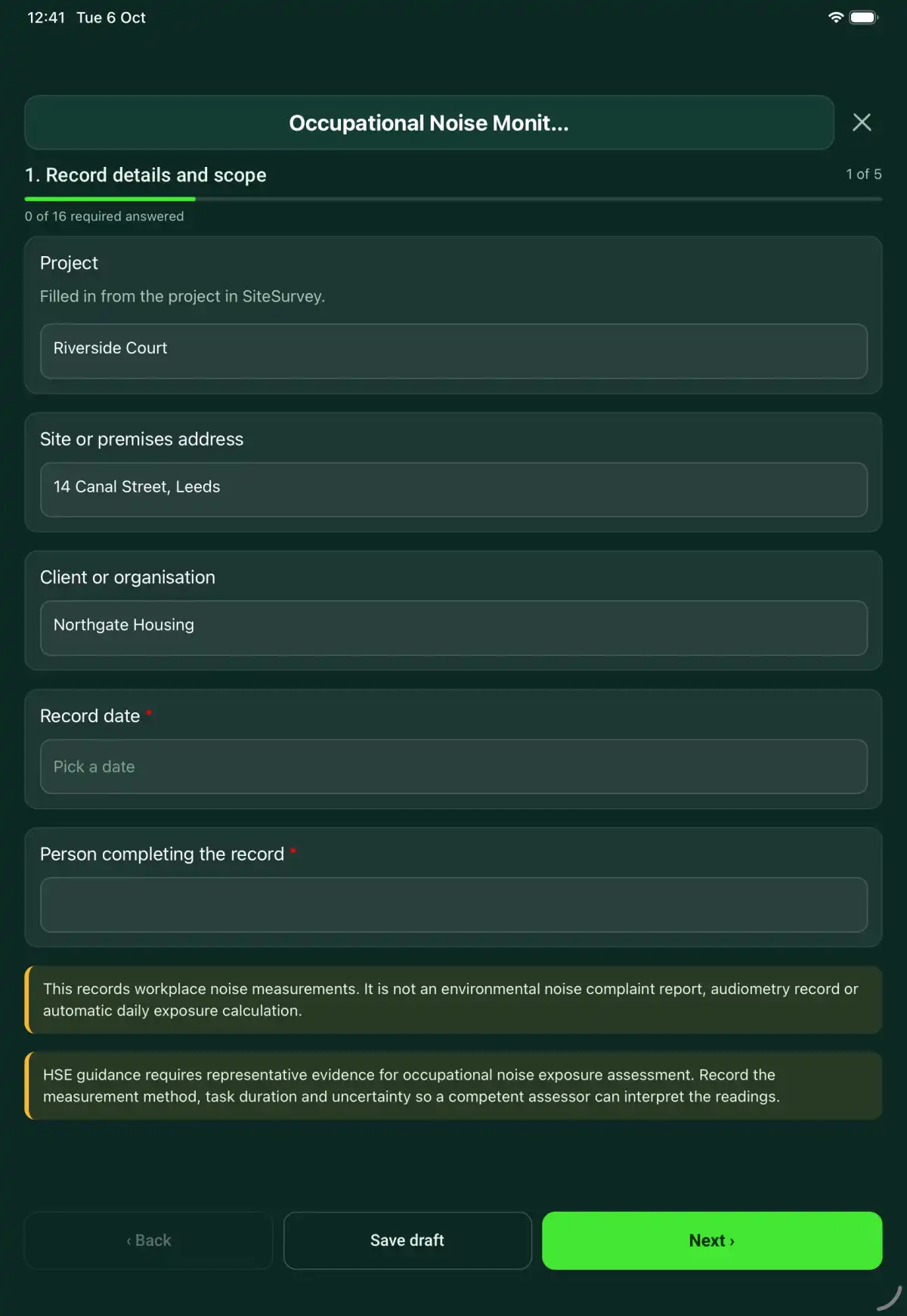
HSE guidance requires representative evidence for occupational noise exposure assessment. Record the measurement method, task duration and uncertainty so a competent assessor can interpret the readings.
Record each measurement run with its LAeq, its peak and the time a day spent on that task. The form shows how each peak compares with the action values and adds up each worker group's day in exposure points, as in HSE's ready-reckoner. It is an estimate from the figures you enter, not the noise risk assessment.
Points and peak for each task
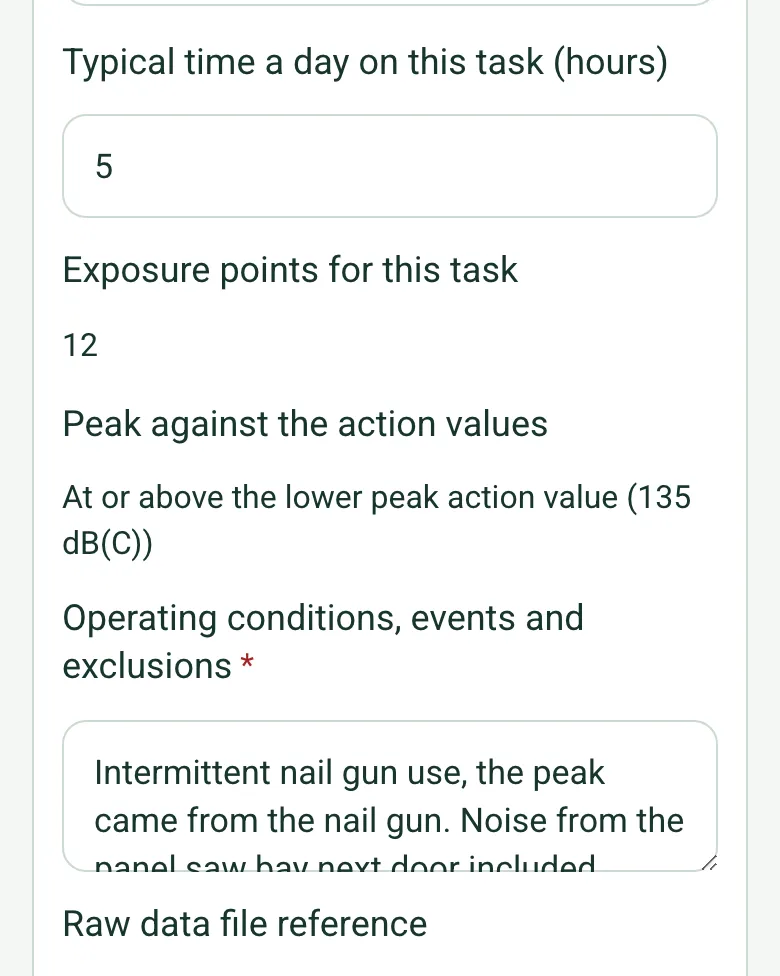
Enter the LAeq, the LCpeak and the hours a day on the task. The form works out the task's exposure points and shows whether the peak is below, at or above the 135 and 137 dB(C) action values or the 140 dB(C) limit value.
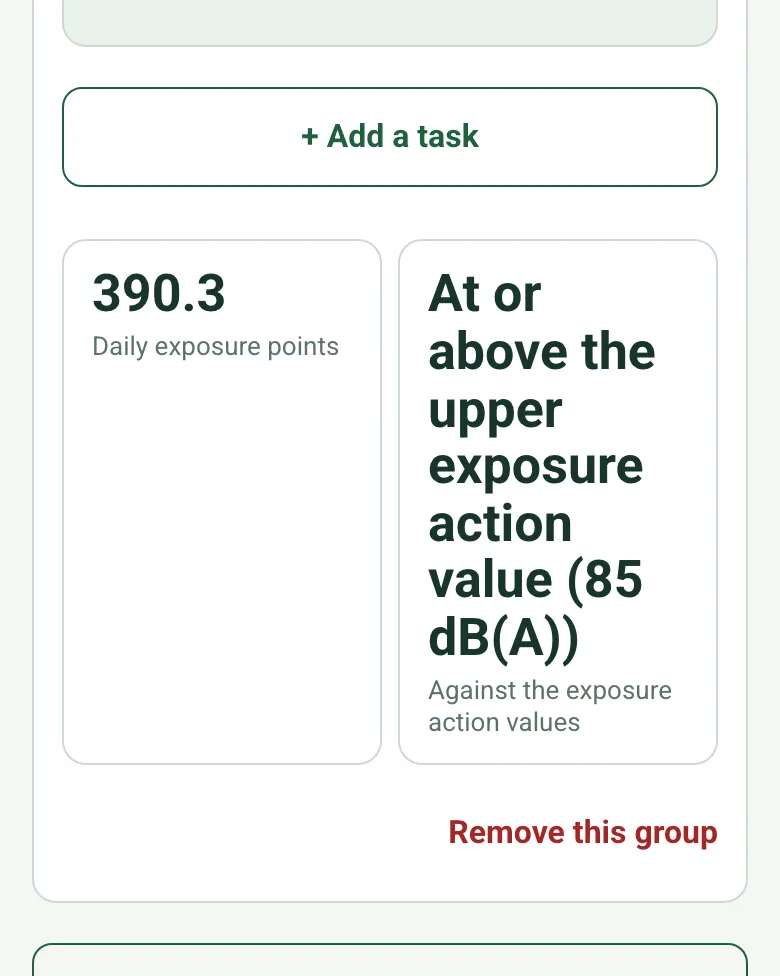
List the tasks in a typical day for each anonymised role. The points add up: 32 is about 80 dB(A) and 100 is about 85 dB(A), so the group shows against the lower and upper exposure action values. Hearing protection is not taken into account.
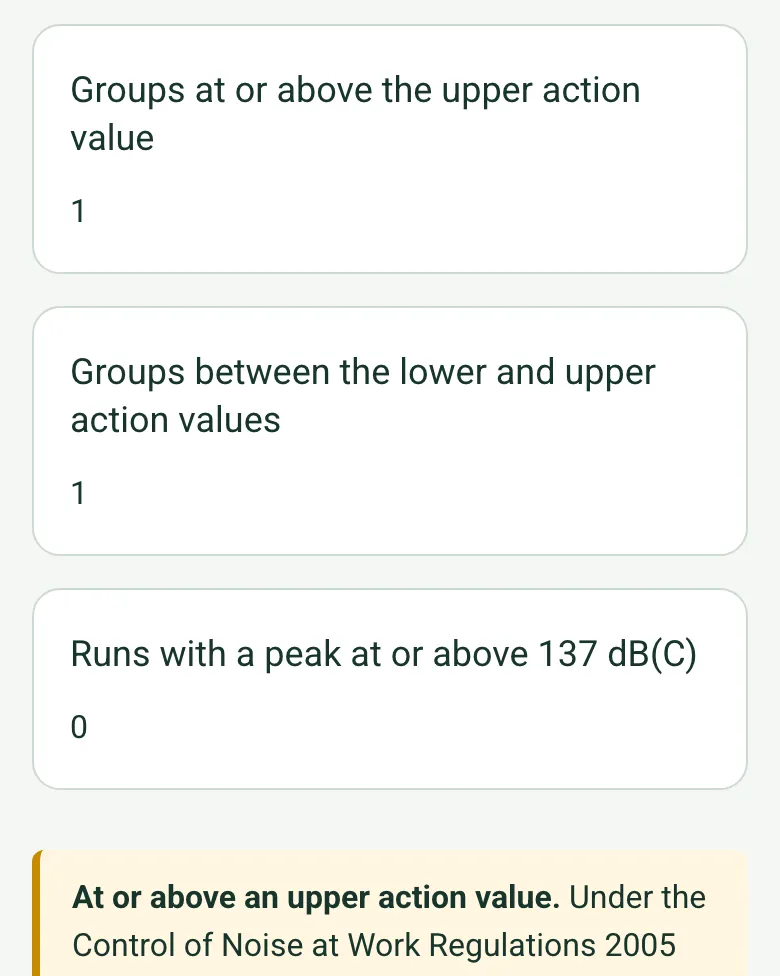
The form counts the groups above each action value and the runs with high peaks, and an amber note lists the duties that come with the upper action values under the Control of Noise at Work Regulations 2005, to pass to whoever owns the noise risk assessment.
A fictional joinery workshop: three task measurements at the panel saw, the planer and the assembly bench, with calibration checks, and three worker groups from about 2 to 390 exposure points. Open it as a filled-in form, or switch to a blank copy and try it yourself.
This is the real form as your team would use it: questions appear as you answer, scores work themselves out and you can add photos and signatures. No sign-up needed. Or open a completed example to see every answer, photo and score filled in.
Your team completes the occupational noise monitoring record on site in the SiteSurvey app on iPhone, iPad and Android phones and tablets. The project name and address fill in for them, it works without signal, and it syncs when the device is back online with photos kept against the question they answer.
Customers and subcontractors do not need the app: send them a link and they can fill it in from any browser.
Every question in the occupational noise monitoring record template
An occupational noise measurement record linking instruments, calibration checks, task conditions, timed measurements, uncertainty and assessment references. 6 sections and 49 questions. Follow-up questions and guidance appear only when an answer calls for them, so the person on site never sees the ones that do not apply.
✎
Make it your own: every question is editable
This is a starting point, not a fixed form. Once it is in your SiteSurvey account you can reword any question, add or remove questions, sections and answer options, and add your own logo, so it fits the way your team works and the jobs you do.
Details you only enter once
Add this form to a project in SiteSurvey and it fills in what the project already knows, so nobody on site retypes it and every form on the job uses the same names. Anything filled in can still be changed.
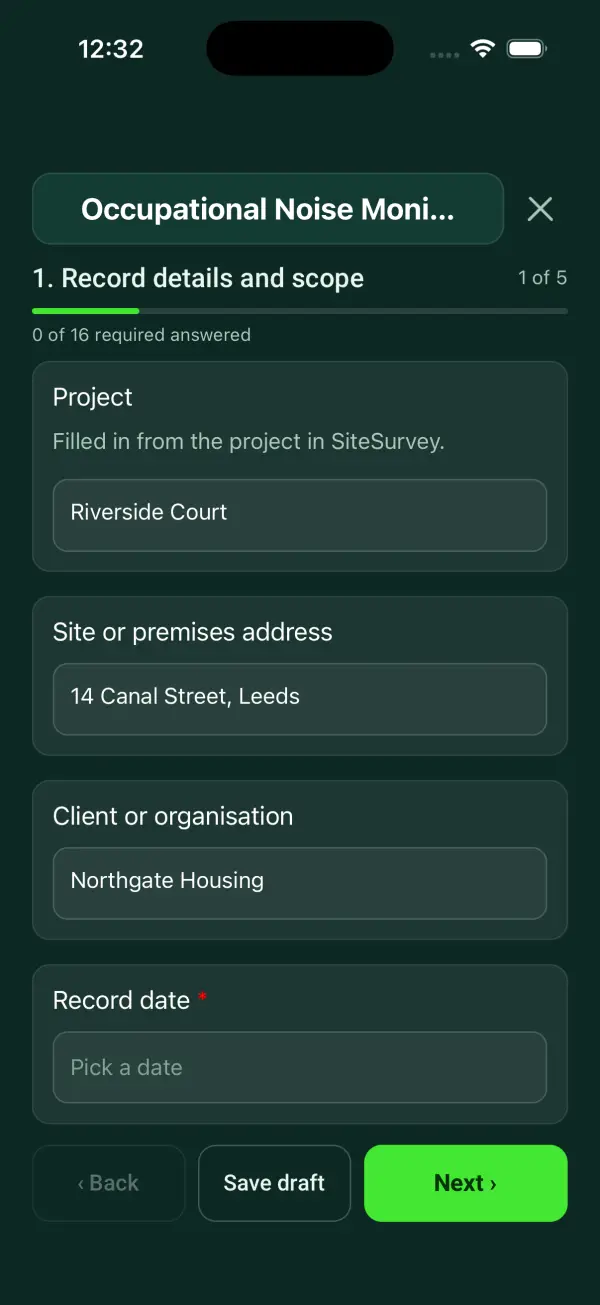
Project: the project name
Client or organisation: the project's customer
Site or premises address: the site address, from the space or the project
1
Record details and scope
ProjectShort answer
Filled in from the project in SiteSurvey.
Fills in from the project name
Client or organisationShort answer
Fills in from the project's customer
Site or premises addressShort answer
Fills in from the site address, from the space or the project
Record date*Date
Person completing the record*Short answer
CheckThis records workplace noise measurements. It is not an environmental noise complaint report or an audiometry record. The exposure points are an estimate from the levels and durations entered, not the noise risk assessment.
CheckHSE guidance requires representative evidence for occupational noise exposure assessment. Record the measurement method, task duration and uncertainty so a competent assessor can interpret the readings. Sources: The Control of Noise at Work Regulations 2005 and HSE guidance L108, Controlling noise at work.
2
Measurement plan
Survey purpose and covered tasks*Short answer
Competent surveyor*Short answer
Method and applicable guidance reference*Short answer
Meter, microphone and calibrator IDs*Short answer
Calibration records and pre/post field checks*Short answer
3
Measurement runs
Measurement run
Repeat for each measurement run. Each one asks:
Location, task and anonymised role*Short answer
Start, finish and representative task duration*Short answer
Measurement metric, weighting and settings*Short answer
Other readings and units, if anyShort answer
LAeq (dB(A))Number
Peak sound pressure, LCpeak (dB(C))Number
Typical time a day on this task (hours)Number
Exposure points for this taskWorked out by the form
Conditional
Peak against the action valuesWorked out by the form
Conditional
Operating conditions, events and exclusions*Notes
Raw data file referenceShort answer
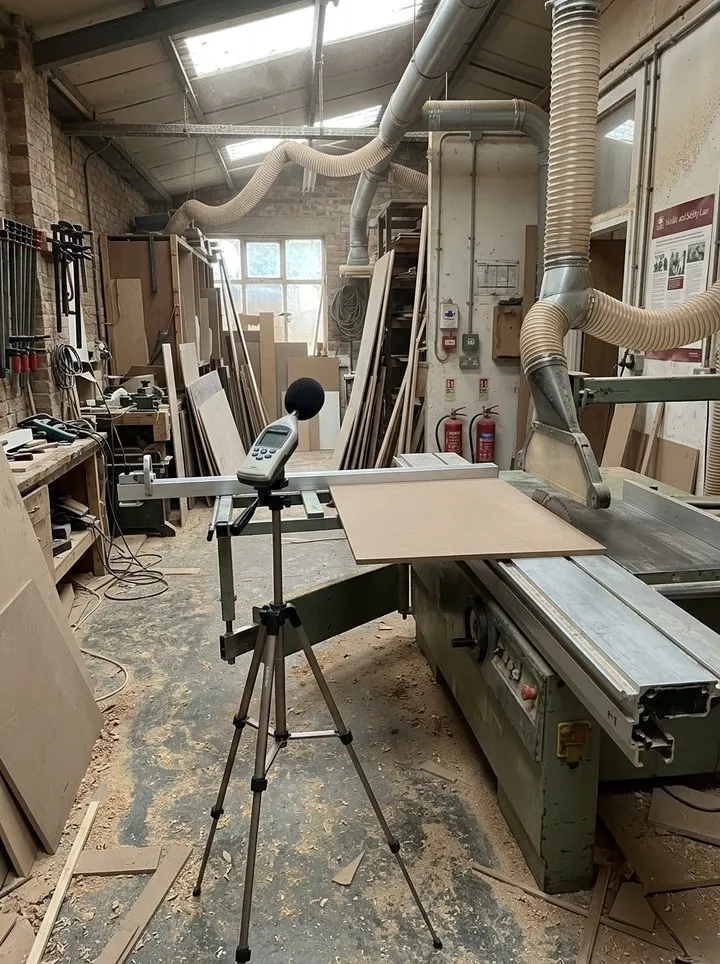
Photos of the measurement positionPhotos
The microphone position, the source and anything unusual during the run.
4
Daily exposure estimate
GuidanceExposure points add up across a working day, as in HSE's ready-reckoner: 32 points is about 80 dB(A) daily exposure (the lower exposure action value) and 100 points is 85 dB(A) (the upper exposure action value). The estimate depends on the levels and times entered, ignores hearing protection and does not replace the noise risk assessment.
Worker group
Repeat for each group. Each one asks:
Anonymised role or worker group*Short answer
Tasks in a typical day
Repeat for each task. Each one asks:
Task*Short answer
LAeq for this task (dB(A))Number
Hours a day on this taskNumber
Exposure pointsWorked out by the form
Daily exposure pointsWorked out by the form
Against the exposure action valuesWorked out by the form
Conditional
Groups at or above the upper action valueWorked out by the form
Groups between the lower and upper action valuesWorked out by the form
Runs with a peak at or above 137 dB(C)Worked out by the form
CheckAt or above an upper action value. Under the Control of Noise at Work Regulations 2005 this brings duties such as a programme of control measures, hearing protection zones and the use of hearing protection. Pass these results to the person responsible for the noise risk assessment.
Conditional
5
Interpretation and handover
Uncertainty and representativeness limitations*Notes
Record factors affecting representativeness and uncertainty. Keep measured values separate from subsequent exposure calculations.
Separate exposure calculation and risk assessment referenceShort answer
Immediate concerns and person informedNotes
Technical reviewerShort answer
6
Actions and review
Are further actions required?Choose one
Yes
No
Further action
Repeat for each further action. Each one asks:
Shown when "Are further actions required?" is "Yes"
Action and evidence reference*Notes
PriorityChoose one
Urgent
High
Medium
Low
Person responsibleShort answer
Target dateDate
Action statusChoose one
Open
In progress
Completed
Completion evidence*Notes
Shown when "Action status" is "Completed"
Open actionsWorked out by the form
Worked out from the actions above: open or in progress.
Shown when "Are further actions required?" is "Yes"
Outstanding limitations and information to pass onNotes
Record status*Choose one
Ready for review
Further work needed
Work or use stopped
Reviewed byShort answer
Review dateDate
Author signature*Signature
CheckSigning records the information entered. It does not itself certify legal compliance, remove a limitation or authorise unsafe work.
Scope and responsibility
This records workplace noise measurements. It is not an environmental noise complaint report or an audiometry record. The exposure points are an estimate from the levels and durations entered, not the noise risk assessment.
What a useful entry looks like
Uncertainty and representativeness limitations
Record factors affecting representativeness and uncertainty. Keep measured values separate from subsequent exposure calculations.
Monitoring covered the recorded production period. Intermittent activity outside that period is identified for assessment in the interpretation report.
Fictional example of record wording. Use the actual evidence and approved arrangements for your job; this is not a completed report or an instruction to carry out the work.
See it filled in
A completed occupational noise monitoring record report, made by SiteSurvey from a fictional site visit: every answer, the photos, the guidance that applied and the sign-off, ready to send as a PDF.
How should I record “Uncertainty and representativeness limitations”?
Record factors affecting representativeness and uncertainty. Keep measured values separate from subsequent exposure calculations.
How is this different from the noise risk assessment?
This holds measurement evidence; the assessment records exposure comparisons and control decisions.
Does it calculate daily exposure?
It gives an estimate. Each task's exposure points come from the LAeq and the hours a day you enter, and they add up for each worker group, as in HSE's ready-reckoner. The estimate ignores hearing protection, and the noise risk assessment still decides the exposure and the controls.
Should worker medical information be included?
No. Use role references and keep health records in the appropriate controlled system.
What are the limits of this template?
This records workplace noise measurements. It is not an environmental noise complaint report or an audiometry record. The exposure points are an estimate from the levels and durations entered, not the noise risk assessment.
Can I complete this form on site and share the record?
In the SiteSurvey app the form works offline, with signatures recorded against the questions. Share the completed record as a PDF or a link. Dates and action owners are recorded fields; this form does not send reminders or update other systems.