Hazards and control measures
Sharps hazards and control measures
Discarded needles, needlestick injury and blood-borne viruses, rat urine and Weil's disease, bird droppings and soiled items: who is at risk, the control measures HSE expects, what to do after a needlestick injury and when RIDDOR applies. With a worked example from a void clearance RAMS.
What are the main sharps and biological hazards at work?
The main sharps hazard is a needlestick injury from a discarded needle, which can pass on blood-borne viruses such as hepatitis B, hepatitis C and HIV. Alongside it sit other biological hazards: rat urine and contaminated water, which carry Weil's disease, bird droppings, and soiled bedding and waste. HSE expects every found needle to be treated as potentially infected, picked up with a tool into a proper sharps box and never by hand, with gloves, good hygiene and a known first aid procedure behind it.
Last updated . Facts checked by the SiteSurvey team on 24 October 2026 against HSE: Blood-borne viruses from needlestick injuries (construction), HSE: Blood-borne viruses, incident reporting, HSE: Leptospirosis and Weil's disease from rats and HSE: Psittacosis and other diseases from bird droppings.
What the hazard is and where it shows up
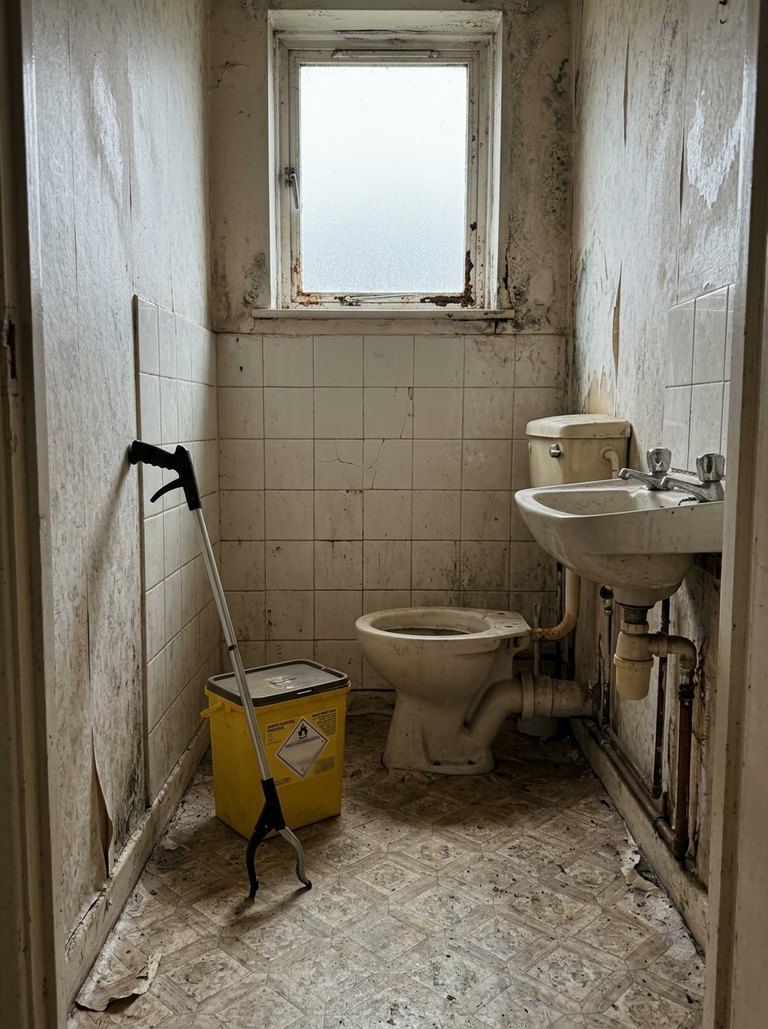
Sharps hazards come from used needles and other sharp items that may carry blood. HSE warns that construction and refurbishment workers can meet them in derelict buildings and anywhere drug misuse is known, and that all needles found should be treated as potentially infected. In practice that means a crew clearing a void flat, a grounds team in a park, a cleaner in a public toilet, and anyone lifting a bath panel, a carpet or a ceiling tile in a property where needles have been reported.
The same jobs bring other biological hazards. Rat urine carries leptospirosis, known in its severe form as Weil's disease, and HSE links the risk to refurbishment and demolition where there is evidence of rats, and to work near canals, rivers and sewers. Dried bird droppings can carry psittacosis and salmonella, and the risk comes from breathing the dust. Soiled bedding, mattresses and blocked toilets bring body fluids into the clearance, and a split bag carries all of it onto the landing.
Who is harmed, and how
The person harmed is usually the one moving things: the operative who reaches into a cupboard, presses down a bag of waste or feels under a mattress. A needle that breaks the skin can transmit hepatitis B, hepatitis C or HIV. Leptospirosis gets in through cuts and scratches or the lining of the mouth, throat and eyes, starts like flu with a headache or muscle pains, and in severe cases can lead to meningitis or kidney failure. Bird dropping diseases usually cause a flu-like illness and pneumonia, and HSE says workers with weakened immune systems should not handle droppings directly.
After a needlestick injury HSE's first aid is simple: encourage the wound to bleed, do not suck it, rinse it thoroughly under running water, and get prompt medical advice on any treatment needed. Splashes to the eyes, nose or mouth are rinsed with plenty of water. The incident is reported to the employer, and if the needle is known to be contaminated with a blood-borne virus it is reportable to HSE as a dangerous occurrence under RIDDOR. A resulting infection is reportable as a disease.
What the law expects
Biological agents count as substances hazardous to health under COSHH 2002, so the employer assesses the risk and controls it in order. First remove the exposure where you can, for example by having the client's specialist contractor clear needles before the general crew goes in. Then use equipment that keeps hands away from the hazard: litter pickers, tongs or a dustpan and brush, and a proper sharps box that is never overfilled, not a plastic sack. Wet down droppings rather than sweeping them dry, and never use a pressure washer on them. Then organise the work: a sharps sweep before anything else is moved, welfare away from the work area, regular hand washing and cuts covered with waterproof dressings.
PPE comes last because HSE is clear that gloves alone do not give adequate protection against needles. Gloves, covered arms and legs and, where dust is raised from droppings, RPE of at least FFP3 standard support the controls above. Hepatitis B vaccination is available but only supplements them. In SiteSurvey, the RAMS template records the hazard with the controls ticked for it and warns when only PPE is ticked, and the Suggested controls list follows the same order.
Suggested controls
Sharps and biological hazards: control measures, most effective first
These are the 5 controls the SiteSurvey RAMS and risk assessment forms offer for this hazard as a tick list, grouped by their level in the hierarchy of controls. They are a starting point from HSE guidance, not an assessment of your job: tick what applies and say how it works on your site. If only personal protective equipment is ticked, the form says so. How suggested controls work and the hierarchy of controls explained.
Keep people away from the hazard with a physical measure: a guardrail, a barrier, extraction, isolation.
- Sharps picked up with a litter picker, never by hand, into a sharps box
Change the way the work is done: a permit, a check, training, supervision, timing.
- Waste bagged, labelled and kept away from food and welfare areas
- Hands washed before eating, drinking or smoking
- Needlestick first aid and reporting covered in the briefing
Protect the person as the last line: a harness, hard hat, gloves or respirator. Never the only control.
- Gloves, covered arms and legs, and eye protection where splashing is possible
Offered to: Facilities, cleaning and maintenance, Grounds, landscaping and tree work.
Try it
Build the controls for sharps and biological hazards
Tick the controls you would put in place, see which levels of the hierarchy they reach, and score the risk before and after. Or fill in the example from a completed RAMS to see how one crew did it.
Interactive
Try it: biological hazards and sharps
Works the same way as the RAMS form. Nothing you tick is saved or sent anywhere.
Your controls, by level
- Eliminateno control at this level for this hazard
- Substituteno control at this level for this hazard
- Engineeringnot ticked
- Adminnot ticked
- PPEnot ticked
Nothing ticked yet.
3. Score the risk with these controls
What the law says
- Control of Substances Hazardous to Health Regulations 2002 (COSHH)
- Biological agents are substances hazardous to health. Assess the exposure, prevent it or control it adequately, with PPE as the last measure, and give workers information and training.
- Reporting of Injuries, Diseases and Dangerous Occurrences Regulations 2013 (RIDDOR)
- Report a sharps injury from a needle known to carry a blood-borne virus as a dangerous occurrence, an infection caught at work as a disease, and an absence of seven or more consecutive days.
- Management of Health and Safety at Work Regulations 1999, regulation 3
- The suitable and sufficient risk assessment that identifies the sharps and biological hazards and the controls.
- Health and Safety (Sharp Instruments in Healthcare) Regulations 2013
- Apply only to healthcare employers and their healthcare contractors, covering medical sharps. A void clearance or grounds contractor is covered by COSHH instead.
Worked example
Sharps and biological hazards in a completed RAMS
The hazard entry exactly as it was recorded in one of our completed example RAMS: the controls ticked from the list, how they apply on that job, and the score before and after the further action.
Facilities, cleaning and maintenance
Ravensworth Court flat 14: void clearance and deep clean
- Hazard
- Biological hazards and sharps: Bathroom (needles reported behind the bath panel and in the cabinet) and the main bedroom (soiled bedding)
- What could happen, and to whom
- Needlestick injury and infection from used needles, and contact with soiled bedding, body fluids and a blocked toilet. The housing officer reported needles in the bathroom at the void inspection. The crew, and anyone on the landing if a bag splits.
- Controls ticked
- Sharps picked up with a litter picker, never by hand, into a sharps box
- Waste bagged, labelled and kept away from food and welfare areas
- Hands washed before eating, drinking or smoking
- Needlestick first aid and reporting covered in the briefing
- Gloves, covered arms and legs, and eye protection where splashing is possible
- How they apply on this job
- The sharps sweep is step 2 and nothing else is moved until it is done. Both operatives in long sleeves, nitrile gloves under rigger gloves and safety glasses. Needles lifted with the 90 cm litter picker into the 5 litre sharps box, which is sealed and labelled before it leaves the bathroom. Bedding and soft furnishings go into yellow and black bags, double bagged, tied and carried straight to the van. Welfare is at the van, not in the flat, and hands are washed with the water container and soap before any break. The needlestick procedure is covered word for word in the briefing.
- Risk with these controls (likelihood x severity)
- 3 x 5 = 15 (High)
- Further action
- Sharps sweep of every room, including inside cupboards, under furniture and behind the bath panel, completed and the sealed sharps box photographed by G. Mellor as the hold point in step 2 before general clearance starts. Mattress and bedding bagged without being shaken out. Owner: G. Mellor.
- Residual risk
- 1 x 5 = 5 (Medium)
A fictional job, filled in as a worked example. The form and the report are real.
It also appears in pump replacement in a foul water chamber. All eleven completed RAMS.
Sharps and biological hazards: common questions
What should you do after a needlestick injury?
Encourage the wound to bleed, do not suck it, and rinse it thoroughly under running water. Then get medical advice straight away, because HSE says prompt advice on any treatment needed is important. Report it to your supervisor and record where and how it happened. The sharps disposal record has a section for the injury, the first aid given and the medical advice.
Is a needlestick injury reportable under RIDDOR?
It is reportable to HSE as a dangerous occurrence if the needle is known to be contaminated with a blood-borne virus such as hepatitis B, hepatitis C or HIV. If the worker goes on to catch the infection, that is reportable as a disease, and an absence of seven or more consecutive days is reportable as an injury. Because the dangerous occurrence rule turns on a known infected source, a discarded needle of unknown origin does not meet it on its own, but the injury should still be recorded and its cause investigated.
Do the Sharp Instruments in Healthcare Regulations apply to cleaning or clearance contractors?
No. They apply to healthcare employers and to contractors providing services to them, and they deal with medical sharps used in care. A housing void clearance, a park litter pick or a public toilet clean is controlled under COSHH and the general risk assessment duty instead. The practical controls are much the same: no handling by hand, a sharps box and a known first aid procedure.
How do you protect workers from Weil's disease?
Treat any area with signs of rats as higher risk, and any work near sewers, canals or rivers. Cover cuts and grazes with waterproof dressings, wear gloves, keep hands away from the mouth and eyes, and take breaks and meals away from the work area after washing. Wash any cut or graze straight away with soap and running water. Tell workers that early symptoms feel like flu, so they mention their work if they see a doctor.
Last updated . See every hazard in the library.
Write the RAMS with these controls already listed.
Pick the hazard, tick its controls, score it and brief the crew, on a phone or laptop. The report goes to the client as one PDF.