Hazards and control measures
Manual handling hazards and control measures
The hazards of manual handling, the back, shoulder and hand injuries they cause, and the control measures HSE expects: avoid the lift, assess the task, load, environment and individual, then reduce the risk with aids, smaller loads and team lifts. With a worked example from a completed RAMS.
What are the main hazards of manual handling?
Manual handling means lifting, lowering, pushing, pulling or carrying a load by hand or bodily force, and the hazards come from the task, the load, the working environment and the person doing it. It is one of the main causes of musculoskeletal disorders, which affected 511,000 workers in Great Britain in 2024/25. The Manual Handling Operations Regulations 1992 expect you to avoid hazardous handling where you reasonably can, assess what cannot be avoided, and reduce the risk as far as reasonably practicable.
Last updated . Facts checked by the SiteSurvey team on 24 October 2026 against HSE: Manual handling at work, HSE: Manual handling at work, a brief guide (INDG143), The Manual Handling Operations Regulations 1992 and HSE: Work-related musculoskeletal disorders statistics in Great Britain, 2025.
Where manual handling hazards show up
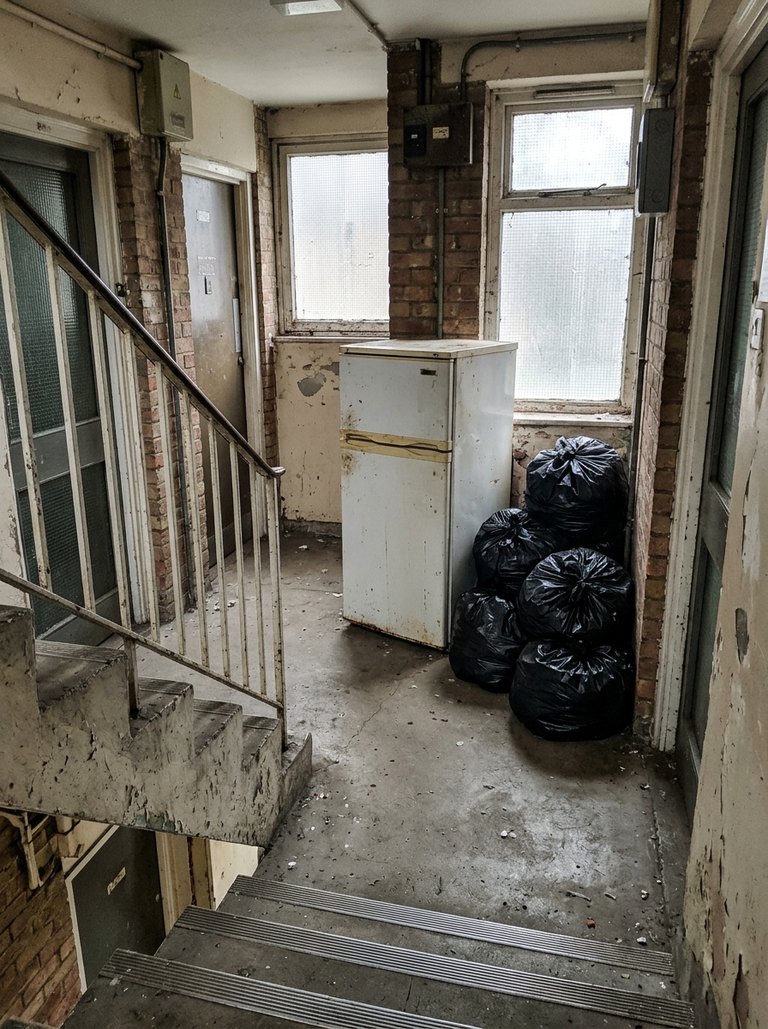
Manual handling is transporting or supporting a load by hand or bodily force: lifting, lowering, pushing, pulling or carrying it. HSE finds it on building sites, farms, in factories, warehouses, hospitals and on deliveries. On site it is the plasterboard carried up a stair, the boiler lifted into a loft, the rack beam lifted into place, the fridge freezer taken down two flights during a void clearance.
Schedule 1 to the regulations sets out the risk factors to check, and the main four are often remembered as TILE. The task: loads held away from the body, twisting, stooping, reaching up, long carries, too little rest. The individual: a job that needs unusual strength, or puts a pregnant worker, a young worker or someone with a health problem at risk. The load: heavy, bulky, hard to grip, unstable, sharp or hot. The environment: cramped space, uneven or slippery floors, changes in level, wind, heat, cold and poor light. Stairs and rough ground combine several of these at once, because the carrier cannot see their feet, the floor level keeps changing and there is nowhere to put the load down.
Who is harmed, and how
Manual handling injuries are part of the wider group of musculoskeletal disorders, and HSE's survey data name manual handling as one of the main causes. In 2024/25, 511,000 workers in Great Britain had a work-related musculoskeletal disorder: 221,000 mainly affecting the back, 211,000 the upper limbs or neck and 78,000 the lower limbs. They cost 7.1 million working days and made up 27% of all work-related ill health. Construction and transportation and storage are among the industries with the highest rates.
The harm is usually gradual: a back that goes on the fifth heavy lift of the day, a shoulder worn down by repeated overhead work, a wrist strained by a load that was hard to grip. Some injuries are sudden, such as fingers trapped between the load and a door frame or handrail. Those most at risk include new and young workers, anyone returning from a recent injury and new or expectant mothers.
What the law expects
Regulation 4 sets the order. First avoid hazardous manual handling so far as is reasonably practicable: have materials delivered to where they will be used, or move them with a conveyor, hoist, pallet truck or sack truck. Then assess what cannot be avoided against the Schedule 1 factors. Then reduce the risk to the lowest level reasonably practicable: smaller or lighter loads, shorter carries, routes cleared of obstructions, fewer steps, handling aids, and training in good technique. Where you can, tell workers the weight of each load and which side is heavier.
There are no legal weight limits. HSE's filter values are a guide to which lifts are low risk, not safe limits, and team lifts always need a more detailed look because two people rarely share a load evenly. In SiteSurvey, the RAMS template scores each hazard from 1 to 5 before and after further action and warns when only PPE is ticked, and the Suggested controls list puts delivery to the point of use and mechanical aids ahead of lifting technique.
Suggested controls
Manual handling: control measures, most effective first
These are the 5 controls the SiteSurvey RAMS and risk assessment forms offer for this hazard as a tick list, grouped by their level in the hierarchy of controls. They are a starting point from HSE guidance, not an assessment of your job: tick what applies and say how it works on your site. If only personal protective equipment is ticked, the form says so. How suggested controls work and the hierarchy of controls explained.
Take the hazard away altogether, usually by doing the job a different way or from a different place.
- Materials delivered to the point of use or moved by hoist, trolley or telehandler
Swap the hazard for something less harmful: a quieter tool, a cold-applied method, a smaller pack.
- Loads broken down or smaller packs ordered
Change the way the work is done: a permit, a check, training, supervision, timing.
- Two-person lifts for heavy or awkward items
- Routes cleared and kept clear before carrying starts
- Crew trained in lifting technique for the loads on this job
Offered to: every type of work in the RAMS form.
Try it
Build the controls for manual handling
Tick the controls you would put in place, see which levels of the hierarchy they reach, and score the risk before and after. Or fill in the example from a completed RAMS to see how one crew did it.
Interactive
Try it: manual handling
Works the same way as the RAMS form. Nothing you tick is saved or sent anywhere.
Your controls, by level
- Eliminatenot ticked
- Substitutenot ticked
- Engineeringno control at this level for this hazard
- Adminnot ticked
- PPEno control at this level for this hazard
Nothing ticked yet.
3. Score the risk with these controls
What the law says
- Manual Handling Operations Regulations 1992, regulation 4
- Avoid hazardous manual handling so far as is reasonably practicable, assess what cannot be avoided against the Schedule 1 factors, reduce the risk, and give information on the weight of each load.
- HSE L23: Manual handling, guidance on the regulations
- HSE's guidance on how to avoid, assess and reduce the risk of injury, including risk filters for tasks that do not need a detailed assessment.
- Management of Health and Safety at Work Regulations 1999, regulation 3
- The suitable and sufficient risk assessment that identifies hazardous manual handling in the first place, with significant findings recorded where five or more are employed.
Worked example
Manual handling in a completed RAMS
The hazard entry exactly as it was recorded in one of our completed example RAMS: the controls ticked from the list, how they apply on that job, and the score before and after the further action.
Facilities, cleaning and maintenance
Ravensworth Court flat 14: void clearance and deep clean
- Hazard
- Manual handling: Two flights of the east stair, second floor to ground, and the path to the van
- What could happen, and to whom
- Back, shoulder and hand injuries moving a three-seat sofa, a double bed base, a fridge freezer (about 60 kg) and a washing machine (about 70 kg) down two flights of stairs with a half landing. Fingers trapped against the handrail. The crew.
- Controls ticked
- Materials delivered to the point of use or moved by hoist, trolley or telehandler
- Loads broken down or smaller packs ordered
- Two-person lifts for heavy or awkward items
- Routes cleared and kept clear before carrying starts
- Crew trained in lifting technique for the loads on this job
- How they apply on this job
- The fridge is emptied, defrosted and taped shut and the washing machine drained before either is moved. The bed base is split and the sofa legs taken off so each load is smaller. White goods go down the stair on the stair-climbing sack truck with one person steering and one below, and across the car park on the flat trolley. All furniture lifts are two person, with K. Ashworth calling the lift. The stair and the path are walked and cleared first, and a doorstop holds each fire door open only while a load passes.
- Risk with these controls (likelihood x severity)
- 3 x 3 = 9 (Medium)
- Further action
- All lifts and carries done on 11 November while both operatives are on site; nothing heavier than a bagged carpet is moved on the afternoon of 12 November. Owner: K. Ashworth.
- Residual risk
- 2 x 3 = 6 (Medium)
A fictional job, filled in as a worked example. The form and the report are real.
It also appears in felt roof renewal on a school sports hall, foundations and drainage for a house extension, distribution board replacement in an occupied office, led display and speakers in a school hall, welding heating pipework in a hospital plant room, independent scaffold on a seafront hotel and pallet racking in a live warehouse. All eleven completed RAMS.
Manual handling: common questions
What is the maximum weight a person can lift at work?
The regulations set no maximum weight. HSE publishes filter values for lifting and lowering, for example up to 25 kg for men and 16 kg for women held close to the body at knuckle height, and less when the load is held away from the body, at shoulder height or near the floor. They are not safe limits, only a guide to which lifts are low risk. A lift outside them, or one done by someone at particular risk, needs a more detailed assessment.
Do team lifts make a heavy load safe?
Not on their own. Two people rarely share a load evenly, they can block each other's view, and one may take most of the weight when the other slips or stops. HSE treats any team handling as needing a more detailed assessment, for example with its MAC tool. A team lift is still a sensible control, but it works best with one person calling the lift, a clear route and the load made smaller first.
How should loads be moved on stairs and rough ground?
Avoid carrying on stairs where you can: use a lift, a hoist or a stair-climbing sack truck, or have materials delivered to the floor where they are needed. HSE's guidance lists changes in floor level, uneven floors and slopes as risk factors that add to every lift. Clear and walk the route first, break the load down so the carrier can see their feet, and plan rests. In the worked example, white goods go down the stair on a stair-climbing sack truck with one person below.
Is manual handling training enough?
No. Training in good technique sits at the end of the order, after avoiding the lift and reducing the load. A trained person carrying an awkward 70 kg washing machine down a stair is still at risk. The law expects the job to be changed first, and training to cover the actual loads and aids on that job rather than a general lifting demonstration.
Last updated . See every hazard in the library.
Write the RAMS with these controls already listed.
Pick the hazard, tick its controls, score it and brief the crew, on a phone or laptop. The report goes to the client as one PDF.