Form library · Housing and property

Property inspection checklist

A routine property inspection form for landlords, letting agents and housing officers, used while the tenant is living in the home. It records the notice given, what the tenant reports, alarms and safety records, each room's condition and any repairs with a priority, measures a damp patch from a photo and counts the repairs by priority for you. Every question is listed below, and you can fill the live form in on this page.

Ready to use from the form library, and every question is yours to edit. Trial from £1, cancel any time.

Try it on your phone

Try it on this phone

Fill in the property inspection on your phone now

See how the property inspection looks on your phone

Scan the code with your phone camera. It opens the real form, no sign-up needed.

Open the live example and fill it in, just as your team would on site. No sign-up needed.

See it on this phone

Every question is editable. Add this form to your account, then change the wording, add or remove questions and options, and make it fit your own jobs.

Or start your trial with this form ready →
One email, and we won't add you to a mailing list.

What should a rental property inspection checklist include?

A rental property inspection checklist should record the written notice given, who inspected and what access there was, what the tenant reports, smoke and carbon monoxide alarms tested, the gas and electrical safety records, the condition and cleanliness of each room with photos of any issue, heating and ventilation, outside defects, and each repair with its priority and who is responsible.

Last updated . Facts checked by the SiteSurvey team on 5 October 2026 against section 11 of the Landlord and Tenant Act 1985, regulation 4 of the Smoke and Carbon Monoxide Alarm (England) Regulations 2015, regulation 36 of the Gas Safety (Installation and Use) Regulations 1998 and regulation 3 of the Electrical Safety Standards in the Private Rented Sector and Social Rented Sector (England) Regulations 2020.

Built for rental property inspections

Walk the home with the tenant and the form on a phone. Mark your arrival at the door, measure a damp patch from a photo, and let the form count the rooms, the repairs by priority and the repairs that fall to the tenant, ready for the landlord's report.

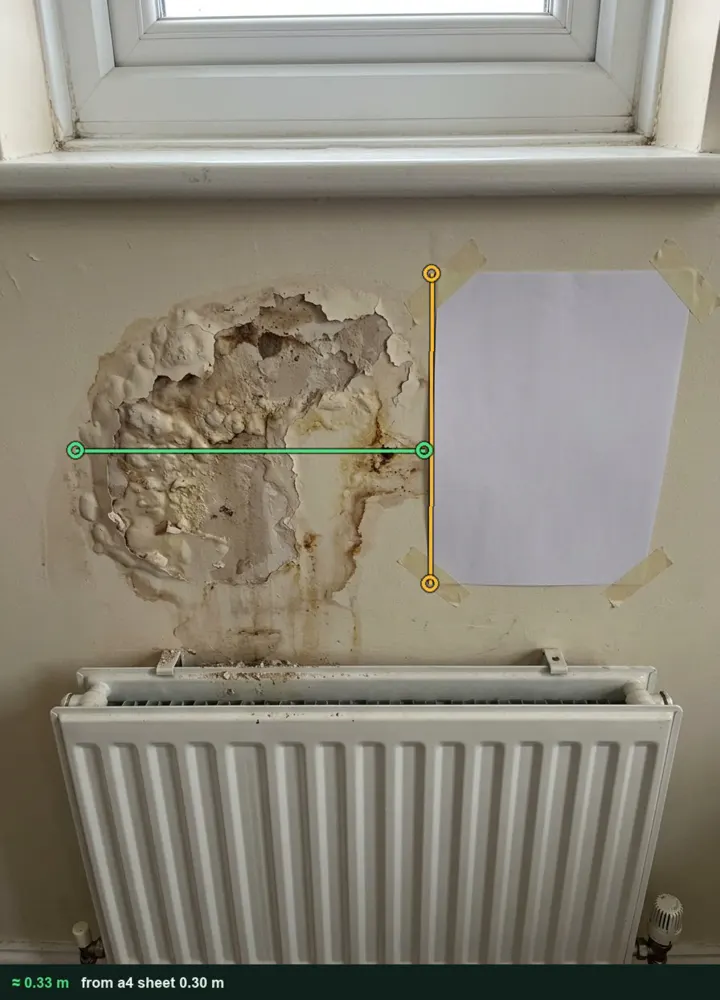
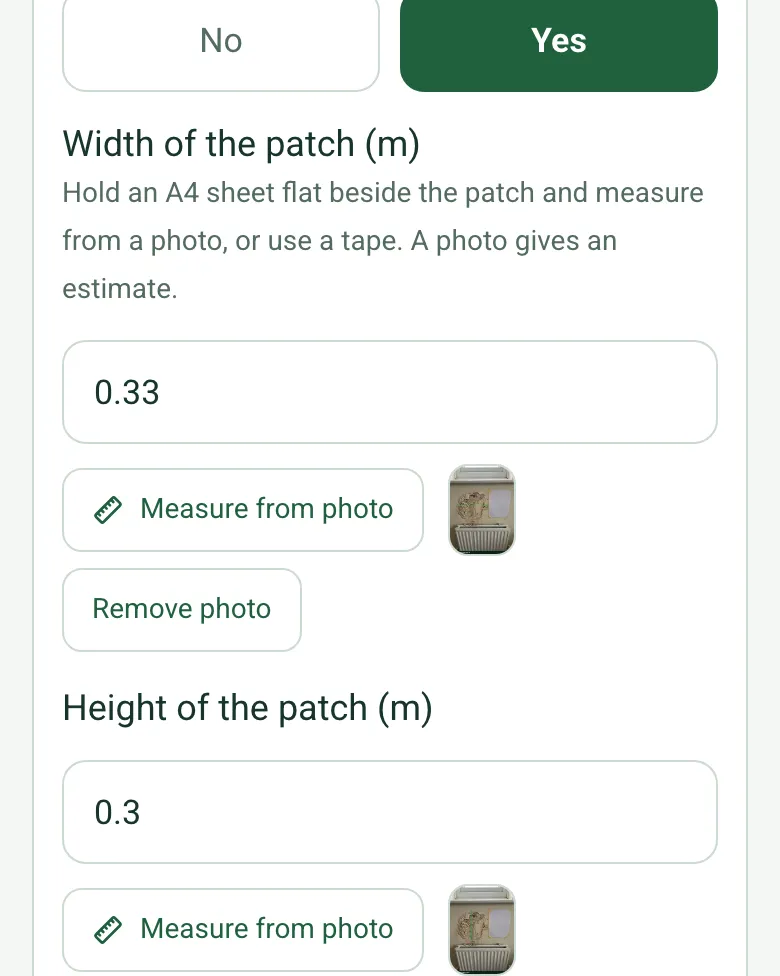
Width of the patch 0.33 m and Height of the patch 0.3 m on a phone, each with a measuring photo thumbnail

A damp patch measured

Tape an A4 sheet beside the patch and measure it from a photo, so the next inspection can see if it has grown. It works on web forms in any phone browser today, and the app version is on its way.

How measuring from a photo works →
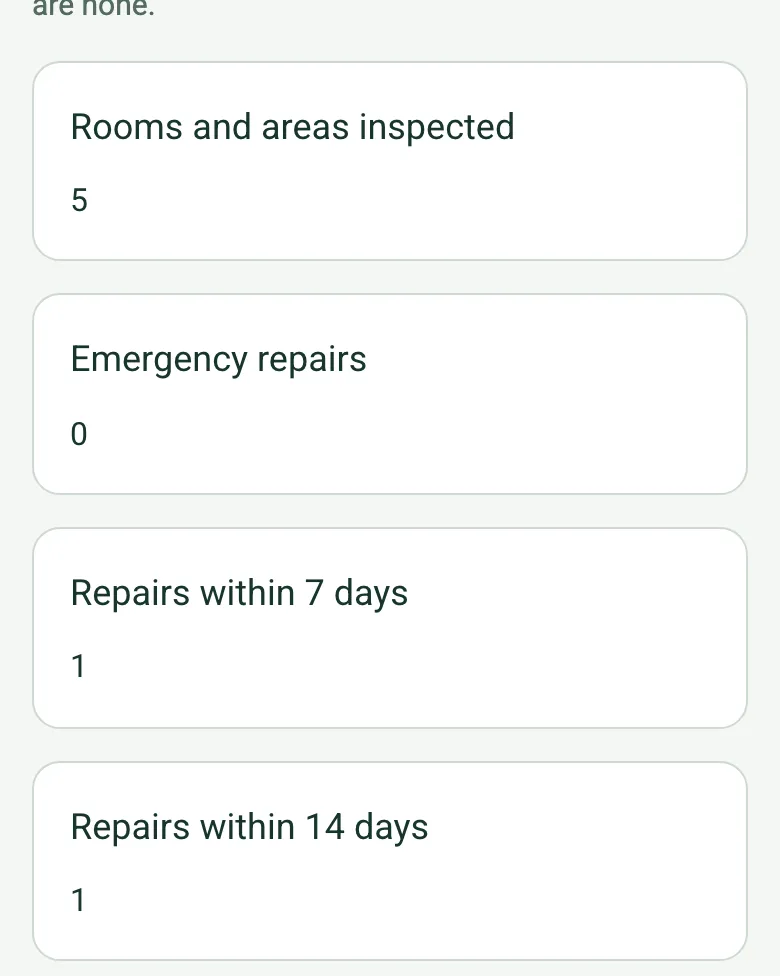
Repairs summary worked out on a phone: rooms and areas inspected 5, emergency repairs 0, repairs within 7 days 1, repairs within 14 days 1

Repairs counted by priority

Each room's issue carries its priority and who is responsible, and the summary counts them for you: emergency, 7, 14 and 28 days, repairs for the tenant and the damp area found.

How calculated fields work →
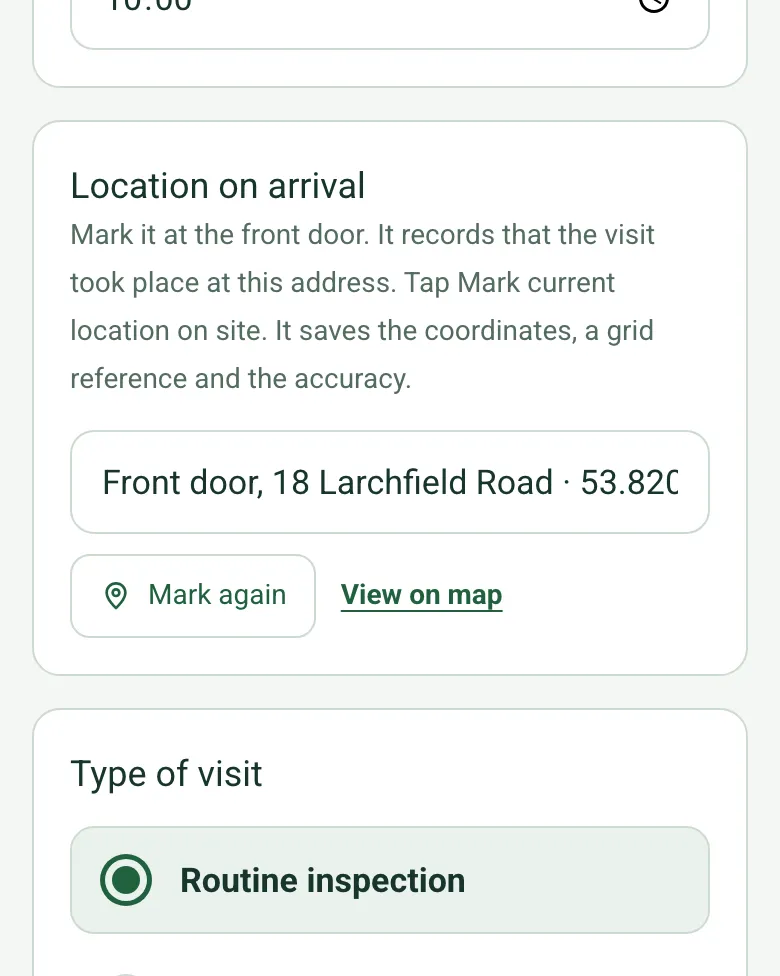
Location on arrival filled in as Front door, 18 Larchfield Road, with GPS coordinates, Mark again and View on map

Proof of the visit

Mark your location at the front door when you arrive. It records that the visit took place at this address. Mark current location works on web forms in any phone browser today, and the app version is on its way.

How GPS location works →

Each room on video

Film the condition of each room as you go. The clip sits with the inspection, so a dispute later starts from the same evidence.

How Walk Cam works →

A completed property inspection

A routine inspection of a fictional rented flat with 24 hours' written notice: a damp patch under the living room window measured at about 0.33 by 0.30 m, a leaking sink trap in the kitchen, alarms tested and two repairs raised. Open it as a filled-in form, or switch to a blank copy and try it yourself.

Blown plaster and tide marks on a living room wall above a radiator, measured from a photo at about 0.33 m wide using an A4 sheet
Living room · damp patch 0.33 x 0.30 m · within 14 days
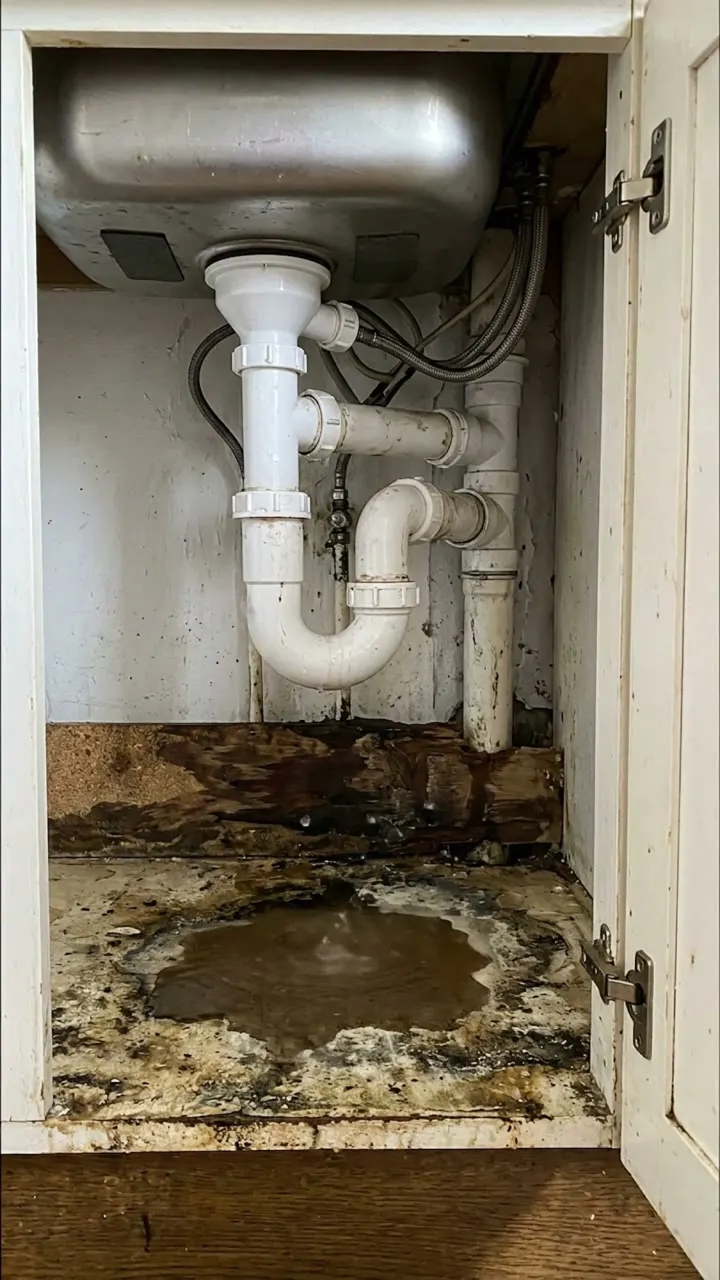
A wet, swollen cupboard base below a dripping sink trap
Kitchen · sink trap leaking · within 7 days
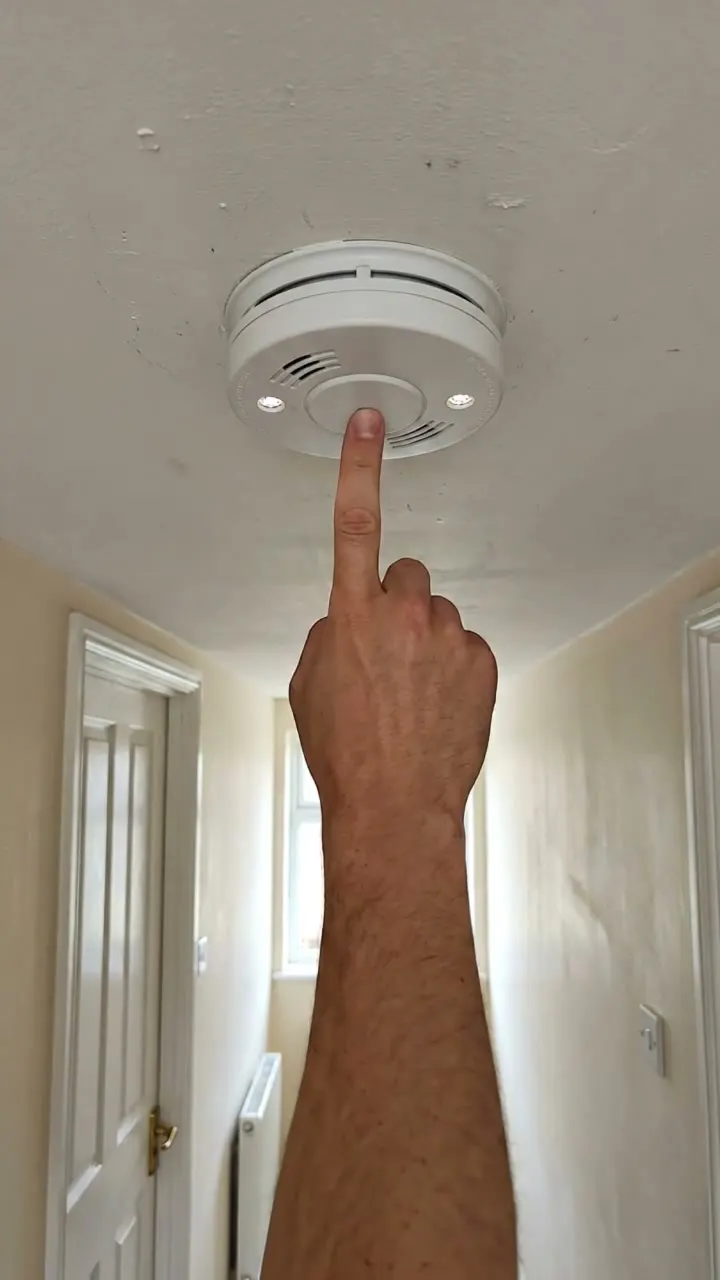
A hand pressing the test button on a ceiling smoke alarm in a hallway
Hallway smoke alarm tested · sounded

Try the property inspection form live

Answer a few questions and watch it adapt. Your answers are not saved, and any photos you add are deleted within the hour.

Live form: Routine Property InspectionOpen full screen ↗
Fill it in right here

This is the real form as your team would use it: questions appear as you answer, scores work themselves out and you can add photos and signatures. No sign-up needed. Or open a completed example to see every answer, photo and score filled in.

Want to see one filled in? See a completed property inspection report (PDF), made by SiteSurvey from a fictional site visit.

Fill it in on a phone or tablet

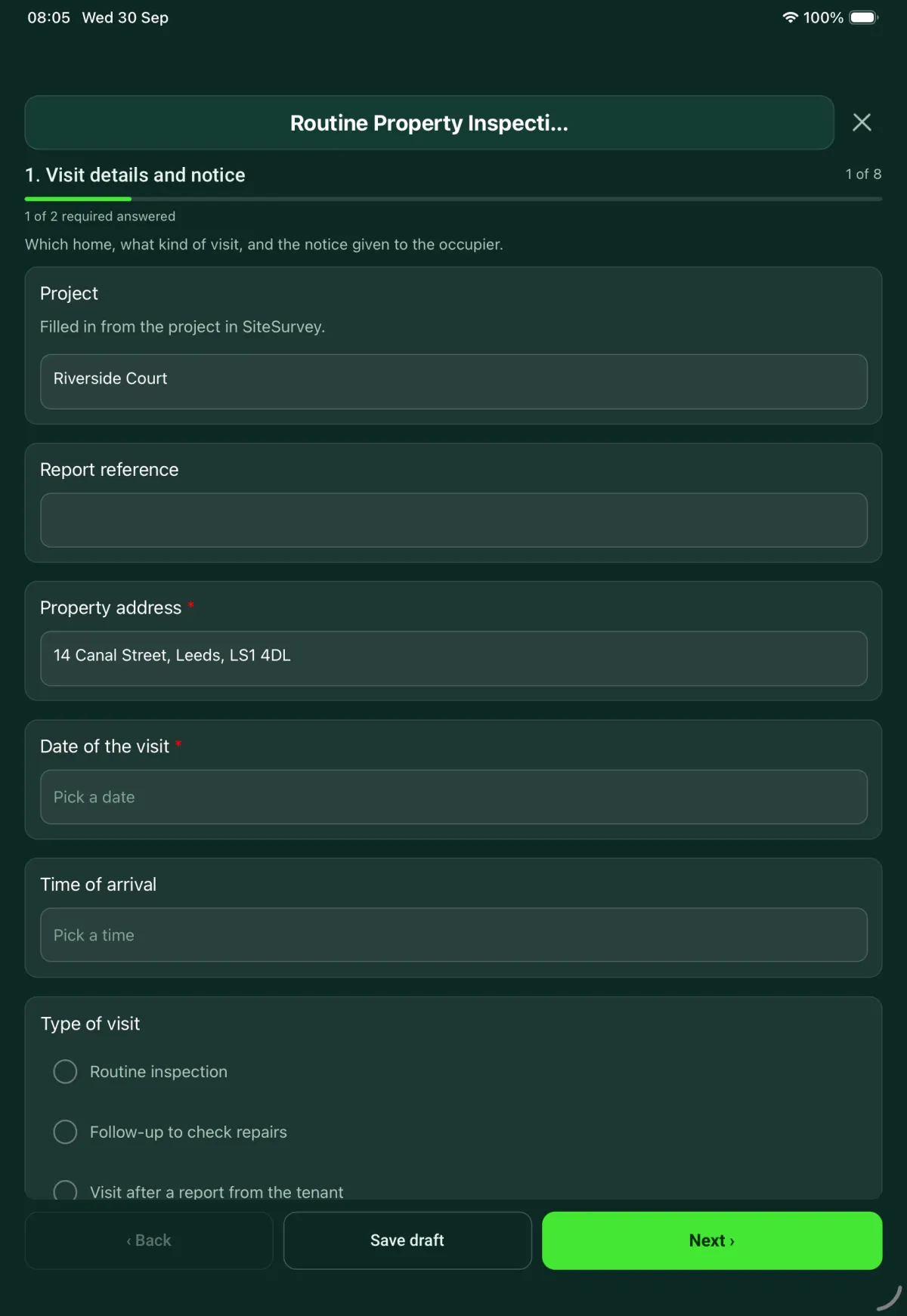
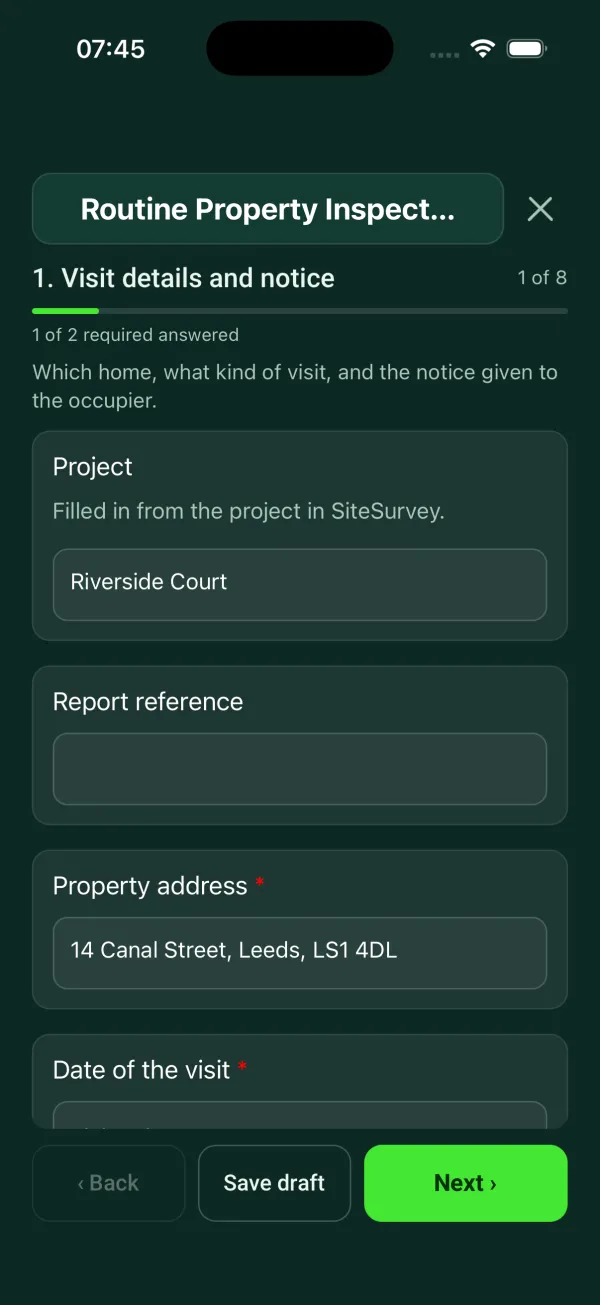
Your team completes the routine property inspection on site in the SiteSurvey app on iPhone, iPad and Android phones and tablets. The project name and address fill in for them, it works without signal, and it syncs when the device is back online with photos kept against the question they answer.

Customers and subcontractors do not need the app: send them a link and they can fill it in from any browser.

The Routine Property Inspection form in the SiteSurvey app on a tablet
The Routine Property Inspection form in the SiteSurvey app on a phone

Every question in the property inspection template

Periodic tenancy inspection: tenant's account, alarms and safety records, room by room condition, repairs with priorities. 8 sections and 108 questions. Follow-up questions and guidance appear only when an answer calls for them, so the person on site never sees the ones that do not apply.

Make it your own: every question is editable

This is a starting point, not a fixed form. Once it is in your SiteSurvey account you can reword any question, add or remove questions, sections and answer options, and add your own logo, so it fits the way your team works and the jobs you do.

Details you only enter once

Add this form to a project in SiteSurvey and it fills in what the project already knows, so nobody on site retypes it and every form on the job uses the same names. Anything filled in can still be changed.

  • Project: the project name
  • Property address: the site address, from the space or the project

Visit details and notice

Which home, what kind of visit, and the notice given to the occupier.

  • ProjectShort answer

    Filled in from the project in SiteSurvey.

    Fills in from the project name
  • Report referenceShort answer
  • Property address*Short answer
    Fills in from the site address, from the space or the project
  • Date of the visit*Date
  • Location on arrivalShort answer

    Mark it at the front door. It records that the visit took place at this address. Tap Mark current location on site. It saves the coordinates, a grid reference and the accuracy.

  • Type of visitChoose one
    • Routine inspection
    • Follow-up to check repairs
    • Visit after a report from the tenant
  • Date of the visit that found the repairsDate
    Shown when “Type of visit” is “Follow-up to check repairs”
  • Date the tenant made the reportDate
    Shown when “Type of visit” is “Visit after a report from the tenant”
  • Was notice of the visit given to the occupier in writing?Yes or No
  • Date the notice was givenDate
    Shown when “Was notice of the visit given to the occupier in writing?” is Yes
  • How was it given?Choose one
    • Letter
    • Email
    • Text message
    • Handed to the occupier
    • Other (describe)
    Shown when “Was notice of the visit given to the occupier in writing?” is Yes
  • How long before the visit was it given?Choose one
    • 24 hours or more
    • Less than 24 hours
    Shown when “Was notice of the visit given to the occupier in writing?” is Yes
  • GuidanceNotice recorded. Section 11(6) of the Landlord and Tenant Act 1985 lets the landlord, or a person authorised in writing, enter at reasonable times of the day to view the condition of the home, on 24 hours' notice in writing to the occupier.
    Shown when “Was notice of the visit given to the occupier in writing?” is Yes and “How long before the visit was it given?” is “24 hours or more”
  • CheckShort notice. The right of entry in section 11(6) of the Landlord and Tenant Act 1985 depends on 24 hours' notice in writing. Record below whether the occupier agreed to this visit.
    Shown when “Was notice of the visit given to the occupier in writing?” is Yes and “How long before the visit was it given?” is “Less than 24 hours”
  • WarningNo written notice. The right of entry in section 11(6) of the Landlord and Tenant Act 1985 depends on 24 hours' notice in writing. Record below whether the occupier agreed to this visit.
    Shown when “Was notice of the visit given to the occupier in writing?” is No
  • Did the occupier agree to the visit?Yes or No
    Shown only when the answers above make it relevant
  • How and when did they agree?Notes
    Shown only when the answers above make it relevant
  • Inspector name and roleShort answer
  • The inspector isChoose one
    • The landlord
    • Someone acting for the landlord
  • Has the landlord authorised the inspector in writing?Yes or No
    Shown when “The inspector is” is “Someone acting for the landlord”
  • CheckSection 11(6) refers to the landlord or a person authorised by the landlord in writing. Get the written authority before the next visit.
    Shown when “The inspector is” is “Someone acting for the landlord” and “Has the landlord authorised the inspector in writing?” is No
  • Access on the dayChoose one
    • Tenant let the inspector in
    • Tenant not home, entry agreed in advance
    • No access
  • WarningNo access. Do not go in. Record what happened and book another visit with new written notice.
    Shown when “Access on the day” is “No access”
  • What happened?Notes
    Shown when “Access on the day” is “No access”
  • Walk Cam: Routine property inspectionWalk Cam video with voice-to-text

    Optional. Film a guided walk-through on the SiteSurvey app.

Tenant's account

Record what the tenant tells you, in their words where you can.

  • Tenant nameShort answer
  • Has the tenant reported any issues, before or during the visit?Yes or No
  • What did they report?Notes
    Shown when “Has the tenant reported any issues, before or during the visit?” is Yes
  • Date first reportedDate
    Shown when “Has the tenant reported any issues, before or during the visit?” is Yes
  • Does any report concern a smoke or carbon monoxide alarm?Yes or No
    Shown when “Has the tenant reported any issues, before or during the visit?” is Yes
  • CheckWhere a tenant reports an alarm and it is found not to be working, the landlord must make sure it is repaired or replaced as soon as reasonably practicable. Test it on this visit and record the result in section 3.
    Shown when “Has the tenant reported any issues, before or during the visit?” is Yes and “Does any report concern a smoke or carbon monoxide alarm?” is Yes
  • Were repairs raised at the last inspection?Yes or No
  • Have they been done?Choose one
    • All done
    • Some done
    • None done
    Shown when “Were repairs raised at the last inspection?” is Yes
  • Which repairs are still open?Notes
    Shown only when the answers above make it relevant
  • Does the tenant have language, access or contact needs?Yes or No
  • What do they need?Short answer
    Shown when “Does the tenant have language, access or contact needs?” is Yes

Alarms and safety records

Test every alarm and say the result. Count the alarms, then check the records.

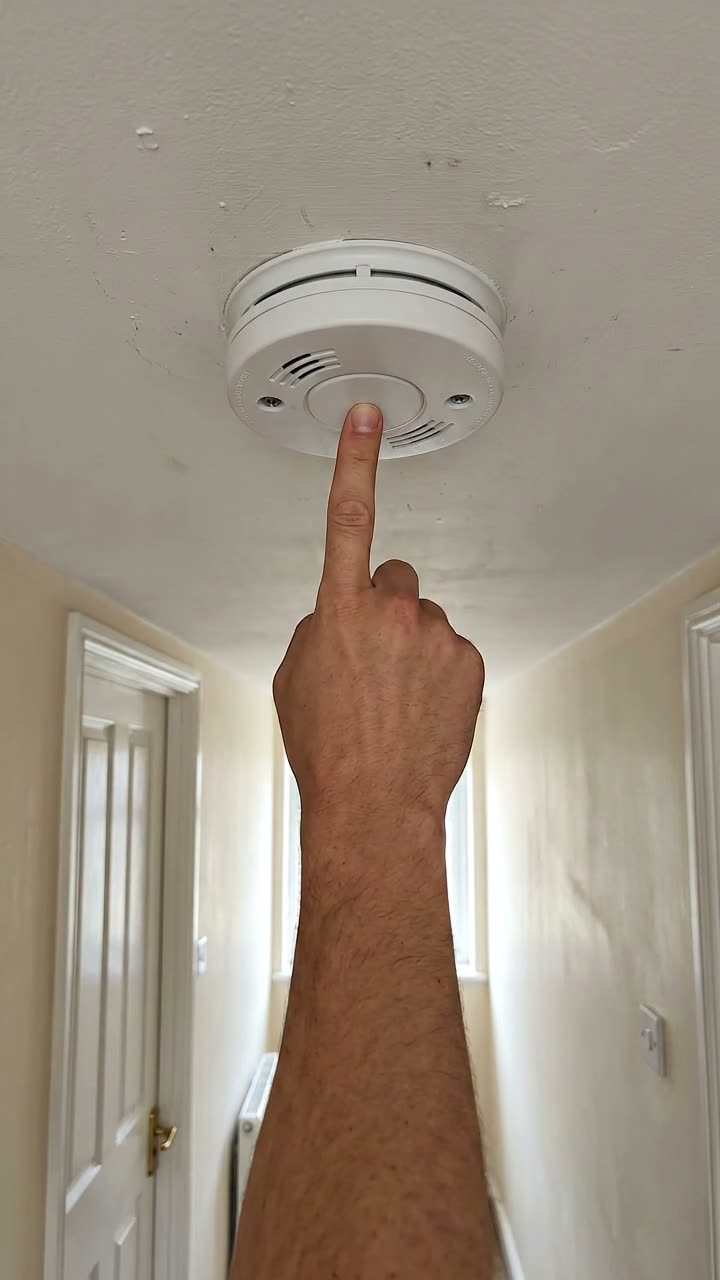
  • A finger pressing the test button on a smoke alarm on a hallway ceiling
    A finger pressing the test button on a smoke alarm on a hallway ceiling
  • GuidanceWhat the regulations require in England. A smoke alarm on each storey with a room used as living accommodation. A carbon monoxide alarm in any such room with a fixed combustion appliance, other than a gas cooker.
  • CheckSources (England). Smoke and Carbon Monoxide Alarm (England) Regulations 2015, as amended in 2022: alarms as above, checked at the start of each tenancy, and repaired or replaced when reported faulty. Gas Safety (Installation and Use) Regulations 1998, regulation 36: landlord gas appliances and flues checked every 12 months by a Gas Safe registered engineer, with the record given to the tenant. Electrical Safety Standards in the Private Rented Sector (England) Regulations 2020: the installation inspected and tested at least every 5 years. Homes (Fitness for Human Habitation) Act 2018: the home must be fit to live in at the start of and throughout the tenancy, including free from serious damp.
  • Storeys with living accommodationNumber
  • Storeys with a smoke alarmNumber
  • Storeys without a smoke alarmWorked out by the form
    Shown when “Storeys with living accommodation” is answered and “Storeys with a smoke alarm” is answered
  • WarningSmoke alarm missing. At least one storey with living accommodation has no smoke alarm. Tell the landlord today.
    Shown only when the answers above make it relevant
  • Rooms with a boiler, fire or stove (do not count gas cookers)Number
  • Of those rooms, how many have a carbon monoxide alarm?Number
    Shown only when the answers above make it relevant
  • WarningCarbon monoxide alarm missing. At least one room with a fixed combustion appliance has no carbon monoxide alarm. Tell the landlord today.
    Shown only when the answers above make it relevant
  • Alarms tested on this visitNumber
  • Alarms that soundedNumber
  • Alarms that did not soundWorked out by the form
    Shown only when the answers above make it relevant
  • WarningAn alarm did not sound. Say which one below and tell the landlord today, so it can be repaired or replaced.
    Shown only when the answers above make it relevant
  • Which alarms failed, and where are they?Notes
    Shown only when the answers above make it relevant
  • GuidanceGovernment guidance is for tenants to test their alarms regularly, following the maker's instructions. It is guidance, not a legal duty.
    Shown only when the answers above make it relevant
  • Does the home have gas appliances supplied by the landlord?Yes or No
  • Gas safety recordChoose one
    • Seen, check made in the last 12 months
    • Seen, check made more than 12 months ago
    • Not seen
    Shown when “Does the home have gas appliances supplied by the landlord?” is Yes
  • Date of the last gas safety checkDate
    Shown only when the answers above make it relevant
  • CheckGas appliances and flues supplied by the landlord must be checked for safety at intervals of not more than 12 months. Tell the landlord that the check is due.
    Shown when “Does the home have gas appliances supplied by the landlord?” is Yes and “Gas safety record” is “Seen, check made more than 12 months ago”
  • Electrical installation reportChoose one
    • Seen, dated in the last 5 years
    • Seen, dated more than 5 years ago
    • Not seen
  • Date of the electrical installation reportDate
    Shown only when the answers above make it relevant
  • CheckIn rented homes in England the electrical installation must be inspected and tested at intervals of no more than 5 years. Tell the landlord that the inspection is due.
    Shown when “Electrical installation report” is “Seen, dated more than 5 years ago”
  • Are the hallway and the way out clear?Yes or No
  • What is in the way?Short answer
    Shown when “Are the hallway and the way out clear?” is No

Room by room

One entry for each room. Photograph every issue where it is.

  • GuidanceWhat a good photo shows. Step back so the room and the position are clear, then get close to the problem. Photograph rooms in good order too, so the next visit has something to compare. The pictures below are examples.
  • Rooms inspected
    Repeat for each room. Each one asks:
    • RoomChoose one
      • Hallway
      • Living room
      • Kitchen
      • Bathroom
      • Bedroom 1
      • Bedroom 2
      • Bedroom 3
      • Outside or shared area
      • Other (describe)
    • ConditionChoose one
      • Good
      • Fair
      • Poor
    • CleanlinessChoose one
      • Clean
      • Needs attention
    • What needs attention?Notes
      Shown when “Cleanliness” is “Needs attention”
    • Which looks most like this room?Choose one
      • Damp patch on a wall
      • Leak under a sink
      • Room in good order
    • Is there an issue in this room?Yes or No
    • Type of issueChoose one
      • Damp or mould
      • Leak
      • Damage
      • Fault with a fitting or appliance
      • Wear
      • Other (describe)
      Shown when “Is there an issue in this room?” is Yes
    • Describe the issue and where it isNotes
      Shown when “Is there an issue in this room?” is Yes
    • Photos of the issuePhotos
      Shown when “Is there an issue in this room?” is Yes
    • Was it reported by the tenant?Yes or No
      Shown when “Is there an issue in this room?” is Yes
    • Width of the patch (m)Number

      Hold an A4 sheet flat beside the patch and measure from a photo, or use a tape. A photo gives an estimate.

      Shown when “Is there an issue in this room?” is Yes and “Type of issue” is “Damp or mould”
    • Height of the patch (m)Number
      Shown when “Is there an issue in this room?” is Yes and “Type of issue” is “Damp or mould”
    • Area of the patch (m²)Worked out by the form
      Shown only when the answers above make it relevant
    • Likely sourceChoose one
      • Water getting in from outside
      • Leak from plumbing
      • Condensation
      • Not yet known
      Shown when “Is there an issue in this room?” is Yes and “Type of issue” is “Damp or mould”
    • CheckFreedom from damp is one of the matters the law looks at when deciding whether a rented home is fit to live in. Record the size and the likely source so the next visit can show whether it has changed.
      Shown when “Is there an issue in this room?” is Yes and “Type of issue” is “Damp or mould”
    • CheckSocial housing. Social landlords in England must also meet the Hazards in Social Housing (Prescribed Requirements) (England) Regulations 2025 (Awaab's Law), in force since 27 October 2025: emergency hazards must be investigated and made safe within 24 hours, and potential significant damp and mould hazards investigated within 10 working days, with fixed timescales for the written summary and safety work. Check the current regulations for the full timescales.
      Shown when “Is there an issue in this room?” is Yes and “Type of issue” is “Damp or mould”
    • Is water still escaping?Yes or No
      Shown when “Is there an issue in this room?” is Yes and “Type of issue” is “Leak”
    • WarningActive leak. Contain the water if you can and tell the landlord today. Keep water away from electrics.
      Shown when “Is there an issue in this room?” is Yes and “Type of issue” is “Leak” and “Is water still escaping?” is Yes
    • PriorityChoose one
      • Emergency
      • Within 7 days
      • Within 14 days
      • Within 28 days
      • Check again at the next visit
      Shown when “Is there an issue in this room?” is Yes
    • WarningEmergency. Phone the landlord or agent before you leave the property.
      Shown when “Is there an issue in this room?” is Yes and “Priority” is “Emergency”
    • Who is responsible?Choose one
      • Landlord
      • Tenant
      • To be agreed
      Shown when “Is there an issue in this room?” is Yes
    • Why is this for the tenant?Notes
      Shown when “Is there an issue in this room?” is Yes and “Who is responsible?” is “Tenant”
    • Action needed, and which tradeShort answer
      Shown when “Is there an issue in this room?” is Yes
    • More issues in this room
      Repeat for each issue. Each one asks:
      Shown when “Is there an issue in this room?” is Yes
      • Type of issue*Choose one
        • Damp or mould
        • Leak
        • Damage
        • Fault with a fitting or appliance
        • Wear
      • Describe the issue and where it isNotes
      • Photos of the issuePhotos
      • PriorityChoose one
        • Emergency
        • Within 7 days
        • Within 14 days
        • Within 28 days
        • Check again at the next visit
      • Who is responsible?Choose one
        • Landlord
        • Tenant
        • To be agreed
    • More issues in this roomWorked out by the form
      Shown when “Is there an issue in this room?” is Yes
    • Photos of the roomPhotos

Heating, ventilation and outside

Checks that apply to the whole home.

  • Is the heating working?Yes or No
  • What is wrong with it?Notes
    Shown when “Is the heating working?” is No
  • Is there hot water?Yes or No
  • CheckNo heating or no hot water. Include the repair in section 6 and give it a priority.
    Shown only when the answers above make it relevant
  • Bathroom extractor fanChoose one
    • Working
    • Fitted, not working
    • None
  • Does the bathroom have a window that opens?Yes or No
    Shown when “Bathroom extractor fan” is “None”
  • CheckThis bathroom has no fan and no window that opens, so moisture has no way out.
    Shown when “Bathroom extractor fan” is “None” and “Does the bathroom have a window that opens?” is No
  • Kitchen extractionChoose one
    • Working
    • Fitted, not working
    • None
  • How was the outside inspected?Choose one
    • Up close
    • From ground level
    • Not inspected
  • Defects seen outsideTick all that apply
    • Blocked or leaking gutters
    • Damaged downpipes
    • Cracked render or pointing
    • Slipped or missing roof tiles
    • Damaged window cills or seals
    • None seen
    Shown only when the answers above make it relevant
  • Describe the defects and where they areNotes
    Shown only when the answers above make it relevant
  • Areas not inspected, and whyNotes

Repairs summary

Count the repairs by priority. Leave a box at 0 if there are none.

  • Rooms and areas inspectedWorked out by the form
  • Emergency repairsWorked out by the form
  • Repairs within 7 daysWorked out by the form
  • Repairs within 14 daysWorked out by the form
  • Repairs within 28 daysWorked out by the form
  • Repairs in totalWorked out by the form
  • Further issues in roomsWorked out by the form
    Shown only when the answers above make it relevant
  • Rooms in poor conditionWorked out by the form
  • Repairs for the tenantWorked out by the form
  • Damp or mould found, total area (m²)Worked out by the form
    Shown only when the answers above make it relevant
  • WarningEmergency repair recorded. Check that the landlord or agent has been told by phone, and record the time of the call.
    Shown only when the answers above make it relevant
  • Who was told, and at what time?Short answer
    Shown only when the answers above make it relevant
  • Who was told about the urgent repairs, and when?Short answer
    Shown only when the answers above make it relevant
  • GuidanceNo repairs recorded. The report will show the home as inspected with nothing to action.
    Shown only when the answers above make it relevant
  • Anything done on the visitNotes
    Shown only when the answers above make it relevant

Report and next steps

Who gets the report, and when the home is seen again.

  • Overall condition of the homeChoose one
    • 1 of 5, very poor
    • 2 of 5, poor
    • 3 of 5, fair
    • 4 of 5, good
    • 5 of 5, very good
  • What are the main concerns?Notes
    Shown only when the answers above make it relevant
  • Is a follow-up visit needed to check the repairs?Yes or No
  • Follow-up visit dateDate
    Shown when “Is a follow-up visit needed to check the repairs?” is Yes
  • GuidanceA follow-up visit is a new visit. Give the occupier written notice again, at least 24 hours before.
    Shown when “Is a follow-up visit needed to check the repairs?” is Yes
  • Next routine inspectionDate
  • How will the report be sent to the landlord?Choose one
    • Email
    • Link
    • Post
    • By hand
  • Will the tenant get a copy?Yes or No

Sign-off

  • Inspector nameWorked out by the form
  • Inspector signatureSignature
  • Is the tenant signing?Yes or No
  • Tenant nameWorked out by the form
  • Tenant signatureSignature
    Shown when “Is the tenant signing?” is Yes
  • Why not?Choose one
    • Tenant not present
    • Tenant chose not to sign
    • Not asked
    Shown when “Is the tenant signing?” is No

See it filled in

A completed property inspection report, made by SiteSurvey from a fictional site visit: every answer, the photos, the guidance that applied and the sign-off, ready to send as a PDF.

See completed form (PDF) ↗

Property inspection FAQs

Can I use this as a house inspection checklist?

Yes, for a landlord or agent inspecting a let home during a tenancy. It covers the tenant's account, alarms and safety records, the condition of each room and repairs with priorities. It is not a survey for someone buying a house, which needs a qualified surveyor.

How much notice does a landlord have to give for an inspection?

Section 11 of the Landlord and Tenant Act 1985 lets the landlord, or a person authorised by the landlord in writing, enter at reasonable times of the day to view the condition of the home, on 24 hours' notice in writing to the occupier. The form records the notice, how it was given and, if it was short or missing, whether the occupier agreed to the visit.

How often should a rental property be inspected?

There is no legal frequency for routine inspections. Many landlords and agents inspect every three to six months, which is common practice rather than law. The form records the date of the next routine inspection and any follow-up visit to check repairs.

Which alarms does the checklist cover?

In England the regulations require a smoke alarm on each storey with a room used as living accommodation, and a carbon monoxide alarm in any such room with a fixed combustion appliance other than a gas cooker. The form counts storeys and rooms against the alarms fitted, records which alarms sounded when tested, and flags any that are missing or failed.

What safety records does it check?

It asks whether the gas safety record has been seen and whether the check was made in the last 12 months, as gas appliances and flues supplied by the landlord must be checked at intervals of not more than 12 months. It also asks about the electrical installation report: in rented homes in England, private and social, the installation must be inspected and tested at intervals of no more than 5 years.

How are repairs prioritised?

Each issue found in a room gets a type, a description, photos and a priority: emergency, within 7, 14 or 28 days, or check again at the next visit. It also records who is responsible and the trade needed, and the repairs summary totals the repairs you count at each priority.

Can the tenant sign the inspection report?

Yes. The sign-off records the inspector's signature and, if the tenant is signing, their name and signature on the phone or tablet. If they do not sign, the form records why. In the SiteSurvey app the inspection works offline and becomes a PDF report or a share link.

Related

Use this property inspection form with your team

Add it from the form library in one click, change any question, and every completed form becomes a branded PDF report.

Start your trial →