A condition inspection of protective coatings on structural steel. Record the structure, the coating system, when it was last coated, the ISO 12944 corrosivity category if known and the access available. Then add each area or member by its gridline or mark: the coating breakdown and corrosion seen, the extent, where on the member it is, a dry film thickness reading if measured, any visible loss of steel and a priority, with photos. The form counts areas with loss of section and areas referred to an engineer, and records what could not be seen. An optional Walk Cam route films the structure, coating breakdown, a connection and a column base. Every question is listed below, and you can fill the live form in on this page.
✎Every question is editable. Add this form to your account, then change the wording, add or remove questions and options, and make it fit your own jobs.
Prefer paper? Download a printable copy: PDF or Word
What should a coating inspection report record?
Which structure and members were inspected, the coating system and the environment, what breakdown and corrosion were found and where, any readings taken, what could not be seen, and the actions with owners and dates. steelconstruction.info says records of all aspects of inspection, along with any problems, should be made. ISO 12944 classifies the corrosivity of environments from C1, such as heated offices and schools, to CX, such as offshore areas.
Film the steelwork from a member reference to the places coatings fail first: flanges, bolts, edges and bases.
Record the structure, gridline or member mark, date and access limits. Move from the whole frame to coating breakdown and corrosion without scraping or touching. The four AI-generated clips illustrate one route, not a real structure.
POINT 01
Structure and area reference
Film the steelwork with a gridline, bay or member mark in view before any close up.
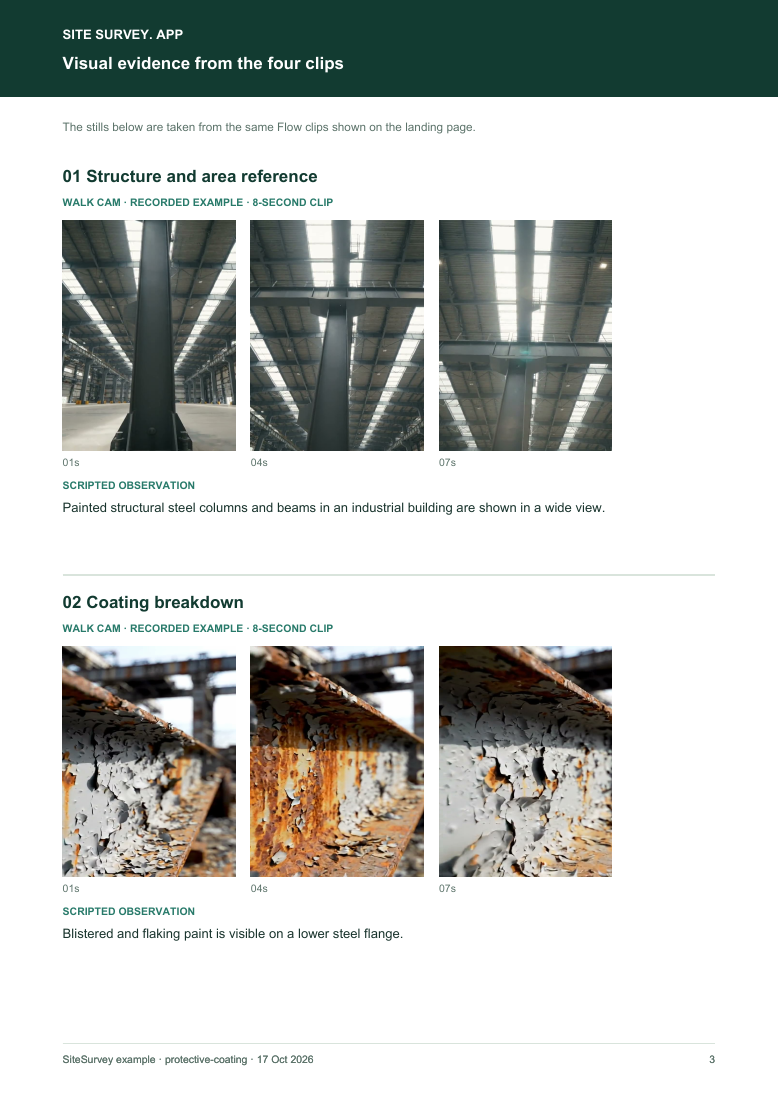
Painted structural steel columns and beams in an industrial building are shown in a wide view.
POINT 02
Coating breakdown
Show blistering, flaking or chalking on the coating with the member still identifiable.
Blistered and flaking paint is visible on a lower steel flange.
POINT 03
Bolted connection and edges
Film bolts, welds and edges, where coatings usually fail first, without scraping or touching.
Rust staining runs from the bolts of a beam to column connection.
POINT 04
Column base and limits
End at the column base or the hardest place to reach, and say what could not be seen.
Corrosion is visible where a column meets the concrete floor.
See the footage in a report
A fictional six-page example with the four points, twelve stills from the clips, observations, follow-up actions and the limits of a visual record.
A video shows visible coating condition. It does not measure film thickness, adhesion or section loss, and it does not grade rust or blistering to a standard; those need a qualified coating inspector and the right instruments. Example footage was generated in Google Flow and the observations are scripted; no real site is shown. Walk Cam works inside any form in the app. How Walk Cam works · All visual inspections
Every question in the coating inspection template
A protective coating and corrosion inspection of steelwork: structure, coating system and corrosivity category, each area or member with breakdown, corrosion, where it is, film thickness if measured, priority and photos. 3 sections and 50 questions. Follow-up questions and guidance appear only when an answer calls for them, so the person on site never sees the ones that do not apply.
✎
Make it your own: every question is editable
This is a starting point, not a fixed form. Once it is in your SiteSurvey account you can reword any question, add or remove questions, sections and answer options, and add your own logo, so it fits the way your team works and the jobs you do.
Details you only enter once
Add this form to a project in SiteSurvey and it fills in what the project already knows, so nobody on site retypes it and every form on the job uses the same names. Anything filled in can still be changed.
Project: the project name
Client: the project's customer
Site: the site, when the form is opened for a space or a product
Site address: the site address, from the space or the project
1
Structure
ProjectShort answer
Fills in from the project name
ClientShort answer
Fills in from the project's customer
Site*Short answer
Fills in from the site, when the form is opened for a space or a product
Site addressShort answer
Fills in from the site address, from the space or the project
Inspection date*Date
TimeTime
Inspector*Short answer
CompanyShort answer
Structure or area (building, frame, bay)*Short answer
Structure locationShort answer
Mark it at the structure, useful for tanks, gantries, bridges and yards. Tap Mark current location on site. It saves the coordinates, a grid reference and the accuracy.
Coating system (from the specification or records, if known)Short answer
Specified minimum dry film thickness (microns), if knownNumber
From the coating specification. The form compares readings with it and sets no figure of its own.
Date last coated or maintained, if knownDate
Corrosivity category (ISO 12944-2), from the specification if knownChoose one
C1 very low
C2 low
C3 medium
C4 high
C5 very high
CX extreme
Not known
AccessChoose one
Full access
Part access
From the ground only
GuidanceBS EN ISO 12944-2:2017 classifies the corrosivity of environments from C1 to CX. Its examples run from heated buildings with clean atmospheres, such as offices and schools (C1), through unheated buildings where condensation can occur, such as depots and sports halls (C2), to industrial and coastal areas with high humidity or salinity (C5). Grade coating breakdown (rusting, blistering, cracking, flaking) to the ISO 4628 series, and measure dry film thickness on steel to ISO 19840. Corrosion needs moisture and oxygen together.
GuidanceThis form is for protective coatings on steelwork. For the look of decorative paint finishes, use a paint finish inspection instead.
Weather captureAnswer
Record estimated current conditions and add what you observe on site.
2
Areas and members
Areas
Repeat for each area. Each one asks:
Gridline, bay or member mark*Short answer
MemberChoose one
Column
Beam
Bracing
Connection
Base plate
Purlin or rail
Handrail or balustrade
Other
Coating and corrosion seenTick all that apply
Blistering
Flaking or peeling
Cracking
Chalking
Rust spots
Rust staining
Pitting or loss of steel
Mechanical damage
None seen
ExtentChoose one
Isolated spots
Local area
Widespread
Shown only when the answers above make it relevant
Where on the memberTick all that apply
Flat surfaces
Edges and corners
Welds
Bolts and connections
Crevices or lap joints
Base or ground contact
Water or dirt trap
Shown only when the answers above make it relevant
Length of the affected patch (m)Number
Measure from a square-on photo with a rule taped to the member, or the member's known flange width, as the reference, or use a tape. Measuring from a photo gives an estimate.
Shown only when the answers above make it relevant
Width of the affected patch (m)Number
Shown only when the answers above make it relevant
Affected area (m²)Worked out by the form
Shown only when the answers above make it relevant
Dry film thickness reading (microns), if measuredNumber
Against the specificationWorked out by the form
Shown only when the answers above make it relevant
Below specification (1 = yes)Worked out by the form
Visible loss of steel section?Yes or No
WarningVisible loss of steel section. Refer it to a structural engineer before the coating is repaired.
Shown when “Visible loss of steel section?” is Yes
Priority*Choose one
No action
Monitor
Coating repair
Refer to a structural engineer
Photos (with the member mark in view)Photos
Areas or members inspectedWorked out by the form
Coating repairWorked out by the form
MonitorWorked out by the form
Readings below the specified thicknessWorked out by the form
Shown only when the answers above make it relevant
Total affected area measured (m²)Worked out by the form
Areas with visible loss of sectionWorked out by the form
Areas referred to an engineerWorked out by the form
GuidanceStructures with many small components and fasteners are harder to protect than large flat surfaces (BS EN ISO 12944-3 covers design for corrosion protection). Crevices hold water and lead to crevice corrosion, and water and dirt traps accelerate corrosion. Look closely at connections, edges, crevices and bases.
Areas not seen and why (height, cladding, stored goods)Notes
Walk Cam: coating and corrosion inspectionWalk Cam video with voice-to-text
Optional. Film the four guided points on the SiteSurvey app; each clip keeps its spoken note.
3
Actions and sign-off
GuidanceRecord every aspect of the inspection and any problems found, with the grading standard used (ISO 4628 for breakdown, ISO 19840 for dry film thickness). The Institute of Corrosion runs a certification scheme for painting and coating inspectors in the UK.
Are further actions needed?Yes or No
Further actions
Repeat for each action. Each one asks:
Shown when “Are further actions needed?” is Yes
What needs doing?*Notes
PriorityChoose one
Urgent
High
Medium
Low
Who will do it?Short answer
Due dateDate
StatusChoose one
Open
In progress
Completed
Inspector name*Short answer
Position or companyShort answer
Inspector signatureSignature
Next inspection dueDate
Set by the coating specification, the maintenance plan or the duty holder.
Days to next inspectionWorked out by the form
Shown when “Inspection date” is answered and “Next inspection due” is answered
CheckThe next due date is before the date of this record. Check the date entered.
Shown only when the answers above make it relevant
CheckSigning records what was found on the day. It does not make unsafe equipment safe or replace a thorough examination, design check or service by a competent person.
Scope and responsibility
This is a condition record, not a coating specification, a structural assessment or a rust or blister grading to a named standard.
What a useful entry looks like
Member, breakdown seen and where on the member
Identify each member by gridline or mark before describing it. Record what was seen and measured, and say what could not be seen.
Column B3: rust staining and pitting at the base plate, in a water trap by a downpipe. Visible loss of section, referred to a structural engineer.
Fictional example of record wording. Use the actual evidence and approved arrangements for your job; this is not a completed report or an instruction to carry out the work.
See it filled in
A completed coating inspection report, made by SiteSurvey from a fictional site visit: every answer, the photos, the guidance that applied and the sign-off, ready to send as a PDF.
No. It is for protective coatings on steelwork, where the concern is corrosion. For the appearance of decorative paint finishes, use a paint finish inspection.
What are the ISO 12944 corrosivity categories?
steelconstruction.info lists six, from C1 very low to CX extreme. Examples run from heated buildings with clean atmospheres (C1) and unheated buildings where condensation can occur (C2) to industrial and coastal areas with high humidity or salinity (C5) and offshore areas (CX).
Where do coatings on steel usually fail?
steelconstruction.info says structures with many small components and fasteners are harder to protect than large flat surfaces, crevices hold water and cause crevice corrosion, and water and dirt traps accelerate corrosion. The form records whether breakdown is on flat surfaces, edges, welds, bolts, crevices, bases or water traps.
What if steel has lost section?
Record it against the member. The form shows a red warning to refer it to a structural engineer before the coating is repaired, and counts how many areas have visible loss of section.
Who can carry out coating inspections?
steelconstruction.info says inspectors should be trained in recognised practices and certified, and that the Institute of Corrosion runs a certification scheme for painting and coating inspectors in the UK.
What does Walk Cam add?
On the SiteSurvey app, the optional Walk Cam route films the steelwork with a gridline or member mark in view, coating breakdown, a bolted connection and a column base, each with your spoken note. It shows the condition; it does not measure film thickness.