Record what was visible immediately before handback. Start with the whole vehicle, then show bodywork, wheels and glass, and the cabin in a repeatable route.
Hold to record. Keep holding while you film and speak; release to save the clip and its transcribed answer.
Four 9:16 example clips generated in Google Flow. Fictional inspection; no customer site is shown.
App-style example using Google Flow footage. The animated recording interface and gradually appearing words are scripted; no real inspection or live transcription took place.
The full visual example
Watch all four inspection points.
Each short clip shows one point in the guided route. The footage is AI-generated and the observations are scripted examples, not findings from a real inspection.
POINT 01
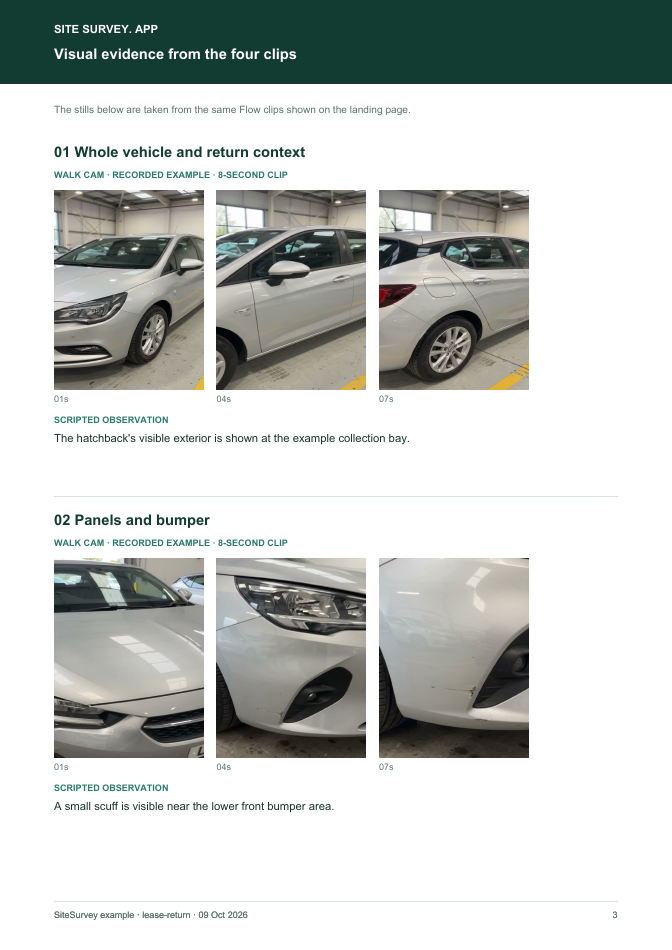
Whole vehicle and return context
Film the vehicle from wide front and side views in steady light. Record registration and odometer in report fields rather than relying on video text.
The hatchback's visible exterior is shown at the example collection bay.
POINT 02
Panels and bumper
Move slowly along the accessible body panels and locate a visible mark within its surrounding panel. Avoid guessing when it occurred.
A small scuff is visible near the lower front bumper area.
POINT 03
Wheels and glazing
Show each accessible wheel in location context, then the visible glass. Record marks without estimating their size from video alone.
The front-left wheel and nearby glazing are shown; a light rim mark may need an in-person check.
POINT 04
Cabin and fittings
Show the accessible seat, footwell and door trim in a steady sweep. Avoid filming personal possessions or another person's information.
The passenger-side seat, trim and footwell are visible in the example clip.
What can a vehicle lease-return visual inspection record?
Identify the vehicle, return stage, date and location. Record a whole-vehicle view before each close-up, and keep each observation linked to its panel or cabin area. This is a visible-condition record, not a mechanical inspection or a decision about fair wear and tear, liability or charges. Apply the actual lease agreement and return standard separately.
The six-page sample contains four inspection points, twelve footage stills, scripted observations and follow-up actions. The preview shows the first visual-evidence page.
Identify the vehicle, return stage, date and location. Record a whole-vehicle view before each close-up, and keep each observation linked to its panel or cabin area.
01
Whole vehicle and return context
Film the vehicle from wide front and side views in steady light. Record registration and odometer in report fields rather than relying on video text.
Example observation
“The hatchback's visible exterior is shown at the example collection bay.”
Scripted example, not a real finding.02
Panels and bumper
Move slowly along the accessible body panels and locate a visible mark within its surrounding panel. Avoid guessing when it occurred.
Example observation
“A small scuff is visible near the lower front bumper area.”
Scripted example, not a real finding.03
Wheels and glazing
Show each accessible wheel in location context, then the visible glass. Record marks without estimating their size from video alone.
Example observation
“The front-left wheel and nearby glazing are shown; a light rim mark may need an in-person check.”
Scripted example, not a real finding.04
Cabin and fittings
Show the accessible seat, footwell and door trim in a steady sweep. Avoid filming personal possessions or another person's information.
Example observation
“The passenger-side seat, trim and footwell are visible in the example clip.”
Scripted example, not a real finding.
How to use the record
Make the visual evidence useful.
Identify the visit
Record the asset or site, visit stage, date and inspector. Keep each clip attached to its point and note anything inaccessible.
Describe, then escalate
Say what the camera shows and where it is. Record the next action without guessing the cause or declaring a specialist result from video.
This is a visible-condition record, not a mechanical inspection or a decision about fair wear and tear, liability or charges. Apply the actual lease agreement and return standard separately.
Questions, answered
Vehicle lease-return visual inspection FAQs
Does the video decide fair wear and tear?
No. It records visible condition. The lease provider's applicable agreement and return standard govern the decision.
How is this different from car rental inspection?
This route is for the end of a vehicle lease and a single handback record. Car rental commonly compares collection and short-term return.
What if a mark is disputed?
Keep the original clip, time and location, compare earlier records and use the provider's normal dispute process.
What is in the example report?
A fictional completed pre-return report with four visual points, still frames, observations, actions and limitations.
Sources and review
Guidance checked 9 October 2026. The four-point route is a SiteSurvey example, not a method prescribed by these sources.
Provides an example of a separate return standard and condition-report process; the applicable contract must be checked.
Search research: Keywords Everywhere estimated 170 UK monthly searches for “end of lease inspection” when checked 9 October 2026. Searches include consumer preparation and professional collection services; software buyer intent is unverified. This is not a traffic or conversion forecast.
SiteSurvey Walk Cam explains the product capability. The clips are AI-generated examples.