Form library · Housing and property
Dilapidations survey template
A dilapidations survey form for commercial property that prepares either a schedule of dilapidations or a schedule of condition. It records the lease and documents, the inspection, each item with its breach category, lease clause, remedy and cost, a summary of costs, the landlord's intentions and the timing. Every question is listed below, and you can fill the live form in on this page.
Ready to use from the form library, and editable. Trial from £1, cancel any time.
What should a schedule of dilapidations include?
Under the Dilapidations Protocol, a schedule of dilapidations sets out the breaches the landlord considers there to be, the works needed to remedy them and, if relevant, the landlord's costings. Breaches are listed separately by category, such as repair, reinstatement and redecoration. Each item should refer to the lease clause it arises under, and the schedule is endorsed by the landlord or its surveyor.
Last updated . Facts checked on 26 September 2026 against the Dilapidations Protocol, section 18 of the Landlord and Tenant Act 1927 and the RICS Dilapidations professional standard.
Try the dilapidations survey form live
Answer a few questions and watch it adapt. Your answers are not saved, and any photos you add are deleted within the hour.
This is the real form as your team would use it: questions appear as you answer, scores work themselves out and you can add photos and signatures. No sign-up needed.
Fill it in on a phone or tablet
Your team completes the dilapidations survey on site in the SiteSurvey app on iPhone, iPad and Android phones and tablets. The project name and address fill in for them, it works without signal, and it syncs when the device is back online with photos kept against the question they answer.
Customers and subcontractors do not need the app: send them a link and they can fill it in from any browser.
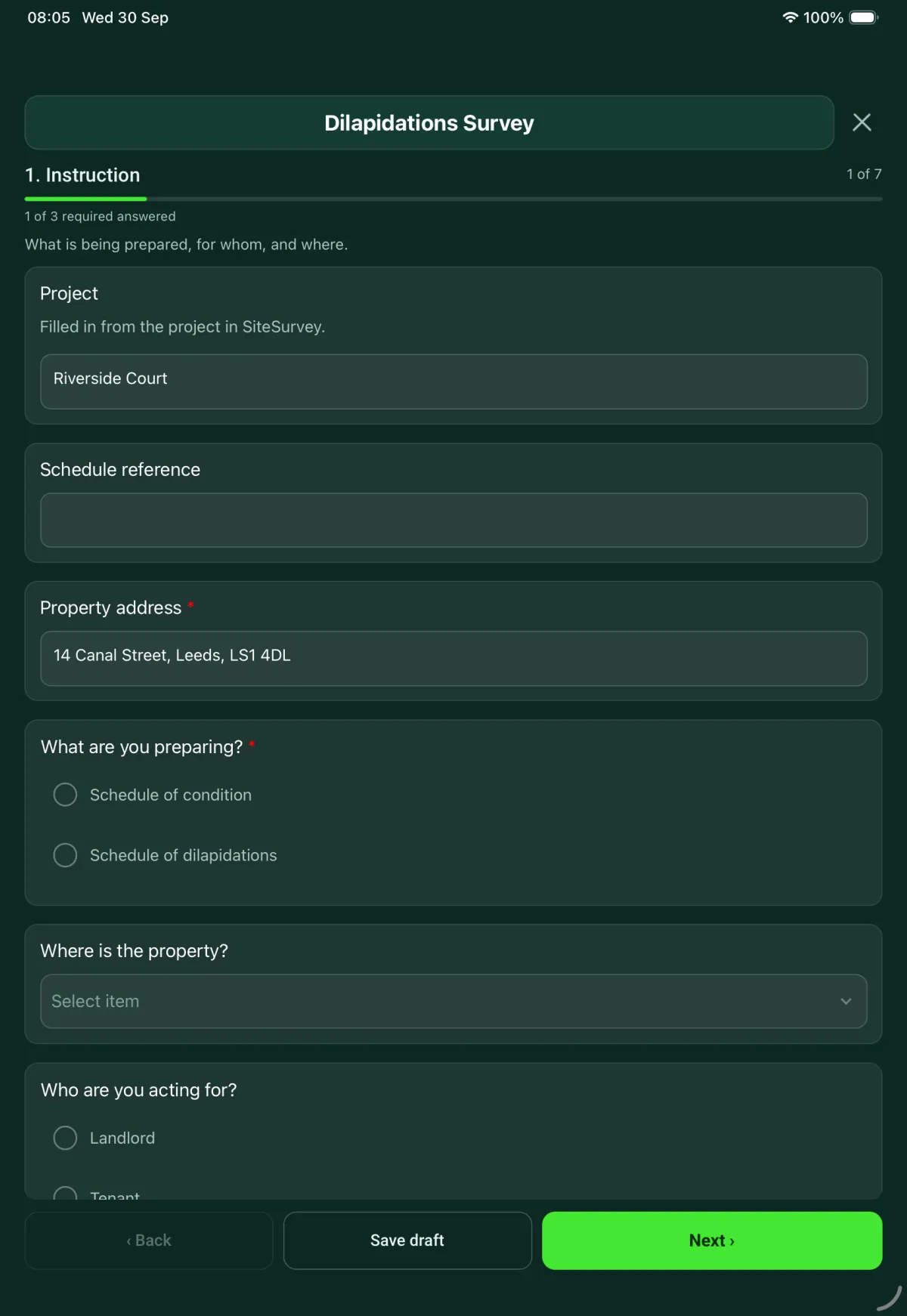
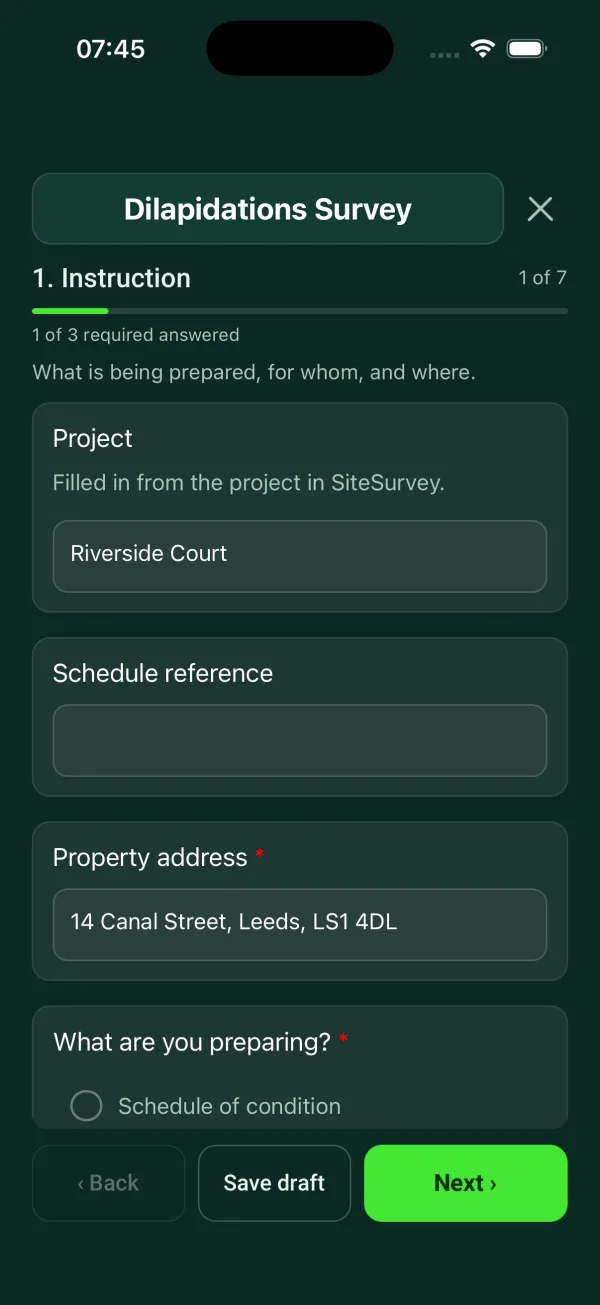
Every question in the dilapidations survey template
Schedule of dilapidations against the lease: item record with remedy and cost, summary of costs, intentions and timing. 7 sections and 69 questions. Follow-up questions and guidance appear only when an answer calls for them, so the person on site never sees the ones that do not apply.
Details you only enter once
Add this form to a project in SiteSurvey and it fills in what the project already knows, so nobody on site retypes it and every form on the job uses the same names. Anything filled in can still be changed.
- Project: the project name
- Property address: the site address, from the space or the project
Instruction
What is being prepared, for whom, and where.
- ProjectShort answerFills in from the project name
- Schedule referenceShort answer
- Property address*Short answerFills in from the site address, from the space or the project
- What are you preparing?*Choose one
- Schedule of condition
- Schedule of dilapidations
- GuidanceSchedule of condition. A record of the state of the premises on one date, usually the start of a lease. Describe and photograph every item, including the ones in good order.Shown when “What are you preparing?” is “Schedule of condition”
- GuidanceSchedule of dilapidations. The Dilapidations Protocol says it should set out the breaches, the works needed to remedy them and, if relevant, the landlord's costings.Shown when “What are you preparing?” is “Schedule of dilapidations”
- When is it being prepared?Choose one
- During the term
- Before the end of the term, for the end of the tenancy
- After the tenancy has ended
Shown when “What are you preparing?” is “Schedule of dilapidations” - CheckA schedule can be sent before the tenancy ends. The Protocol says that at the end of the tenancy the landlord should confirm that the situation is still as stated, or send a further schedule within a reasonable time.Shown when “When is it being prepared?” is “Before the end of the term, for the end of the tenancy”
- CheckThe Dilapidations Protocol covers claims for damages at the end of a tenancy. A schedule sent during the term is outside it, so take advice on the notices the lease and the law require.Shown when “When is it being prepared?” is “During the term”
- Where is the property?Choose one
- England
- Wales
- Scotland
- Northern Ireland
- CheckThe Dilapidations Protocol applies to commercial property in England and Wales, and section 18 of the Landlord and Tenant Act 1927 extends to England and Wales only. The notices in this form about them will not apply here.Shown only when the answers above make it relevant
- Who are you acting for?Choose one
- Landlord
- Tenant
- Landlord and tenant jointly
- LandlordShort answer
- TenantShort answer
- Surveyor name, qualification and firmShort answer
- Date of inspection*Date
Lease and documents
The schedule follows the lease. Record what you have read.
- GuidanceThe Protocol does not define repair, reinstatement or redecoration. What work is required depends on the terms of the lease and any other relevant documents.
- Date of the leaseDate
- Date the term ends, or endedDate
- Have you seen a complete copy of the lease?Yes or No
- WarningDo not issue the schedule until you have read the lease. Each item has to refer to the clause it arises under.Shown when “Have you seen a complete copy of the lease?” is No
- Other documents seenTick all that apply
- Lease plan or scaled plans
- Licence for alterations
- Reinstatement notice
- Schedule of condition with photographs
- Inventory
- Side letter or other written agreement
- Assignment or licence to assign
- Other (describe)
- Is the repairing clause limited by the schedule of condition?Yes or NoShown when “Other documents seen” includes “Schedule of condition with photographs”
- Date of that schedule of conditionDateShown when “Other documents seen” includes “Schedule of condition with photographs”
- CheckCompare every item with the schedule of condition before you list it as a breach. Record the page or photo number you compared it with.Shown when “Is the repairing clause limited by the schedule of condition?” is Yes
- What did the licence allow, and does it require reinstatement?NotesShown when “Other documents seen” includes “Licence for alterations”
- Repair clause numberShort answerShown when “What are you preparing?” is “Schedule of dilapidations”
- Redecoration clause numberShort answerShown when “What are you preparing?” is “Schedule of dilapidations”
- Reinstatement clause numberShort answerShown when “What are you preparing?” is “Schedule of dilapidations”
Inspection
How the premises were inspected and what could not be seen.
- WeatherShort answer
- Are the premises occupied?Choose one
- Occupied
- Vacant
- Part vacant
- Did the other side or their surveyor attend?Yes or No
- Who attended?Short answerShown when “Did the other side or their surveyor attend?” is Yes
- Were all areas inspected?Yes or No
- Which areas were not inspected, and why?NotesShown when “Were all areas inspected?” is No
- Is opening up or further investigation needed?Yes or No
- What needs opening up, and where?NotesShown when “Is opening up or further investigation needed?” is Yes
- CheckRICS guidance says to get the client's agreement and, where appropriate, the tenant's, and to arrange making good. If you act for the tenant, get the landlord's consent before any invasive inspection.Shown when “Is opening up or further investigation needed?” is Yes
- GuidanceKeep the record. RICS guidance says all site notes, sketches, measurements, photographs and videos should be kept, as they may be needed later as evidence.
Item record
One entry for each item. Work through the building in the order you walk it.
- GuidanceWhat a good photo shows. Step back to show the whole element and where it is in the room, then get close to the defect. One item, one entry, its own photos.
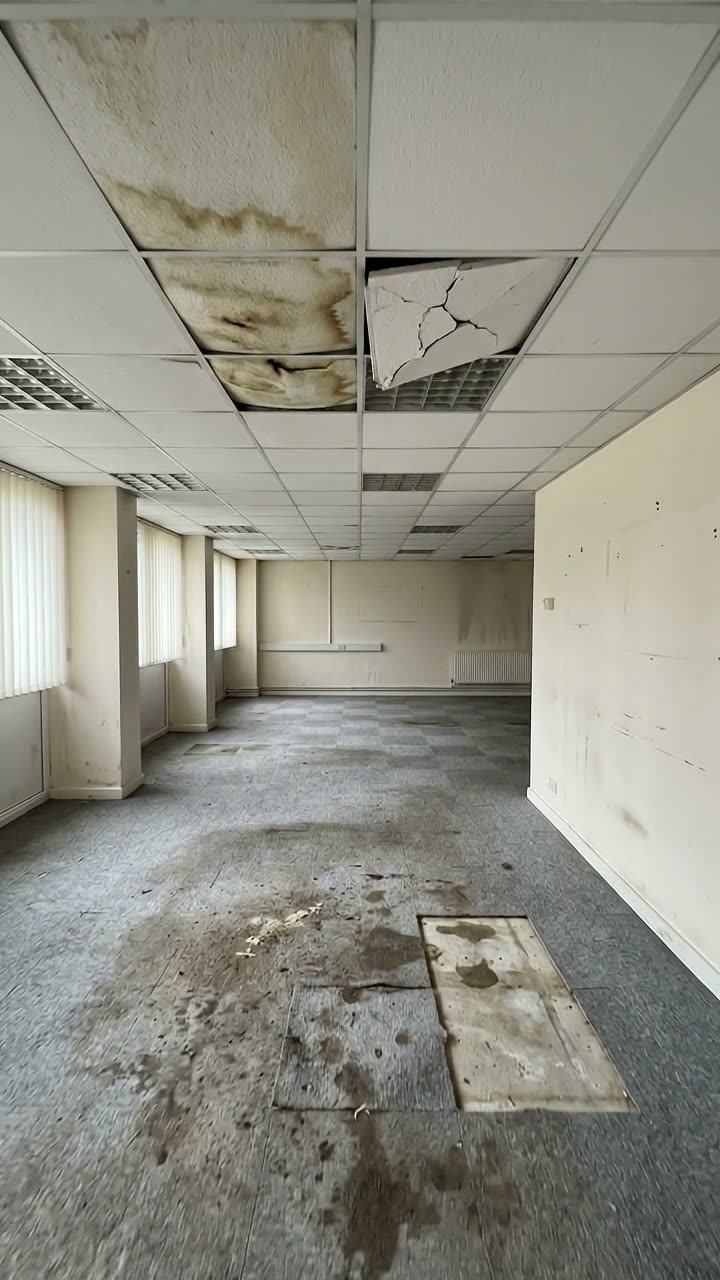
An empty office with stained carpet tiles and water damaged ceiling tiles 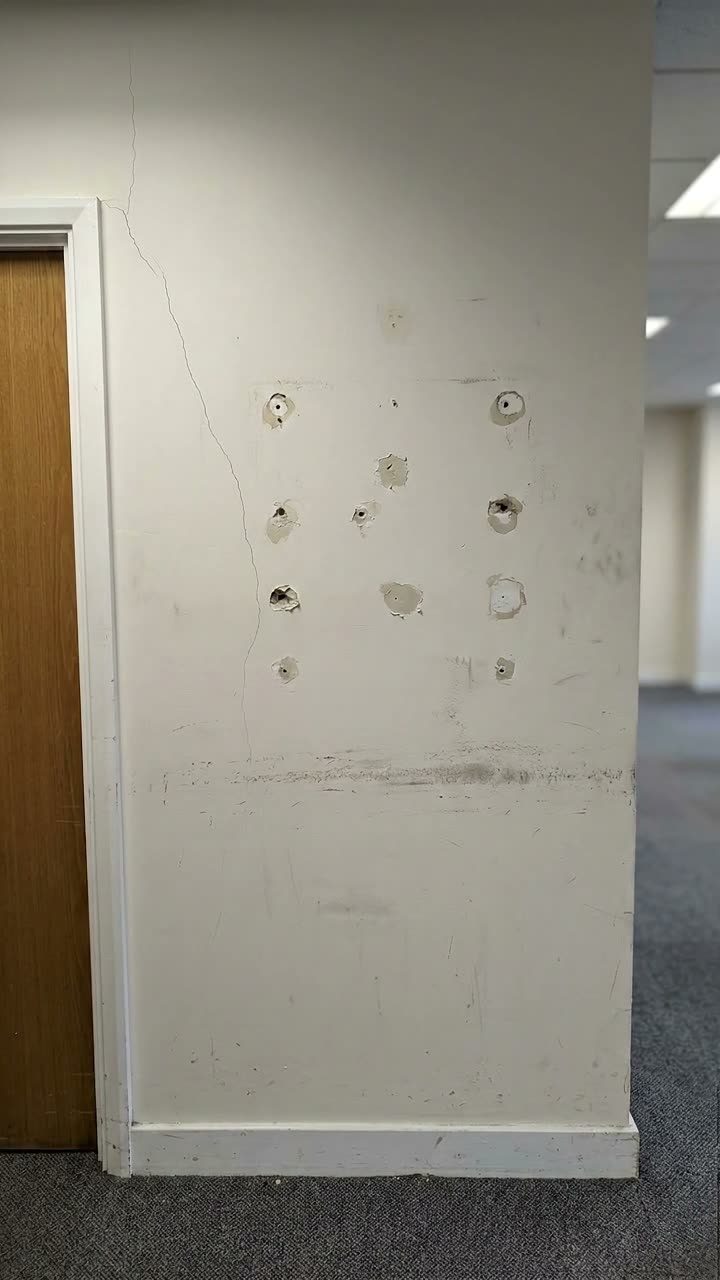
A wall with screw holes and wall plugs left by removed shelving 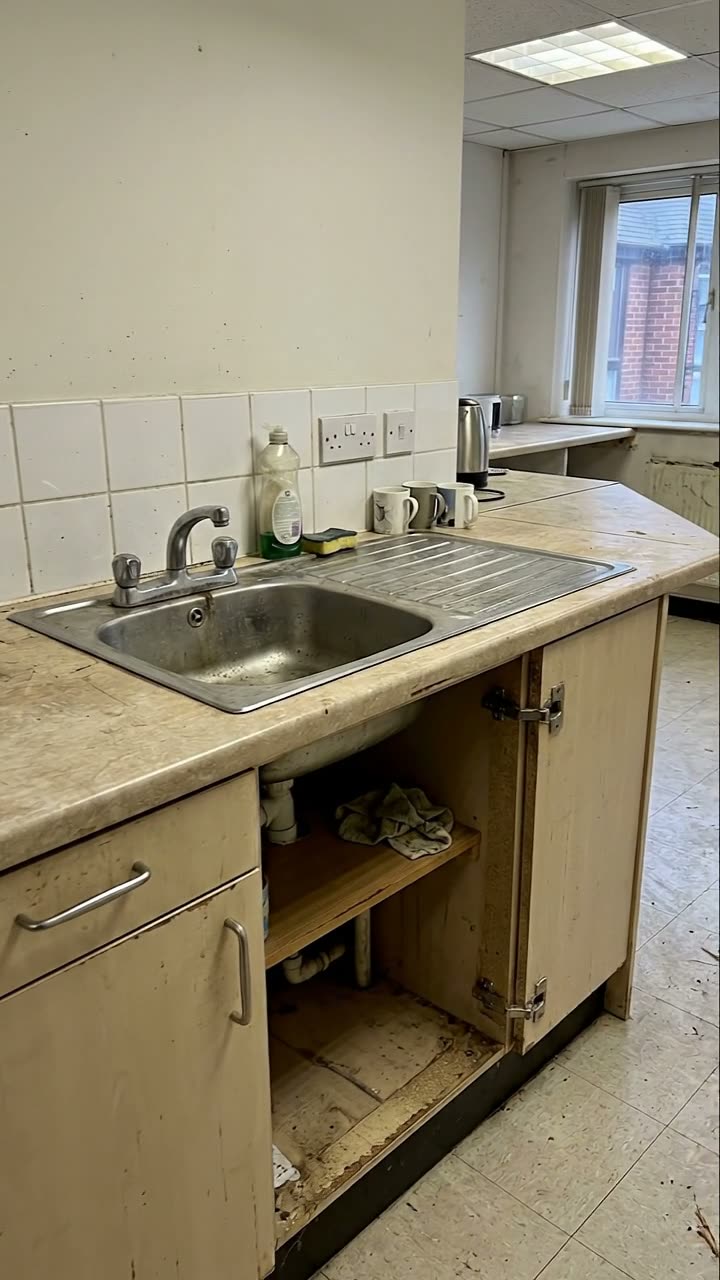
An office kitchenette with a worn worktop and missing cupboard doors - ItemsRepeat for each item. Each one asks:
- Floor and roomShort answer
- ElementChoose one
- Floor finish
- Ceiling
- Walls
- Doors and ironmongery
- Windows
- Kitchen and sanitary fittings
- Services
- Roof and rooflights
- External areas
- Other (describe)
- Which looks most like what you can see?Choose one
- Stained floor and ceiling tiles
- Fixing holes left in a wall
- Worn and damaged fittings
- Doors, closers and ironmongery
- Photos of this itemPhotos
- ConditionChoose one
- Good
- Fair
- Poor
- What you can seeNotes
- Measured extent of the defectShort answerShown only when the answers above make it relevant
- Category of breachChoose one
- Repair
- Reinstatement
- Redecoration
- Other
- Not a breach
Shown when “What are you preparing?” is “Schedule of dilapidations” - Lease clauseShort answerShown only when the answers above make it relevant
- GuidanceRepair. By law, damages for breach of a covenant to repair cannot be more than the fall in value of the landlord's interest caused by the breach (Landlord and Tenant Act 1927, section 18(1)).Shown when “Category of breach” is “Repair”
- GuidanceRICS guidance says section 18(1) does not apply to obligations such as decoration, removal and reinstatement. They have different rules for assessing damages, so keep them apart from the repair items.Shown only when the answers above make it relevant
- Has a notice requiring reinstatement been served?Yes or NoShown when “Category of breach” is “Reinstatement”
- Date of the noticeDateShown when “Category of breach” is “Reinstatement” and “Has a notice requiring reinstatement been served?” is Yes
- CheckCheck whether the lease or licence requires a notice before the tenant has to reinstate. The Protocol says the schedule should identify any such notices.Shown when “Category of breach” is “Reinstatement” and “Has a notice requiring reinstatement been served?” is No
- Remedial works requiredNotesShown only when the answers above make it relevant
- QuantityNumberShown only when the answers above make it relevant
- UnitChoose one
- m²
- m
- Number
- Item
Shown only when the answers above make it relevant - Rate (£)NumberShown only when the answers above make it relevant
- Cost of this item (£)Worked out by the formShown only when the answers above make it relevant
- Is this work likely to be superseded by the landlord's plans for the property?Yes or NoShown only when the answers above make it relevant
- CheckThe Protocol says the Quantified Demand should not include items of work that are likely to be superseded by the landlord's intentions for the property.Shown when “Is this work likely to be superseded by the landlord's plans for the property?” is Yes
Summary of costs
For a costed schedule of dilapidations. Totals come from the item record.
- GuidanceA schedule of condition is not costed. Go on to the next section.Shown when “What are you preparing?” is “Schedule of condition”
- Cost of works, from the items (£)Worked out by the formShown when “What are you preparing?” is “Schedule of dilapidations”
- Design and contract administration fees (% of the cost of works)NumberShown when “What are you preparing?” is “Schedule of dilapidations”
- Design and contract administration fees (£)Worked out by the formShown only when the answers above make it relevant
- Professional fees for preparing the schedule (£)NumberShown when “What are you preparing?” is “Schedule of dilapidations”
- Legal fees for serving the schedule (£)NumberShown when “What are you preparing?” is “Schedule of dilapidations”
- Sub-total (£)Worked out by the formShown when “What are you preparing?” is “Schedule of dilapidations”
- Can the landlord recover the VAT on these costs?Yes or NoShown when “What are you preparing?” is “Schedule of dilapidations”
- GuidanceNo allowance for VAT. RICS guidance says a landlord that can fully recover the VAT has not suffered a loss from it.Shown when “What are you preparing?” is “Schedule of dilapidations” and “Can the landlord recover the VAT on these costs?” is Yes
- Allowance for VAT the landlord cannot recover (£)NumberShown when “What are you preparing?” is “Schedule of dilapidations” and “Can the landlord recover the VAT on these costs?” is No
- CheckRICS guidance says it is for the landlord to show that it cannot recover the VAT.Shown when “What are you preparing?” is “Schedule of dilapidations” and “Can the landlord recover the VAT on these costs?” is No
- Total (£)Worked out by the formShown when “What are you preparing?” is “Schedule of dilapidations”
- What are the costs based on?Choose one
- Invoices for completed works
- Competitive tender
- Price book data
- Recent tender prices
- Quantity surveyor's advice
- Contractor's estimate
Shown when “What are you preparing?” is “Schedule of dilapidations”
Intentions and timing
For a schedule of dilapidations at the end of a tenancy.
- GuidanceThis section is for a schedule of dilapidations. Go on to sign-off.Shown when “What are you preparing?” is “Schedule of condition”
- What does the landlord intend to do with the property?Choose one
- Re-let it as it is
- Refurbish or alter it
- Demolish or redevelop it
- Sell it
- Not yet known
Shown when “What are you preparing?” is “Schedule of dilapidations” - WarningBy law, no damages can be recovered for failing to leave premises in repair if it is shown that they would be pulled down at or shortly after the end of the tenancy, or altered so that the repairs would have no value (Landlord and Tenant Act 1927, section 18(1)).Shown when “What does the landlord intend to do with the property?” is “Demolish or redevelop it”
- CheckLeave out work that the landlord's own works would supersede. Mark those items in the item record.Shown when “What does the landlord intend to do with the property?” is “Refurbish or alter it”
- Has the landlord confirmed its intentions in writing?Yes or NoShown when “What are you preparing?” is “Schedule of dilapidations”
- CheckRICS guidance says the surveyor should ask the landlord to confirm its intentions in writing before endorsing the schedule, and keep the reply on file.Shown when “What are you preparing?” is “Schedule of dilapidations” and “Has the landlord confirmed its intentions in writing?” is No
- Has the landlord carried out the works?Choose one
- All of them
- Some of them
- None, but it intends to
- None, and it does not intend to
Shown when “What are you preparing?” is “Schedule of dilapidations” - CheckWhere the landlord has not done all the works and does not intend to, the Protocol says it should provide a formal diminution valuation before proceedings, unless it would be reasonable not to.Shown only when the answers above make it relevant
- Date the tenancy endedDateShown when “What are you preparing?” is “Schedule of dilapidations”
- Date the schedule was, or will be, sentDateShown when “What are you preparing?” is “Schedule of dilapidations”
- Days from the end of the tenancy to sendingWorked out by the formShown only when the answers above make it relevant
- GuidanceWithin 56 days. The Protocol says a schedule should be sent within a reasonable time, which will generally be within 56 days after the end of the tenancy.Shown only when the answers above make it relevant
- CheckMore than 56 days. The Protocol says a schedule should be sent within a reasonable time, which will generally be within 56 days after the end of the tenancy. Record why it took longer.Shown only when the answers above make it relevant
- Why was it sent later?NotesShown only when the answers above make it relevant
Sign-off
Your name, signature and the date.
- GuidanceThe Protocol says the schedule should be endorsed by the landlord or, where a surveyor prepared it, by the landlord's surveyor. Tick only what is your opinion.Shown when “What are you preparing?” is “Schedule of dilapidations”
- I confirm that in my opinionTick all that apply
- All the works set out in the schedule are reasonably required to remedy the breaches
- Full account has been taken of the landlord's intentions for the property, as advised by the landlord
- The costings, if any, are reasonable
Shown when “What are you preparing?” is “Schedule of dilapidations” - Have the landlord and the tenant both agreed this schedule of condition?Yes or NoShown when “What are you preparing?” is “Schedule of condition”
- Who agreed it, and on what date?Short answerShown when “What are you preparing?” is “Schedule of condition” and “Have the landlord and the tenant both agreed this schedule of condition?” is Yes
- CheckUntil both sides have agreed it, this is one side's record. Send it to the other side and record their reply.Shown when “What are you preparing?” is “Schedule of condition” and “Have the landlord and the tenant both agreed this schedule of condition?” is No
- NameShort answer
- SignatureSignature
- DateDate
Dilapidations survey template questions
What is the Dilapidations Protocol?
It is the pre-action protocol for claims for damages about the physical state of commercial property at the end of a tenancy. It applies to commercial property in England and Wales. A schedule sent during the term is outside it, so the form prompts you to take advice on the notices the lease and the law require.
When should a schedule of dilapidations be sent?
The Protocol says within a reasonable time, which will generally be within 56 days after the end of the tenancy. The form works out the days from the end of the tenancy to sending, and asks why if it is more than 56.
Is there a cap on dilapidations damages?
For repair, yes. Under section 18(1) of the Landlord and Tenant Act 1927, damages for breach of a covenant to repair cannot be more than the fall in value of the landlord's interest caused by the breach. No damages can be recovered for failing to leave premises in repair if they would be pulled down at or shortly after the end of the tenancy, or altered so that the repairs would have no value.
Why are repair, reinstatement and redecoration kept apart?
RICS guidance says section 18(1) does not apply to obligations such as decoration, removal and reinstatement, so damages for them are assessed differently. The form records a breach category and lease clause for each item, and for reinstatement asks whether a notice requiring it has been served.
Does the template price the works?
No. The surveyor enters a quantity, unit and rate for each item, and the form adds up the cost of works, fees and any VAT the landlord cannot recover. It also records what the costs are based on, such as a tender or a contractor's estimate.
Should I keep my site notes and photos?
RICS guidance says all site notes, sketches, measurements, photographs and videos should be kept, as they may be needed later as evidence. In the SiteSurvey app each item has its own photos, the survey works offline and is signed on the device, and it becomes a PDF report or a share link.
Related
Related templates
Templates that go with the dilapidations survey form
Photographic record of condition before works or at the start of a lease, room by room.
Condition survey of a building: limits of inspection, element by element record, services and risks, further investigations.
Room by room damp and mould inspection with causes, HHSRS hazard check, photos and remedial actions. Built for Awaab's Law timescales.
Elements, lifecycles and renewal years, kitchen and bathroom, heating and electrics, hazards and recommended work for each property.
Use this dilapidations survey form with your team
Add it from the form library in one click, change any question, and every completed form becomes a branded PDF report.
Start your trial →